

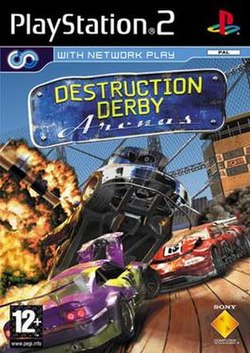

Destruction Derby Arenas rolls onto the PlayStation 2 like a demolition derby wrapped in a mild identity crisis. Developed by Studio 33 and published by Sony Computer Entertainment in Europe (with Gathering of Developers handling North America), the game landed in early 2004 as the fifth and final entry in Psygnosis's long-running Destruction Derby series. It promises smashing metal, chaotic arenas and multiplayer mayhem - which it often delivers - but also arrives with the kind of compromises that leave you grinning, shrugging, and then wondering whether you should have just rented it. Critics broadly agreed: mixed feelings, a decent few thrills, and enough rough edges to remind you this is a PS2-era title, not a modern-day crash porn sim.
At its core, Destruction Derby Arenas is gloriously straightforward: you drive, you crash, you repeat. The game leans into vehicular combat and arena-style racing more than into nuanced driving mechanics, so expect arcade-style handling where smashing someone into a wall is both a tactic and a lifestyle. Modes include single-player challenges and multiplayer bouts, the latter being a notable selling point in an era when online play for the PlayStation 2 still felt a little exotic. GameSpot even suggested that the online component alone made it worth renting for fans of the genre. Single-player is a mix of stunt-ish arena matches and objectives that push you to brawl your way to victory. It's not the deepest campaign you'll ever encounter; the fun peaks early when the crashes are fresh and satisfying, and then repetition threatens to turn the charmingly brutal into a predictable routine. IGN summed this up neatly, saying the game is fun for an hour or two before it loses value - a line that's honest and a little harsh, but sadly accurate. If your idea of fun is inventing increasingly creative ways to turn an opponent's hood into origami, the early game will satisfy. If you want a long-lasting single-player career with plenty of strategic variety, this isn't the place. Multiplayer is the feature that keeps the ambulance on standby and the party alive. Whether you're duking it out with friends on the same console or exploring the online offerings that were present at release, the chaotic energy of head-to-head arena combat delivers memorable moments: last-minute spin-outs, glorious head-on collisions, and that perfect ricochet that feels like karma. Reviewers who spent time online tended to be kinder; there's a social joy in watching someone's carefully upgraded beater fold like a lawn chair at the hands of your perfect bumper-to-bumper ballet. Just don't expect an especially deep progression system or wildly varied objectives - the appeal is immediacy and impact, not long-form meta. The physics and controls are built for impact rather than simulation. Cars don't behave like precision instruments; they behave like angry shopping trolleys with engines. This makes crashes entertaining, but it can also make maneuvers feel imprecise. If you're nitpicking the subtleties of drift angles and apex clipping, you'll be disappointed. If you enjoy the catharsis of driving straight into a roomful of rivals and seeing chaos ensue, you'll probably have a good time. Ultimately, Destruction Derby Arenas is best judged by how much you value visceral, throw-yourself-into-the-mess gameplay versus mechanical depth and long-term variety.
For a 2004 PlayStation 2 title, Destruction Derby Arenas renders a serviceable visual package. It's not trying to win awards for texture fidelity or photorealism - this is an era of chunky polygons, visible pop-in, and lovingly exaggerated crash deformation. The impact animations and damage states are the heart of the show's visuals, and they do a respectable job of selling the carnage. Cars buckle properly when you slam them, panels fly off with satisfying thunks, and debris scatters in a way that helps every crash feel momentous. Backgrounds and arenas are functional rather than spectacular: a handful of themed arenas, lots of concrete and metal, with enough variety to keep your eyes entertained for a few sessions. Lighting and draw distance are what you'd expect from a PS2 title; don't go in hoping for modern shaders or realistic reflections. Instead, appreciate the game for what it is - a throwback spectacle where the star is the collision, not the landscaping. Reviewers at the time were forgiving of the visuals, focusing more on the gameplay loop and multiplayer value when deciding whether the title was worth a purchase or a rental.
Destruction Derby Arenas is like your friend who's great for Friday night chaos but not the one you call for long-term life advice. It's loud, destructive, and occasionally brilliant in short bursts, especially if you can find people to play with. Studio 33 delivered a game that fits neatly into the vehicular combat niche: it's fun in the moment, social when played with others, and imperfect everywhere else. Critics were mixed - Metacritic sits around 57/100 - and that's a fair reflection. Outlets ranged from fairly lukewarm to mildly positive: IGN and GameSpot warned that the game's longevity is limited and that its best moments are fleeting, while publications like PlayStation: The Official Magazine and X-Play found more to like. If you're a fan of the Destruction Derby lineage or arena brawls in general, you'll get your money's worth of chaotic entertainment. If you're looking for depth, longevity, or a single-player experience that keeps surprising you, consider renting first. For a rental? Definitely. For a full-price purchase in 2004? Maybe under slightly lower expectations and a lot of crash-padding. Either way, when this game lights the fuse, it's a satisfying explosion - just don't expect the fireworks to last forever.
 Destruction Derby Raw on PlayStation
 Red Faction: Guerrilla Re-Mars-tered on PS4
 Project Awakening on PS4
 Combat Elite: WWII Paratroopers on PS2
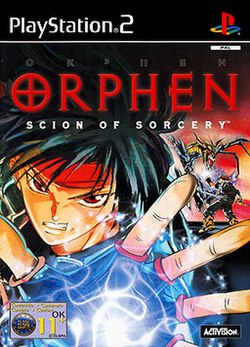
 Orphen: Scion of Sorcery on PS2
 Monster Hunter Stories 2: Wings of Ruin on Switch
 Formula One 99 on PlayStation
 Newman/Haas Racing on PlayStation
 Formula One 2001 on PlayStation
 Formula One Arcade on PlayStation












 Another SquareThought Site