

 Sep 2022
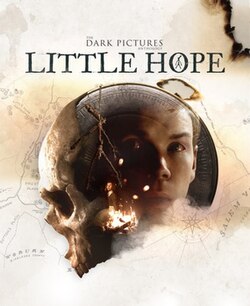

Little Hope is the kind of horror game that politely asks you to get off the bus and then slams the door shut. Supermassive's second entry in The Dark Pictures Anthology puts you in a fog-choked Massachusetts town where the present day keeps getting photobombed by the 17th century. Will Poulter lends his face and motion capture to the lead(s), the omnipresent Curator pops up like a spooky librarian, and demons take visual cues from colonial-era deaths. On PS5 this package arrives with the usual next-gen niceties and a patch that adds quality-of-life and accessibility options - which you'll appreciate when the game demands you mash a button like you're trying to silence your annoying group chat. Little Hope is built around choice, dread, and quick-time events. It wants you to play your moral compass like a joystick, and it promises that your decisions actually matter - sometimes by letting a character stumble to an untimely demise and sometimes by giving you a trophy for being indecisive. The whole thing is replayable, which is great because once you've seen the town's secrets, you'll want to play again just to see every possible way your friendships implode.
If you enjoyed Man of Medan, Little Hope will feel familiar - and that's both comforting and mildly dangerous, like putting on a cosy sweater in a room full of candles. The game is a third-person interactive drama where you control five linked characters: four college students and their professor. The setup is tidy: a class trip, a detour through Little Hope, and a bus crash that turns your GPS into a haunted Etch A Sketch. Gameplay is dictated by dialogue choices, exploration, and quick-time events (QTEs). The choices influence relationships, who survives, and which of the many endings you unlock. Supermassive kept the series' signature permadeath mechanic, so players can accidentally (or gleefully) eliminate characters permanently. There's also a collectible system of 'pictures' that give premonitions - handy if you want a supernatural cheat-sheet of future bad decisions. Action mostly boils down to QTEs. The PS5 release continues the trend of making those prompts clearer and more forgiving than before: the game tells you when a QTE is coming, which reduces cheap deaths but also trims the tension a little. The team addressed complaints from Man of Medan, removing clunky tank controls, speeding up movement, and loosening the QTE timing so you can actually enjoy the chase without feeling like your thumbs are being judged. Multiplayer returns in two flavors. 'Shared Story' lets two players co-op online, while 'Movie Night' is the couch‑pass-the-controller mode for up to five players. Movie Night is peak party-horror: everyone selects a character, passes the controller each turn, and enjoys watching their friends' moral compasses spectacularly shatter. If you're hosting, provide snacks and tissues; you'll need both. The narrative hops between present-day and colonial flashbacks, revealing how paranoia, greed, and religious fervour made Little Hope fertile ground for mass hysteria. The twist - which has divided critics - reveals deeper layers about identity and guilt; whether it lands for you depends on how much you like psychological ambiguity and moral whiplash. Expect to replay chapters to see alternative outcomes and to toy with the game's branching 'what if?' structure. It's built to be revisited, for better or for worse.
Little Hope runs on Unreal Engine 4 and on PS5 it benefits from smoother performance and the aforementioned post-launch improvements. The game's atmosphere is where it shines: a convincing, ever-present fog, creaky period interiors, and demon designs that lean heavily on the grotesque silhouettes of colonial-era deaths. Will Poulter's motion capture work gives the lead(s) believable facial beats - enough that the flashback sequences feel unsettling rather than laughably bad. The environments are moody and well-composed; Little Hope's town looks like a place that would immediately get a restraining order from the sun. While it's not trying to win awards for photorealism, the stylised gloom suits the story. Some animations can still stiffen in a few cutscenes, and the QTE safety net reduces the 'I barely survived' cinematic panic that used to make scenes feel more kinetic. On balance, the PS5 version looks and runs better than the original console release and the fog-heavy visuals do a lot of the heavy lifting for atmosphere.
Little Hope is a spooky choose‑your‑own‑paranoia that knows how to dress a moral dilemma in a witch-hunt costume. It refines what worked in Man of Medan - better pacing, friendlier controls, and clearer QTE cues - while doubling down on the anthology's core: branching narratives, permadeath stakes, and a Curator who is equal parts encyclopaedia and creepy dinner guest. Critically, the game landed in mixed territory; Metacritic hovered around the low 70s on PC and mid-60s to 70s on consoles, and reviews praised the atmosphere and replayability while grumbling at a plot twist some called polarizing and a choice system a few felt was surface-level. If you like horror that leans into mood, moral quandaries, and multiplayer screaming matches over the controller, this PS5 port is an easy recommend. If you want tight, mechanical horror or choices that always feel consequential, be prepared for a few narrative bumps. At 7/10, Little Hope is less 'perfect storm' and more 'perfect campfire story.' It won't change the anthology formula, but it improves the experience where it mattered and gives you plenty of spooky nights worth of bad decisions. Bring friends for Movie Night, or play alone and enjoy the guilt - whichever you choose, don't take dance lessons from any bus drivers in small New England towns.
 Untold Legends: Dark Kingdom on PS3
 Unsung Story on Switch
 Obscure: The Aftermath on PS2
 Tokimeki Memorial Drama Series Vol. 3 Tabidachi no Uta on PlayStation
 Crow Country on PS4
 The Dark Pictures Anthology: Man of Medan on PS5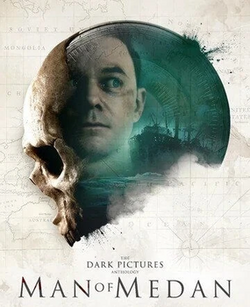
 Little Nightmares III on Xbox Series X/S
 Until Dawn on PS5
 Until Dawn on PS4
 Directive 8020 on Xbox Series X/S
 Wonderbook: Walking With Dinosaurs on PS3










 Another SquareThought Site