

 Sep 2022
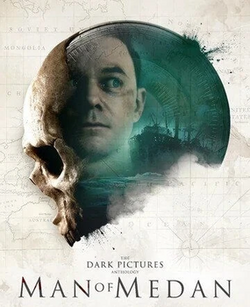

In an era when magazines arrived by mail with glossy inserts and a furrowed brow was the acceptable state of critical thought, interactive horror wore the mantle of campfire storytelling with a joystick. The Dark Pictures Anthology: Man of Medan continues Supermassive Games' attempt to translate that anxious, communal thrill into a modern console experience. First released in 2019 and brought to PlayStation 5 alongside a patch in 2022, Man of Medan positions itself as a tale told in choices: five protagonists, a derelict freighter, and a biochemical rumor from the aftermath of World War II called the "Manchurian Gold." If you expected a tight, action-first game, this is not it. If you expected a slow-burn, decision-heavy interactive drama where every missed button prompt can ruin a relationship - and possibly the life - of a character, then you have come to the right, salt-streaked deck.
Man of Medan is a third-person interactive drama that trades twitch combat for moral gymnastics and the occasional frantic Quick Time Event. The player rotates control among five playable characters: brothers Alex and Brad, Alex's girlfriend Julia, her brother Conrad (voiced and mocapped by Shawn Ashmore), and the ship's captain Fliss. The core loop is exploration, conversation, and decision-making. Conversations present you with a compass of choices - a literal representation of head, heart or doing nothing - and those choices ripple outward, affecting other interactions, relationships and who survives to see the final reel. Supermassive's branching narrative is the game's principal engine. The title embraces permadeath: any of the five can die permanently depending on how you handle critical scenes. Replayability is therefore baked in; discovering alternative outcomes is half the game's fun. Collectible "Dark Pictures" provide premonitions-little vignettes that hint at possible futures. They function as both foreshadowing and red herrings: sometimes they can be used to avoid disaster, and sometimes they are cruel teasers of inevitability. The ship itself is designed as a series of cramped corridors and claustrophobic rooms. Movement uses tank-like controls at times, which is a deliberate, if divisive, design choice that amplifies the helplessness on a rolling, rotten deck. Action scenes are resolved mostly through QTEs; missing one can lead to nasty consequences. For players who prefer to share the dread, the title includes two multiplayer modes inspired by the streaming resurgence of Until Dawn: Shared Story allows two players to cooperatively play online, while Movie Night supports up to five players locally, passing the controller as scenes demand. While the decision system is intelligent and often emotionally affecting, it exposes a design tension. The pace can bog down between set-piece scares, and the reliance on QTEs makes certain tense moments feel brittle: there is skill, but also a degree of performance anxiety not necessarily tied to narrative tension. The PS5 patch improves stability, accessibility options and some quality-of-life features, which helps the modern player settle into the game's rhythms more comfortably than the original release.
The PS5 version benefits from the grunt that console brings: shorter load times and steadier frame pacing than the original generation. Built on Unreal Engine 4, the game aspires to photorealism and often approaches it, especially in the weathered textures of the SS Ourang Medan and the reflective, bruise-dark sea. Lighting and texture work were even recognized in award nominations, and the careful use of shadow and practical light sources is a major contributor to the atmosphere. Facial performance is generally strong; Pip Torrens' Curator arrives as a vintage narrator with dry cadence and well-timed gravitas, and Shawn Ashmore's motion-capture lends Conrad a believable physicality. There are occasional uncanny moments-some animations and lip-syncing can miss their mark, and the middling animation in peripheral NPCs will remind you that no engine can fully mask limited budget and scope. The visuals serve the story rather than overwhelm it, which suits the game's old-school pacing and keeps focus on emotion and consequence rather than spectacle.
Man of Medan is not a flawless resurrection of '90s horror aesthetics, nor is it meant to be. It is, however, a purposeful exercise in interactive storytelling that knows where its meat is: the decisions, the small human moments, and the communal shudder. For players who enjoyed Until Dawn's mix of B-movie plotting and genuine character investment, this is a worthy successor. If your patience for tank controls and QTE-centric action is thin, and you prefer your scares with heavier gameplay seasoning, you will find the experience wanting. On PlayStation 5 the anthology's first chapter holds up as a polished, if occasionally uneven, interactive horror piece. Its strengths are replayability, voice and mocap performances, and a system that makes choices matter. Its weaknesses are pacing, a sometimes over-scripted scare economy, and the odd animation hiccup. Score it as a solid seven out of ten: a game that remembers the old way of telling frightening tales, translates it for the present, and invites you to test your moral compass under the cold light of a deck lamp. Pass the controller to a friend and watch the arguments start - that, after all, is half the point.
 Pac-Man Museum on PS3
 Mega Man: Dual Override on PS4
 Dark Cloud 2 on PS2
 Obscure: The Aftermath on PS2
 Tokimeki Memorial Drama Series Vol. 3 Tabidachi no Uta on PlayStation
 Crow Country on PS4
 Little Nightmares III on Xbox Series X/S
 Until Dawn on PS5
 Until Dawn on PS4
 Directive 8020 on Xbox Series X/S
 Wonderbook: Walking With Dinosaurs on PS3










 Another SquareThought Site