

 Jan 2027
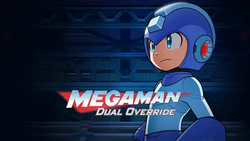

Mega Man: Dual Override arrives as both a promise and a throwback: promise because Capcom has publicly declared its intent to regrow Mega Man into a core IP again, and throwback because this is the twelfth mainline entry in the Classic Mega Man series, landing in 2027 to coincide with the franchise's 40th anniversary. On the evidence in the announcement and reveal trailer, Dual Override keeps the essentials - our blue bomber, the dastardly Dr. Wily, 2D platforming and boss-driven progression - while dangling a few fresh hooks like "Override challenges" and a fan-driven Robot Master contest. For PS4 players who grew up memorizing boss patterns and collecting quirky new weapons, Dual Override looks like a love letter written with a rocket punch. For the rest of us, it's a tidy chance to revisit one of gaming's most reliable hero-villain relationships and see how that dynamic might flex in the modern era.
At its core, Dual Override is faithful to the Classic series DNA: tight 2D platforming, measured jump-and-shoot encounters, and boss stages that reward pattern recognition and strategic weapon swapping. The reveal gives us a glimpse of Mega Man using a charge shot, and Capcom's phrase "Override challenges" hints at a layered difficulty system or targeted test rooms that play with mechanics rather than simply pumping up enemy health. That combination - classic scaffolding with bite-sized modern trials - is precisely the environment where character arcs can be told through gameplay. Mega Man's "arc" in a traditional sense is subtle; he's archetypal, almost Platonic: default good, adaptable, and defined by the weapons he borrows from his opponents. Dual Override seems to respect that archetype while offering opportunities to deepen it. The very concept of "override" can be read narratively as well as mechanically - if the Override challenges place Mega Man into situations that temporarily change his ruleset, the player experiences growth in the same breath that the character does. Each new weapon or Override matrix becomes a small lesson: Mega Man doesn't just add tools to his belt, he learns new ways to approach problems. In other words, the usual "beat the boss, take their power" loop doubles as incremental personal development. Dr. Wily remains the gravitational center of the series' moral drama: the scientist whose ambitions repeatedly outstrip his ethics, a perpetual foil who forces Mega Man into moral and physical opposition. There's nothing in the source material about a reinvention of Wily, and probably wisely so: the long-term strength of their rivalry is its ritualized consistency. Still, the framing around Capcom's push to reestablish Mega Man as a core IP suggests a production that cares about legacy. If Dual Override leans into themes of legacy and continuity, then Wily can be more than a mustache-twirling antagonist - he can be the symbolic threat to the franchise's past and future, an ideological test of whether the old blue model adapts without losing his essence. Perhaps the most intriguing narrative lever is the Robot Master contest. Capcom is inviting fans to design bosses, and six will be selected, with one grand-prize winner implemented into the game. This is not just a marketing stunt; it has story potential. Fan-designed Robot Masters can introduce unexpected tones, personalities, and micro-arcs that challenge the long-term formula. A stage inspired by community creativity might be a comedic detour, a tragic vignette, or a mechanically unique gauntlet that forces Mega Man to confront a nonstandard problem. That variety can function like episodic character studies inside the game: each Robot Master tells a little story about why they exist, what they defend or desire, and how Mega Man responds. When a community-created boss yields a weapon that shifts player strategy, that shift becomes a story beat: the player and the character are both changing in response to voices beyond the canon. That's meta in the best way. Mechanically, we should expect the standard slate - a choice of boss stages to tackle in any order, a weapon wheel of acquired abilities, and likely some modern quality-of-life features such as selectable difficulties or replay-encouraging modes tied to Override challenges. The giveaway screenshot shows Mega Man with a visible charge meter; if Dual Override leans into charge-shot variety and situational Override modifiers, then boss fights will demand both reflex and improvisation. This is where character and gameplay intersect: Mega Man's stoic progression through these tests is a character arc of competence - he arrives as an efficient machine and becomes a more versatile one. Story is told in the way his toolkit grows and how each new mechanic changes the player's relationship to the world.
The reveal trailer's visuals drew early praise - IGN called them "promising vibrant visuals" - and the image used in promotional material highlights a polished, modern sheen layered over classic 2D perspectives. Dual Override doesn't appear to be aiming for photorealism, nor should it: the Classic Mega Man series thrives on iconic silhouettes, readable fire patterns, and bold color contrasts that make telegraphed threats legible. On PS4 the game will likely occupy the sweet spot of modern retro: crisp pixel-art-inspired models or stylish 2.5D backdrops with rich parallax layers that make stages feel alive without muddying gameplay readability. Visually, characters in Mega Man games have always been narrative shorthand: a Robot Master's color palette, posture, and attack motifs tell you who they are before they ever speak. Translating fan designs into this vocabulary will be a fascinating exercise. If Capcom leans into vibrant, expressive boss designs, the emotional shorthand will pay off; a tragic-sounding theme with a melancholic palette will read differently than a slapstick, neon-bright boisterous foe. For Mega Man and Wily, the design work will have to balance reverence with refreshment: iconic enough to feel familiar, but polished enough to justify the reboot energy Capcom is promising.
Mega Man: Dual Override on PS4 reads as both a careful continuation and a subtle experiment. With Core series mechanics intact - platforming, boss-hunting, weapon acquisition - Dual Override gives players the expected pleasures, while the "Override" hook and fan-made Robot Masters promise fresh, human-flavored detours. The emotional weight of character arcs here will be quiet and incremental: Mega Man grows through tools and trials, and Wily remains the pressure that pushes him toward adaptation. Where Dual Override could surprise is in how it uses community input and targeted challenges to let character beats happen inside levels instead of cutscenes. For fans of the series, that's a worthy balance of nostalgia and novelty; for newcomers, it's a smartly packaged entry point that shows why Mega Man's simple, resilient relationship with Dr. Wily endures. Score: 8/10 - not perfect, but a robust comeback attempt that respects the past while inviting the community to shape its future.
 Mega Man 8 on PlayStation
 Mega Man Anniversary Collection on PS2
 The Wacky History of Platform Games
 Roblox on PS4
 DreamMix TV World Fighters on PS2
 Toki Tori on Switch
 Monster Hunter Rise on Switch
 Resident Evil 2 on PS4
 Ultra Street Fighter IV on PS3
 Street Fighter 6 on PS4
 Resident Evil 7: Biohazard on PS4










 Another SquareThought Site