

 Nov 2025
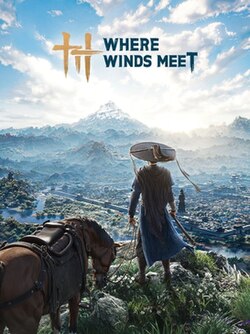

In an era when blockbuster fantasy epics trade on dragons and laser swords, Where Winds Meet arrives like a silk banner unfurling over an otherwise crowded marketplace. Everstone Studio has attempted something both unabashedly ambitious and stubbornly old-fashioned: a wuxia open-world RPG that asks players to wander through the Five Dynasties and Ten Kingdoms period of China, learn martial arts that read like mini-poems of motion, and make a living as a youxia, a wandering hero. If you remember the style of ink-and-paper previews in the 1990s, imagine one of those long feature pieces that treats a game as a cultural artifact. This is that piece's tonal twin: measured, occasionally stern, but not without a dry smile about how umbrellas can be lethal.
Where Winds Meet splits its heart between nuanced combat and exploratory role-playing. Combat is built around a surprisingly deep weapon-and-art interplay. The wanderer can equip two weapons at a time from a seemingly endless wuxia toolbox: jian swords, dual blades, spears, rope darts, fans, umbrellas, mo blades, heng blades and gauntlets. Each weapon type maps to a distinct martial arts school and a distinct set of moves. The result is an intentional design choice: changing your weapon feels like changing professions. Two-weapon skills, weapon switches and charged heavy attacks interact with standard light attacks to produce combos that are satisfying once you learn the rhythm. Defensive options are clear and decisive. Dodges, blocks and deflects (parries) are present and meaningful, and Everstone helpfully telegraphs enemy attack properties with color cues. Red means the strike cannot be blocked, gold means the strike cannot be either blocked or deflected. It is simple, old-school telegraphing that prevents the combat from feeling like a random button-mash while still rewarding timing. Mystic arts sit alongside weapon skills and broaden the repertoire: movement and environmental skills (Tai Chi that lifts fish from ponds, for example), offensive spells and supportive techniques allow builds ranging from nimble damage-dealers to healers and control specialists. The fact that skills can affect both exploration and combat is where the game scores points for design intent - martial arts are not only about killing things, they are about inhabiting a world that responds to a xiake's motions. Exploration is open-world in the modern sense but layered like a well-edited magazine feature. Regions such as Qinghe, Kaifeng and Hexi are distinct thematic acts, each designed with a central emotional motif; Qinghe favors legends and lost heroes, Kaifeng contrasts prosperity with decay, and Hexi is romantic, even dreamlike. Quests are categorized into main story, lost chapter, encounter and exploration. Lost chapter quests are the small, felt moments where the game does its best writing, unspooling neighborhood stories rather than merely serving chest-and-xp treadmill. There are PvP arenas, cooperative dungeons, guild systems and sect membership that add social depth to the wandering. Cross-platform play and progression mean your grind on PC can accompany your prestige on PlayStation 5, and the monetization model is free-to-play without pay-to-win trappings, which will comfort anyone wary of a cash shop deciding combat balance. Balance is not perfect. The weight of so many weapon types and mystic arts means that some builds outpace others, and the multiplayer meta leans on a handful of dominant combos. The UI occasionally struggles under the richness of the systems: tooltips can be terse and inventory tedium surfaces more often than it should. Still, when the combat clicks - a perfectly timed parry into a dual-weapon finisher while your Tai Chi ripples a pool to spawn an environmental advantage - the game delivers a cinematic rush that recalls choreographed fight sequences in classic wuxia films. The involvement of Stephen Tung as martial arts director and Yuen Woo-ping as action consultant is not mere billing; the motion capture and choreography feel cinematic and, more importantly, readable in play.
Visually, Where Winds Meet leans toward a painterly realism that favors mood over photorealism. The Messiah Engine is put to work for sweeping vistas of rivers, pagoda silhouettes and busy market streets modeled on studies of Kaifeng and classical paintings such as Along the River During the Qingming Festival. Textures and foliage pop in 4K, and the world often looks like a scroll painting that's been given convincing depth. Hexi's dreamscapes are the highlight: they are composed and framed with a poet's restraint, where mist and brushwork-inspired backgrounds bleed into each other. Character models are competent; facial work is solid without reaching the uncanny valley of over-polished modern titles. Motion capture lends weight and authenticity to the martial arts and dance animations. The Dunhuang flying deities dance is a particularly elegant touch, and the Toad Style cameo (promotional tie-in aside) has genuine old-school charm. Sound design is thematically tuned: folk songs, snippets of poetry woven into lyrics, and environmental scoring that favors wind and water motifs create a soundscape that complements the visuals. On PS5 the load times are sensible and streaming is handled cleanly, though occasional pop-in persists in crowded urban districts. Performance is generally stable, and the aesthetic choices often carry the game where technical shortcomings appear.
Where Winds Meet is an exercise in deliberate ambition. Everstone Studio has built more than a combat sandbox: they have created a cultural diorama that invites you to move through its planes like a character in an inked novella. The game will reward patient players who enjoy learning systems, experimenting with weapon-and-art synergies, and reading small human stories tucked into lost chapter quests. Its shortcomings are practical - balance wobbles, UI rough edges, and the occasional technical quirk - but they are not fatal. If you want the immediacy of a frantic loot shooter, this is not that. If you want an open-world action-RPG that strives to marry choreography, history and atmosphere, Where Winds Meet is worth your attention. It is exactly the sort of title a serious 1990s reviewer would have praised for its ambition while cautioning readers about its rougher edges, then added a wry aside about how lethal umbrellas will haunt their dreams. For those willing to study its subtleties, this game offers a distinct and rewarding wind to sail with.
 Disney's Meet the Robinsons on PS2
 Power Pro Kun Pocket 11 on DS
 Tintin: Destination Adventure on PlayStation
 Disney's Chicken Little: Ace in Action on PS2
 Combat Elite: WWII Paratroopers on PS2
 Onimusha: Dawn of Dreams on PS2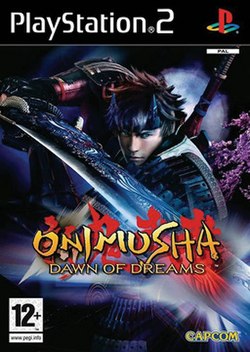










 Another SquareThought Site