

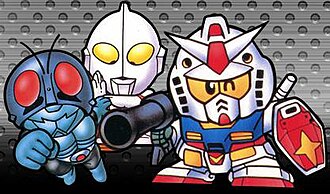

Battle Formation is the PlayStation entry in the delightfully chaotic Compati Hero lineage, the long-running Banpresto series that straps Ultraman, Kamen Rider and Gundam into the same toybox and shakes very hard. Released in Japan on November 13, 1997, it lands squarely in the franchise's Battle Sports sub-branch: the part of the family where heroes try not to hurt each other too much while also trying to score points. The series' trademark is its "SD" or super-deformed art style, which everyone agreed was the diplomatic solution to the thorny problem of mixing skyscraper-sized mechs with appropriately human-sized masked riders. Battle Formation approaches crossover diplomacy like a bureaucrat who also happened to study rugby tactics.
Calling Battle Formation a sports game is accurate, but only if you're comfortable with a definition of "sports" that includes tiny caricatured giant robots and live-action heroes forming human (and robotic) chains. The game is built around team selection and formation mechanics rather than raw button mashing. You choose a team made up of the Compati franchise's usual suspects - in-joke-friendly Ultraman types, a few Kamen Riders, and enough Gundam parts to make a gunpla builder weep with nostalgia - and slot them into a formation that decides how they behave on the field. The formations are the game's personality. Each setup confers different roles: offense, defense, support and the sort of oddball specialty that sounds sensible on paper and becomes a hilarious gamble in play. Positioning matters in a way that will make strategy fans nod approvingly and button-mashers glance at their controller with a new, baffled respect. There are simple plays for when you want things to be uncomplicated and blockbuster maneuvers for when you're trying to turn a six-point comeback into a conversation piece. The balance between accessible sports rules and modest strategic depth is probably Battle Formation's most sensible achievement: it rewards thinking but doesn't demand a master's thesis in formation theory. Matches tend to be short, which is an excellent idea if your attention span is modern and legal. Single-player mode gives you a campaign-like progression where winning unlocks new characters and cosmetic bits - essentially trading a few fighters' dignity for the promise of more roster variety. The AI is competent and occasionally infuriating; it will execute a perfectly timed formation shift that looks suspiciously like it peeked at your notes. Local multiplayer is where the game does its most honest work. Watching two friends rearrange their tiny hero armies and psych each other out over who gets control of center field is an experience that feels like a crossover between chess and a very loud playground argument. If the PlayStation era has any genre blind spot, it's the lack of online options: Battle Formation is strictly local, which is historically accurate and occasionally tragic. Also predictable is the game's regional footprint; it was released only in Japan, which means the menus and character bios remain stubbornly untranslated. Fans of the franchises will find the context in the character interactions and cameos, while newcomers will glean everything they need from the gameplay itself and the very expressive SD art. It's an approachable title that respects your time and occasionally insults your tactics. The game does not try to be deep in an RPG sense. There are no sprawling dialogue trees or moral quandaries about giant robots' retirement plans. The RPG trimmings the Compati series likes to borrow - small stat bumps, unlockable moves, and a smattering of light progression - exist just enough to be noticed and not enough to be resented. Ultimately, Battle Formation asks you to care about formations and lineups the way you might care about where you place toppings on a pizza: the difference matters if you're doing it for effect, and it is deeply satisfying when executed well.
Graphically, Battle Formation is a product of its era and the franchise's aesthetic requirements. The SD character models are the whole point: heads that look like they spent time in a very affectionate caricature workshop, bodies compact and heroic and completely uninterested in realistic proportions. Whether rendered with sprites or early-era polygons, the visual charm is intact. The PlayStation hardware gives the game a slightly blocky 3D sheen in places, but the cartoony animations and crisp colors hide the technical limitations with an attitude that reads "we meant to do this." Menus and UI mirror the straightforwardness of the gameplay. They are functional, easy to navigate, and lack the modern tendency to over-explain itself with pleasant little tutorial monologues. Sound compliments the visuals with jaunty, arcade-leaning tracks and effect sounds that hit with satisfying thwacks and whirrs when formations connect. There is a pleasant lack of pretension: nothing here is trying to convince you it's cinematic, but it never stops trying to be entertaining. For a PlayStation-era Banpresto title, the presentation nails the series' cute-crossover charm and then quietly moves on to the next task.
Battle Formation is one of those niche PlayStation games that knows exactly what it is: a compact, witty crossover sports-strategy game that trades depth for immediacy and charm. It's not a revolutionary title, nor is it trying to be. What it offers is an afternoon's worth of clever formation fiddling, a respectable roster drawn from Ultraman, Kamen Rider and Gundam lore, and a visual style that treats its characters with fond caricature rather than fan-service gravity. If you are a fan of the Compati Hero series or have even a passing appreciation for oddball crossovers, Battle Formation will make you smile in small, reliable ways. If you demand a sprawling single-player epic or online matchmaking with twelve tiers of ranked competitive despair, this is not that game. It excels at quick matches, local rivalry, and the weird delight of watching a Gundam and a masked rider cooperate to score a point. Score: 7/10. Solid, charming, and a healthy reminder that some games exist to be playful and unpretentious. Also a good purchase if you like your strategy served with a side of adorable giant robots behaving responsibly.
 Bakugan Battle Brawlers: Battle Trainer on DS
 Orphen: Scion of Sorcery on PS2
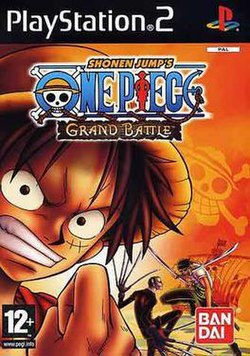
 One Piece Grand Battle! on PS2
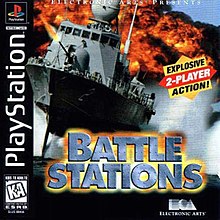
 Battle Stations on PlayStation
 Nobunaga no Yabou Online: Haten no Shou on PS2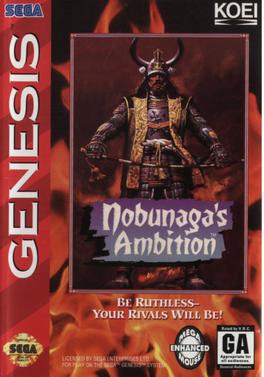
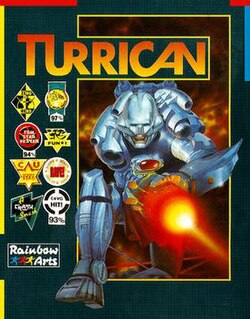
 Turrican Flashback on PS4
 The Next Tetris on PlayStation
 Dragon's Lair on DS
 Chessmaster II on PlayStation
 The Chessmaster 3-D on PlayStation












 Another SquareThought Site