

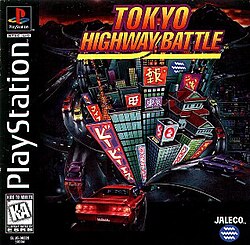

Tokyo Highway Battle arrives like a neon-bathed cassette tape you dug up in your parents' attic: clearly of its era, oddly charming, and carrying the faint whiff of burnt rubber and ambition. Known in Japan as Shutokou Battle: Drift King, this mid-90s PlayStation racer from Genki aims to capture the illicit rush of highway duels on Tokyo's expressways. The publicly available facts are concise: the game offers three tracks, supports single-player and multiplayer, and was received as a competent but not genre-defining outing by contemporary critics. Famitsu's take praised the controls and balance, calling that balance 'perfect', while Next Generation gave it a respectable three out of five stars and summarized it as 'not far behind' the best racers of the time. My job here is to pry open the hood, count the pistons, and see whether the driving feels like precision engineering or a greased pig. If you're buying Tokyo Highway Battle for authenticity to the Shutokou Battle lineage or the historical curiosity of a pre-Tokyo Xtreme Racer Western release, you'll want a review that talks shop: handling fidelity, AI behavior, collision rules, level streaming, and where the PlayStation hardware is being asked to bend like a stunt driver. I'm going in with a technical magnifying glass and a sense of humor; think forensic mechanic meets stand-up comic. Buckle up.
On paper Tokyo Highway Battle is blissfully simple: three courses mapped to the highways of Tokyo, races that can be contested solo or with a friend, and a context that places you in traffic rather than an empty arcade circuit. Simplicity is actually a feature here - fewer tracks means the designers can tune those environments precisely. Famitsu's praise for the controls and the 'perfect' balance appears grounded in how the car responds to player input: steering feels intentionally taut, with a predictable under/oversteer envelope that makes each turn a test of throttle modulation rather than blind faith. The PlayStation era is littered with racers that cheat either by slapping on an absurd grip curve or by turning the steering into a binary button; Tokyo Highway Battle favors consistency, which is a technical achievement for a 32-bit debut. Handling model: Tokyo Highway Battle leans toward an arcade-adjacent simulation. Braking transfers weight in an expected manner, and applying throttle mid-corner will upset the rear end in a way that rewards countersteering and measured inputs. There's no complex tuning menu or telemetry; the 'model' is baked into the physics and made accessible through controls. This is likely a conscious trade-off: Genki aimed to deliver visceral highway duels rather than a parts catalog for gearheads. The result is a satisfyingly tactile driving feel on a standard DualShock/D-pad setup, which aligns with Famitsu's note that the controls are a highlight. AI and traffic interaction: One of the game's more interesting technical design choices is the presence of regular road vehicles on the courses. This isn't just cosmetic; traffic acts as a dynamic obstacle layer that both raises the skill ceiling and exposes the AI's limitations. Opponents will weave and attempt passes, but their behavior remains fairly scripted - you'll see repeated lines and predictable gap exploitation. That predictability actually becomes part of the puzzle: understanding how the CPU drivers react to traffic lets you plan overtakes or force errors. Collisions with traffic are handled in a way that penalizes sloppy driving but avoids the simulation-level damage modeling that would ruin the flow. Expect positional displacement and speed loss rather than long-term mechanical failure; it's a gameplay decision that keeps races competitive rather than punitive. Pacing, balance, and progression: With just three tracks, balance is not an accident. The designers reused and remixed track elements, ensuring each circuit tests a different skill set: sustained speed and drafting on the longer stretches, precision through tighter elevated sections, and situational awareness where traffic density spikes. Famitsu's 'perfect' balance likely references how the game curves its difficulty: early races teach you to be smooth, mid-tier events throw denser traffic and sharper turns at you, and multiplayer throws a wild card into the mix. Next Generation's judgment that the game 'doesn't rank up there with the best of them, but it isn't far behind' feels apt; Tokyo Highway Battle isn't reinventing the physics textbook, but it reads it well for what it aims to be. Controls and input latency: From a technical standpoint, the input-to-response chain is clean. Steering input translates quickly into yaw changes, and braking/acceleration ramping is implemented with minimal latency. There are no obvious frame-synced input quirks or controller polling oddities, which was a common issue in some early console racers. If you prefer precision, the game obliges; if you prefer sliding for style points, the physics accommodate that too - albeit within reason. Multiplayer and competitiveness: The two-player split-screen mode is classic PlayStation economy: same hardware, same rendering constraints, halved frame budgets. Despite this, the split-screen remains playable and retains most of the driving fidelity of single-player. The technical compromises - reduced draw distance, simpler roadside detail - are sensible and never sacrifice core gameplay readability. If you plan to challenge a friend, the game becomes more about tactical aggression than uncompromising top-speed runs, because human opponents are less forgiving and more capable of exploiting traffic-induced chaos. Limitations and quirks: The game's narrow scope is both a virtue and a limitation. Three tracks mean repetition sets in, and the AI, while competent, is limited in depth. Visually and technically, Tokyo Highway Battle displays the usual early-PlayStation signs: pop-in, texture warping and occasionally polygonal shimmer. These are not catastrophic, but they're noticeable. The collision system is robust enough for gameplay but lacks finesse when it comes to secondary effects like car deformation or complex ricochet physics. The net effect is a racer that focuses on tight driving loops and traffic negotiation rather than open-ended experimentation with vehicle dynamics.
Tokyo Highway Battle's graphical presentation is archetypal PlayStation mid-90s: polygonal cars with flat-shaded and low-resolution textures, a restrained palette, and an emphasis on performance over eye candy. The hardware constraints of the PSX are felt everywhere - geometry budgets are modest, texture memory is sparse, and draw distance is capped. Genki uses these limits pragmatically: roadside clutter is suggested rather than modeled, and the sense of speed is achieved more through camera motion, motion blur tricks, and roadside repetition than through dense environmental detail. Pop-in and level streaming are the game's most visible technical trade-offs. Objects and traffic occasionally appear with a stuttering 'pop' as they are streamed in, which can be jarring when it coincides with a high-speed approach. The art team mitigates this with clever LOD (level of detail) choices - distant geometry gets simplified rather than abruptly replaced - but you will still notice the seams. Texture warping and affine texture artifacts are present in corners and on low-angled surfaces, which is a byproduct of the PlayStation's rendering pipeline. These issues don't break the driving experience, but they do remind you you're running on silicon from an era before ubiquitous hardware T&L and large texture caches. Camera and HUD: The camera framing is functional and leans toward an over-the-shoulder perspective that accentuates speed and nearby traffic. It does its job: horizon lines remain stable, and there's enough visual information to judge braking points. The HUD is minimal and unobtrusive, giving you speed, position and lap info without stealing screen real estate - an appreciated design choice that keeps player focus on the road. Animation and visual feedback: Vehicle animations (wheel rotation, slight body roll, basic suspension bob) are present but economical. The most important visual feedback - skidmarks, sparks, and minor collision effects - are implemented with restraint. This conserves CPU time for handling and AI, which is the right call given the game's priorities. Lighting is simple, relying on baked vertex colors and a few specular highlights; there's no dynamic lighting drama, but that's consistent with the era and budget. Overall impression: Visually, Tokyo Highway Battle doesn't attempt to be a showcase title. Instead it opts for clarity and performance, which suits the gameplay. If you're expecting photorealism, you will be disappointed. If you want legible visuals that support a tense, traffic-dodging racing experience, the game's technical art direction is coherent and effective.
Tokyo Highway Battle is a pragmatic, well-tuned entry in the mid-90s racing field. It embraces constraints - only three tracks, modest audiovisual ambition, and a focused handling model - and turns them into a consistent gameplay experience. Critics at the time reflected this view: Next Generation placed it close to the better racers without claiming it was the apex, while Famitsu singled out the controls and balance as standout features. Technically, Genki prioritized responsive input, a predictable physics envelope, and readable visuals over flashy but shallow spectacle. That decision yields a racer that feels honest under the hood: what you steer is what you get. For the retro racer or the curious driver interested in the lineage that would eventually spawn the Tokyo Xtreme Racer series, Tokyo Highway Battle is worth a spin. It won't convince you it's a lost masterpiece, but it will teach you to respect good tuning and sensible design. At a score of 6.5/10, it's recommended for fans of period driving sims, highway duel aficionados, and anyone who likes their nostalgia served with a side of competent engineering and occasional texture pop-in. Play it with a friend in split-screen for the best long-term mileage - you'll get the most value from the game's core strengths: tight controls, competitive balance, and the small thrill of dodging traffic at 200 kph while your buddy insults your drifting technique from the other half of the TV.
 One Piece Grand Battle! on PS2
 Bakugan Battle Brawlers: Battle Trainer on DS
 Roary the Racing Car on DS
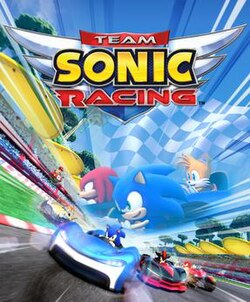
 Team Sonic Racing on Switch
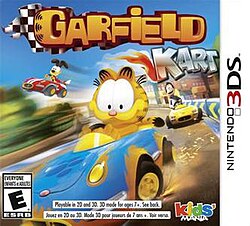
 Garfield Kart: Furious Racing on Switch
 Ben 10: Galactic Racing on PS3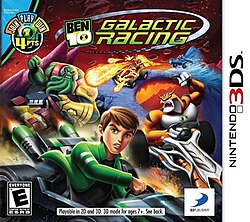
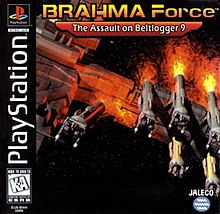
 BRAHMA Force: The Assault on Beltlogger 9 on PlayStation
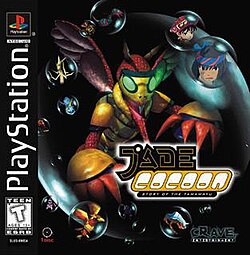
 Jade Cocoon: Story of the Tamamayu on PlayStation
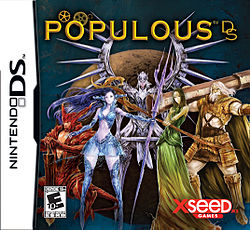
 Populous DS on DS
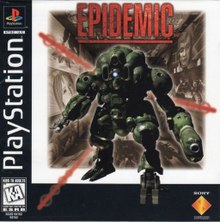
 Epidemic on PlayStation
 Kileak: The DNA Imperative on PlayStation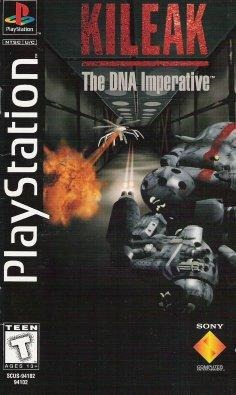












 Another SquareThought Site