



Tokimeki no Houkago is the Tokimeki Memorial series' polite, slightly odd answer to the question: what if falling in love required answering pop culture trivia correctly? Released on the PlayStation in 1998, this title strips away most of the series' stat-building complexity and hands you a microphone-less, romance-flavored quiz show. If the original Tokimeki Memorial gives you the long, slow simmer of teenage social simulation, Tokimeki no Houkago is the kitchen timer Konami set off to see whether you'd rather woo Shiori Fujisaki with knowledge of 1990s manga or with a bouquet. The result is a compact, curious experiment that will make series fans smile, trivia junkies nod approvingly, and anyone who thought dating sims were inherently subtle reconsider their life choices.
Gameplay here is refreshingly simple and quietly brutal. You pick a partner from among the female cast of the first Tokimeki Memorial - because nothing says 'romance' like making your love life contingent on how well you remember sports stats and paperback titles from the 90s. Unlike the Private Collection spinoff, which quizzes you on in-universe trivia about the girls themselves, Tokimeki no Houkago quizzes you on real-world topics of the era: sports, manga, books, and the sort of general knowledge you either paid attention to in school or acquired through an unwanted childhood obsession with magazines. The prospect of 'winning' a girl's affections by answering a question about baseball trivia is treated with all the solemnity of a school assembly. Questions are presented in classic quiz format - multiple choice, mercifully clear - and the game's structure is built around picking the right answer more often than not. This approach reduces romance to performance: flirtation becomes accuracy. It is a bold design choice, one that reads like an academic hypothesis condensed into a PlayStation disc. It also makes for an unexpectedly replayable experience. If you love a character, you can play through again and again until you have the recall of a dedicated fan or the luck of someone who learned everything from watching TV game shows. The game is notable in the series for allowing you to pick a male partner once in a while. You can choose Yoshio Saotome, the resident info otaku who, according to the manual (and our dreams), knows more about the heroines than anyone else. If you manage to 'win' Yoshio, you get one of the more peculiar endings in the franchise: a bittersweet promise to help each other find romantic partners. It reads like the game's quietly self-aware way of saying, 'Yes, even our geeky friend deserves an ending. Also, this is how bad endings get dressed up as content.' Endings in Tokimeki no Houkago are short but meaningful to fans. Where the main games often left some conclusions to imagination, this quiz spin-off expands on canonical resolutions by serving up illustrated endings with slight animation. For example, a player who courts Ayako Katagiri will get an ending that hints at her dreams of going to an art school in Paris, complete with a farewell scene at the airport. It is a small, affectionate gesture - snapshots that feel like postcards from other possible lives. The animations are not cinematic masterpieces, but the added movement makes the conclusions feel earned rather than tacked on. Mechanically, this is not the deepest of Tokimeki experiences. There are few layers of stat management, no elaborate scheduling minigames, and no late-night conversations stretching for an hour while your social stats climb like a spreadsheet. What the game lacks in complexity it makes up for in focus: everything is directed at the quiz. This is a blessing if you want a quick, nostalgia-heavy slice of Tokimemo without committing to a multi-hour social simulation, and a curse if you were hoping to grind your way into someone's heart by enrolling them in every club imaginable. The interface treats the proceedings with deadpan efficiency: pick a heroine, answer questions, unlock pictures and endings. The scoreboard of your romantic life is essentially your quiz score.
Graphically, Tokimeki no Houkago is a period piece in the most literal sense. The PlayStation hardware gets pressed into service for character portraits, expressive but mostly static illustrations, and a handful of charmingly limited animations that were considered cute in 1998 and still hold up if you remove unreasonable expectations. The game relies heavily on the original Tokimemo art assets and reuse is part of the charm: if you liked the way Shiori blinked in the first game, you'll be happy to see the same expression doubled down in quiz-closing artwork. Visual polish is practical rather than showy. Backgrounds are understated, as though a responsible adult designed a school hallway and decided not to distract from the main attraction: the girls. The slight animated sequences during endings are small flourishes - a hair flip here, a train pulling away there - that add warmth without breaking the budget. If the PlayStation era had a slogan for romantic interludes, it would read: minimal frames, maximum longing. There are also galleries and image rewards for doing well in the quiz, which will appeal to compulsive completionists and anyone who enjoys collecting visual rewards for not being terrible at trivia. The pictures are nicely drawn and occasionally reveal alternative moments from the main game's endings, which makes the title feel like a consolation prize that learned to be sincere. In short, the graphics do exactly what they're supposed to: look pleasant, reward effort, and occasionally remind you that you are, in fact, playing a Konami dating sim derivative and should probably be slightly embarrassed about how much you care about pixelated goodbyes.
Tokimeki no Houkago is not a masterpiece, and it doesn't try to be. It is a focused experiment that asks whether trivia can replace conversation and finds that, for a surprisingly large number of cases, it can. The game works best for two audiences: diehard Tokimeki Memorial fans who want extra scenes and endings for their favorite heroines, and people who genuinely enjoy quiz games with a romantic veneer. If you fall into both categories, this is the digital equivalent of finding a mixtape in a time capsule. For everyone else, its appeal is more niche. The lack of deeper social systems will make it feel light if you came for the long burn of stat optimization; conversely, the romance is never as convincing as a well-timed heart-to-heart in the main series. The Yoshio ending is an odd, slightly melancholic highlight, which proves the game can surprise you with sly tenderness when it wants to. The small animations in the endings and the expanded epilogues for characters like Ayako give the game some emotional weight, even if that weight is carried in a paper airplane. Score justification: 7 out of 10. Tokimeki no Houkago earns points for charm, uniqueness within the franchise, and honest execution of its quiz-centric premise. It loses a few because its narrowness limits audience appeal and the audiovisuals, while pleasant, won't win any modern awards. If you own a PlayStation, like Konami's vintage romantic aesthetics, and either have a cache of useless 1990s knowledge or the patience to acquire one, this is a neat curiosity worth chasing down. If you are hoping for the layered social life of a full Tokimeki Memorial title, you might want to sit this one out - unless you enjoy being judged by multiple choice, in which case consider it courtship with a buzzer.
 Tokimeki Memorial: Taisen Puzzle-Dama on PlayStation
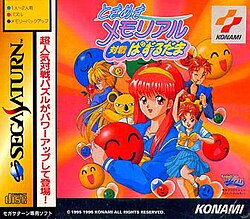 Tokimeki Memorial Selection: Fujisaki Shiori on PlayStation
 Test Drive: Off-Road 2 on PlayStation
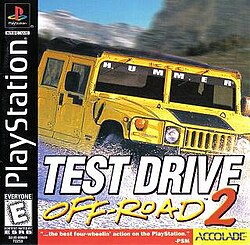 Test Drive: Off-Road 3 on PlayStation
 Test Drive: Off-Road on PlayStation
 Dave Mirra Freestyle BMX: Maximum Remix on PlayStation
 Metal Gear Solid: Integral on PlayStation
 ISS Pro Evolution 2 on PlayStation
 Pro Evolution Soccer 2 on PlayStation
 Metal Gear Solid 3: Snake Eater on PS2
 Dance Dance Revolution Best Hits on PlayStation












 Another SquareThought Site