

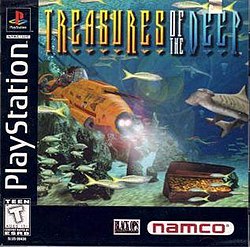

Treasures of the Deep is one of those PlayStation oddballs that quietly slipped into the late 90s catalog and then refused to behave like a standard polygon shooter. Built by Black Ops Entertainment and scored by Tommy Tallarico, it mixes free-roaming 3D exploration with mission-driven objectives under hundreds of meters of water. If you enjoy the idea of navigating a claustrophobic blue world where fish, pirates and moral accounting all share the same pressure suit, this game is a technical curiosity worth revisiting. From a systems perspective it's an exercise in balancing PS1-era constraints - limited draw distance, low texture memory and tight polygon budgets - with an ambition to create a convincing, reactive undersea ecosystem.
At its mechanical core Treasures of the Deep splits play between a diver in wetsuit and a succession of one-man submersibles. Missions range from capping oil leaks and salvaging shipwrecks to rescuing crash victims and blowing up hostile installations. Treasures are explicitly secondary; the game nudges you toward objective completion while still rewarding curiosity with ancient gems used to upgrade weapons, equipment and subs. That upgrade loop is an elegant piece of design for the hardware: rather than lean on currency menus or grinding, the gems gate progression and create meaningful choices about subsystems to improve. Controls and camera are where a submarine game either becomes sublime or infuriating, and Treasures mostly leans toward the former. The world is presented as a free-roaming 3D ocean; turning and momentum are deliberately ponderous compared with on-foot shooters, which sells the sense of mass and water resistance. Developers used control friction and differing sub handling to give each vehicle a distinct signature: early wetsuits feel nimble but fragile, while later subs are slower but pack weapon and survivability gains. That mechanical variety keeps level scripting interesting because the same geometry plays differently depending on which vehicle you're piloting. A compelling technical detail is the game's resource and scoring interplay with the wildlife. Sharks and hostile creatures have attack behaviors that are simple, but effective: they can ambush from behind, react to blood in the water, and pursue based on proximity triggers. The game even fines players for killing harmless or endangered species - a gameplay decision with technical ramifications. Implementing a scoring penalty tied to entity classification implies the engine tracks creature states, friendly/hostile tags and player transgressions across a mission, then surfaces those penalties at mission end. For a single-player PS1 title this is a neat bit of systemic design that raises the stakes without adding a complex ruleset. Mission design is varied across 14 locations, from Bermuda Triangle-esque mysteries to Antarctic ice caverns, and includes an unlockable Atlantis level and a temporary 'Shark Attack' bonus mode. The missions feel curated: objectives like capping leaks or salvaging shipwrecks require players to navigate three-dimensional space with verticality and tight corridors. Level scripting emphasizes tension - you may graze a reef and suddenly draw the attention of predators, or turn a corner and find a timed objective. That emergent-scenario approach relies on relatively light AI but smart encounter placement, and the developers deserve credit for designing missions that feel larger than the graphical fidelity might imply. Where the game frays is in the trade-offs inherent to the hardware: collision fidelity and hit detection can feel loose, and some of the control weight makes precise platforming-esque maneuvers frustrating. Also, mission checkpoints are conservative, so mistakes can force replaying long stretches. Still, the game's blend of resource management, vehicle progression and variety of objectives gives it a distinctive mechanical identity; it's not just an underwater shooter, it's an undersea mission-sandbox with an economy and ecosystem working behind the curtains.
The attempt to render a convincing undersea world on the PS1 is the most technically interesting aspect of Treasures of the Deep. Black Ops used 16 levels of distance fog - yes, 16 - as an explicit rendering and gameplay tool. On one level distance fog is a polish trick: it hides the console's limited draw distance and the abrupt pop-in of distant geometry. On another it becomes a gameplay affordance, softening how objects and creatures approach and lending a cinematic sense of depth. Rather than being a mask for shortcomings, the fog is integrated into level design to create mood and to telegraph threats as they emerge through layers of blue. Polygon budgets and texture memory were clearly managed aggressively. Models are low-poly compared with modern standards, but careful animation and clever posing make the wildlife feel alive. Critics at the time noted the convincing animation and wildlife behavior; from a technical standpoint that's about making the most of a small animation set and timing it to camera and AI triggers to suggest more complexity than actually exists. Texture work is functional: reefs, wrecks and seafloor tiling avoid high-frequency detail, but silhouette clarity and contrast help readability in low-light cavern sections. Sound design and music also play a major role in perception of fidelity. With Tommy Tallarico providing the soundtrack, the game uses ambient soundscapes and sharp SFX to sell danger and scale - creaking hulls, distant sonar pings and the sudden splashing of an attack. Because the PS1 audio subsystem cannot render 3D positional audio with accuracy, the designers lean on volume, reverb cues and texture of sounds to place threats off-screen. That approach complements the fog technique: you hear something before you see it, then watch it emerge through a blue mist. There are limitations too. Texture warping, lower-resolution bitmaps and occasional frame-rate fluctuation under complex scenes are reminders of the platform's constraints. Some environments rely heavily on color grading and fog density to maintain mood instead of geometric diversity, which can make certain levels feel visually similar after long play sessions. Still, given the era and platform, the visual and audio choices are more artful than apologetic - they exploit constraints to create atmosphere.
Treasures of the Deep is a technical love letter to constraint-driven design. Rather than pretending the PlayStation could render an infinite ocean, Black Ops chose targeted tricks - layered fog, vehicle handling differentiation, tight mission scripting and audio cues - to craft a believable undersea adventure. That makes the title less about raw graphical horsepower and more about systems engineering: balancing AI triggers, resource progression and sensory cues to evoke tension and curiosity. Reception at the time split along expectation lines: publications that valued atmosphere and design ambition scored it highly, while outlets looking for tight modernized shooters found flaws in pacing and presentation. Today it reads as a fascinating case study in how to make a themed 3D world on constrained hardware. It's not perfect: control weight, occasional collision oddities and hardware artifacts show their teeth. For players who appreciate technical craft and mood over flashy polygon counts, however, Treasures of the Deep remains a charming, sometimes tense reminder that good design can make limited technology feel larger and stranger than it is. Dive in if you want an undersea sim that prioritizes systemic depth over graphical bravado.
 Deep Sky Derelicts: Definitive Edition on PS4
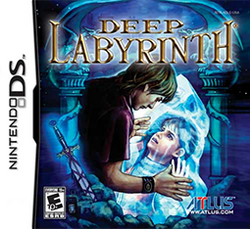
 Deep Labyrinth on DS
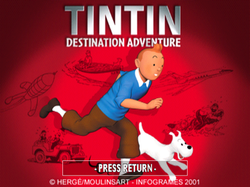
 Tintin: Destination Adventure on PlayStation
 One Piece Grand Adventure on PS2
 Taiko no Tatsujin: Dokodon! Mystery Adventure on Switch
 Onimusha: Dawn of Dreams on PS2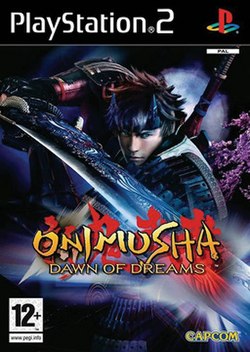
 Knockout Kings 2001 on PlayStation
 Black Dawn on PlayStation
 Knockout Kings 2000 on PlayStation
 NCAA March Madness 2001 on PlayStation
 007: The World Is Not Enough on PlayStation












 Another SquareThought Site