



Twilight Syndrome: Kyūmei-hen is the second volume of Human Entertainment's original PlayStation pair that tried to bottle the specific dread of late‑90s Japanese school ghost stories. Technically it's fascinating because it isn't content to hide behind the PS1's limitations - it leans on them, and on a handful of creative workarounds, to craft an experience that's more about atmosphere engineering than raw polygon counts. Kyūmei-hen continues the storyline started in Tansaku-hen (the two were originally one game split due to tight schedules), and it inherits the same mix of side‑scroll exploration, visual‑novel scripting and decision branching. If you're reading this expecting a run‑and‑gun or a tech demo, breathe easy: this is an audiovisual puzzle of pacing, sound placement and compositing tricks.
Kyūmei-hen's gameplay is a hybrid of side‑scroll exploration and visual‑novel branching, organized into discrete chapter scenarios. Each chapter opens with a dialog scene where the three protagonists chatter about a rumor, followed by a on‑rails walk through a school corridor or neighborhood rendered with a pseudo‑3D effect. Movement is essentially side‑scroll: the camera framing and level art give an illusion of depth (objects slide by at different rates, doorways recede), while actual player agency is channeled through investigative choices and dialog branches rather than free movement or combat. Periodically the game will switch out of the scrolling sections into static images with scrolling text - a tried‑and‑true method for emphasis and pacing that works here because the developers use the stills as narrative beats rather than filler. The decision points are the mechanical backbone: you choose what to ask, where to go, sometimes which friend to follow. Correct choices lead to normal or best endings for the scenario and unlock the next chapter; incorrect choices force a retry. This binary, retry‑centric structure reads like an old school testing apparatus for narrative designers - it's unforgiving, but it trains players to read tone, environmental cues and audio hints. Kyūmei-hen also preserves a recurring on‑screen heart rate monitor: it's a diegetic HUD that spikes when spirits are near, a clever biofeedback cue that doubles as tension meter and gameplay signal. The structure is simple but precise: the game is less about mechanics depth and more about the discipline of listening, reading and selecting with consequences.
Graphically, Kyūmei-hen is where creative production techniques outmuscle polygon budgets. The first two Twilight Syndrome volumes use a pseudo‑3D presentation for levels - corridors, classrooms and libraries rendered with layered background planes - but the characters are a different technical story. Human composite filmed actors walking in front of a blue screen and used that footage to create the in‑game characters. That chroma‑key approach gives the protagonists an uncanny, low‑frame, almost ghostlike motion: it's alive in a way sprites often weren't, yet it sits weirdly against the static or parallaxed backgrounds. In a modern context this looks like an odd hybrid between FMV and spritework, but at the time it was a bold way to add human presence without full 3D models. Text and still images are used deliberately: still scenes can be high‑contrast, photographic, and the scrolling text presentation controls the rhythm of reveals. The visual tradeoffs are obvious - limited resolution, blocky textures and the PS1's usual affine warping show up under scrutiny - yet the game's art direction compensates by leaning into mood. Shadows, shot composition, and the occasional sudden freeze frame create horror beats that the hardware otherwise couldn't sustain through polygonal fidelity alone. Kyūmei-hen's visuals are not about fidelity; they're about composition and the uneasy realism that blue‑screen actors bring when mixed with low‑res backgrounds.
Kyūmei-hen is a technical curio that still holds up as an audio‑first, composition‑driven horror experience. Where contemporary PS1 titles chased polygons and texture maps, Human Entertainment experimented with 3D sound placement, live‑action compositing and diegetic UI elements like the heart rate monitor to create immersion. The consequence is a game that rewards patient, detail‑oriented players: listen closely with headphones, read environmental text carefully, and the game will speak to you. Weaknesses are practical - aging visuals, rigid branching that forces retries, and the unavoidable language barrier (the series was never localized, and the games are text heavy). The backstory of the release matters too: director Goichi Suda stepped in late and the original ten scenarios were split into two volumes, which explains why Kyūmei-hen sometimes feels like the tail end of an already‑rolling design rather than a standalone evolution. Still, for technically curious players and horror aficionados who want to see how designers made atmosphere with constraints, Kyūmei-hen is a rewarding play. It isn't flawless, but it's an effective demonstration of creative engineering on the PlayStation: low poly budgets, live‑action compositing and focused sound design combined to scare people in 1996, and that craft still reads as intelligent and specific today. Score: 7.5/10 - a strong, atmosphere‑first title whose innovations outweigh its outdated veneer, but whose accessibility is hampered by language and the era's mechanical firmness.
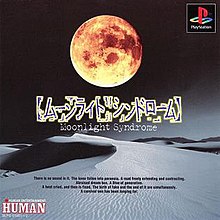 Twilight Syndrome Saikai on PlayStation
 Twilight Syndrome: Tansakuhen on PlayStation
 Tintin: Destination Adventure on PlayStation
 One Piece Grand Adventure on PS2
 Taiko no Tatsujin: Don to Katsu no Jikū Daibōken on Switch
 Taiko no Tatsujin: Dokodon! Mystery Adventure on Switch
 Fire Pro Wrestling: Iron Slam '96 on PlayStation
 Clock Tower: The First Fear on PlayStation
 Mikagura Shōjo Tanteidan on PlayStation












 Another SquareThought Site