



By the turn of the millennium, survival-horror had already put its fingerprints on the PlayStation, but the Twilight Syndrome series occupied a quieter, more schoolyard corner of the genre: intimacy over spectacle, rumor over rampage. Saikai - literally 'Reunion' - arrives as a continuation of that particular unease, a PlayStation title that trades chainsaws and night-vision for whispered urban legends, the creak of a corridor and a heart monitor quietly ticking in the corner of the screen. The game's pedigree is not inconsequential; the series began under Human Entertainment and carried with it a design DNA that later influenced notable Japanese auteurs. Spike's Saikai steps in with a new, original scenario and the ambition to evolve a cult formula: polygonal characters, an on-foot photo mode to catch spirits on film, and an audio package that practically demands headphones. If you remember 1990s reviews that sniffed for atmosphere like a sommelier sniffing cork, consider this: Saikai is more about the lingering hint of something wrong than a sudden, theatrical scare, and that restraint is both its charm and, occasionally, its undoing.
Saikai retains the basic spine of the Twilight Syndrome house style: episodic investigations driven by high school (and a few junior high) students, each chapter beginning with gossip and culminating in an on-foot foray into the locations those rumors inhabit. The game's movement plays out in a side-scrolling space - a peculiar choice for a title that otherwise leans toward visual novel sensibilities - and the transitions into still-image narrative are frequent enough that players will need patience and a willingness to read. Dialogue choices are the fulcrum upon which your progress balances; the pacing is less twitch and more judgement. Those choices influence the investigation's outcome, steering you toward normal, best, or failed endings and gating subsequent chapters in the manner of classic adventure design. There is comfort here for the methodical player: every rumor is parsed into manageable beats, and success feels earned because it requires observation and, sometimes, the right question at the right moment. Saikai expands the formula with a small but meaningful set of mechanics. The photo mode is the headline novelty: you can walk through the school and frame shots of corridors, classrooms, and suspicious dark corners with the intent of capturing spirit phenomena. It's evocative in a way screenshots in glossy magazines cannot reproduce; the act of lining up a shot, hearing the distant hum of a fluorescent light and then clicking the shutter, makes the world feel lived-in. Mechanically it's simple - the photos feed into certain triggers and are often required to complete scenarios - but the psychological effect is disproportionate. The on-screen heart rate monitor is an old Twilight Syndrome staple that returns here as a steady indicator of presence: when it spikes, you know the game is attempting to lean on you. Choices can feel opaque to non-Japanese readers. Saikai, like its siblings, has not been localized, and the weight of its writing sits heavily on comprehension. This is not an action romp where body language will tell you everything; the game expects you to parse nuance from text. Checkpoints are generous in some chapters, stingy in others; failure is punitive only insofar as it sends you back to try another line of inquiry. For western players willing to surmount the language barrier or consult translations, the structure is rewarding. For those expecting a PlayStation-era horror that speaks with broad gestures, Saikai will feel introspective to the point of being inscrutable.
Graphically Saikai marks a clear departure from the earlier Twilight Syndrome games. Where the first entries used 2D characters composited over pseudo-3D backdrops - an offbeat visual trick that read as eerie on its own - Saikai embraces polygonal characters. The result is mixed. On release, outlets like Famitsu praised the polygon work as raising production values, and they were not wrong: polygons bring motion and perspective to environments that previously felt like photographed dioramas. That movement helps with immersion; characters turn, stutter, and animate in ways that convince the eye you are traversing a real school rather than reading captions. Where the title truly earns its atmospheric stripes is audio. The series' long-standing obsession with 3D sound is on full display, and the positional audio design is the game's MVP. Played through headphones at the sort of volume your parents would call excessive, Saikai stages ambient creaks with pinpoint accuracy: footsteps passing behind you, the distant click of a switch to your left, a whisper that threads between ears in a way the PS1 seldom managed. Later series entries leaned into binaural techniques, and Saikai's audio engineering feels like an earnest prelude to that approach. The polygonal models are serviceable rather than gorgeous by modern standards; textures are often low-resolution, lighting is pragmatic and occasionally flat, and the PS1's hardware limitations are never politely hidden. But the net effect is less about fidelity and more about mood: rough geometry that moves and sound that insinuates, together creating a tangible sense of place.
If you come to Saikai expecting set-piece frights and cinematic spectacle, you will walk away wondering why you were invited to a funeral tea party and not given a crash helmet. The game's strengths are precisely the ones that make it a niche pleasure: meticulous atmosphere, a tactile photo mode that encourages exploration, and an audio design that repays close listening. Its weaknesses are equally clear - untranslated text that narrows its audience, a reliance on reading and patience over immediate payoff, and graphics that show their PlayStation bones if you stare too long. For a 1990s reviewer trying to be fair and a little severe, Saikai is the sort of release you recommend to the curious rather than the casual: bring headphones, bring time, and if possible, bring a translation guide. Score-wise, it's a commendable effort that advances the series without reinventing it: 7.5 out of 10, for atmosphere first, action far down the credits, and one of the more quietly unnerving schoolyard jaunts the PlayStation has to offer.
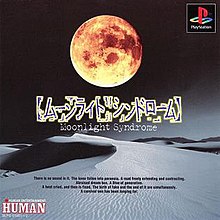 Twilight Syndrome: Kyuumeihen on PlayStation
 Twilight Syndrome: Tansakuhen on PlayStation
 Tintin: Destination Adventure on PlayStation
 One Piece Grand Adventure on PS2
 Taiko no Tatsujin: Don to Katsu no Jikū Daibōken on Switch
 Taiko no Tatsujin: Dokodon! Mystery Adventure on Switch












 Another SquareThought Site