



V2000 arrives a decade after the game that quietly redefined three-dimensional action on home computers. Known to purists as Virus 2000, this PlayStation incarnation is David Braben's attempt to transplant the eerie, tile-ruled world of Zarch into the late-90s polygon era while soothing one of the original's most notorious quirks: its unforgiving control. The marketing will tell you it is a sequel; the joystick will tell you whether you deserve that sequel. If you remember Zarch as the little lander that could-and often would promptly implode-V2000 is supposed to be the grown-up, slightly kinder descendant. If you never played the original, V2000 still wants to be taken seriously: it is a game about tidy destruction, patient piloting and landscapes that bleed when you fail to defend them. The stunt here is simple and old-fashioned: keep the ground green, shoot the invaders, and avoid becoming a smear of exploded ship on somebody's coastline.
V2000 is faithful to the austere logic of Zarch. You pilot a single, mouse/analog-stick-controlled lander with one downward thruster, tilt to translate, and shoot to remove the spawning menace. The central conceit remains unchanged: seeders infest the terrain, turning verdant tiles to sickly red; kill the seeders and their minions and you win the wave; let them terraform the world and you watch your score evaporate along with every green patch. That economy of threat is still the game's best idea-destruction is not simply score padding, it is landscape preservation. If that sentence sounds like it came from a design textbook, it's because V2000 wears its engine on its sleeve. There are no flashy power-ups to paper over poor aim, only smart missiles, a precious handful of smart bombs and your reflexes. The PlayStation controller mapping deserves attention. Frontier have sensibly moved away from the twitchy mouse-only idiom of the original and introduced analogue stick steering. The controls are noticeably more forgiving: the lander no longer detonates at the slightest twitch while sitting on its pad, and auto-centering tendencies in the analogue input make upright recoveries less mortifying. That said, forgiving is not forgiving enough for everyone. The lander still feels like a delicate, high-strung instrument rather than a plucky combat helicopter. Tilt too far and you can still find yourself inverted with a single stray thruster press converting a runway into a burial plot. Fuel management and the requirement to return to the launchpad to refuel remain intact, and the reward for a clean landing-however rare-still tastes faintly of triumph. Enemies keep their personalities. Seeders are slow, predictable, and always the priority because they directly alter the map. Support craft are sharper, more aggressive and pose the real threat to your hull integrity. Later waves introduce bomber-like high-altitude threats that rain virus packets with gleeful indifference, testing your ability to match speed and angle while bringing the cannon to bear. The radar screen-an essential little planning tool in the top-left corner of the HUD-remains vital. Destroyable scanning towers can blind chunks of the map, creating black squares where ambushes like to hide. Smart missiles and bombs are useful but finite; some enemies outmanoeuvre them, and the bombs' limited range makes them a last-resort gesture rather than a solution to difficulty spikes. Wave structure and scoring echo the original's philosophy. After each cleared assault you are awarded bonus points for how much landscape remains uninfected; after a quartet of waves the landscape itself mutates into a smaller island topography, with more water and less land-this increases pressure and forces more disciplined play. There are no hand-holding tutorials, only a brief manual and a brutal learning curve. V2000 seeks to be a game of practiced technique rather than instant gratification. For players who like their action with a side of consequence and a reason to aim precisely, V2000 is a rewarding, if sometimes relentlessly stern, experience.
On PlayStation hardware the landscape engine wears better clothes but keeps the same skeletal anatomy. The tiled, undulating terrain that was once a jaw-dropping showcase on the Archimedes now reads as solid, clean polygons with respectable particle effects. Dust in the air, splash effects against water, and the shower of virus particles are all present and do a competent job of selling motion and impact. Shadows and lighting are present but conservative; where the original Zarch once boasted pioneering light-sourced polygons and crisp shadow projection, V2000 prefers stability over ambition and opts for modest shading and particle-driven feedback. The result is a game that looks honest rather than flashy: it won't be the prettiest title in your PlayStation library, but it communicates what you need to know at a glance-enemy positions, infected tiles and the direction of incoming threats. The camera and draw distance are the real compromises. PlayStation-era polygon budgets mean the horizon sometimes pops and objects can appear suddenly from beyond the fog. The camera is serviceable but occasionally stubborn; it stays mostly behind the craft in a classic third-person fashion, though it can struggle during vertical climbs and tight manoeuvres, at times forcing you to trust the radar more than what you see on-screen. Performance is generally steady, but in busy waves the frame rate dips enough to be noticeable, reminding you that the engine is working to render many particle effects and moving objects simultaneously. For viewers with rose-tinted nostalgia for the original's trailblazing 3D, V2000's graphics are a polite update rather than a revolution.
V2000 is a curious exercise in restraint. It takes a landmark concept-the tile-based, infect-and-defend world of Zarch-and modernises it where it matters: control sensibilities and presentation. It refuses to indulge the modern trappings of power-ups and simplified difficulty, instead trusting players to learn the dance of tilt, throttle and precision fire. This is both admirable and limiting. The game rewards patience, discipline and an appetite for systems that punish sloppiness; it will frustrate those who prefer instant, colourful power fantasies. On the PlayStation it looks competent and runs well enough, though camera quirks and draw-distance pop-in occasionally interrupt the flow. For anyone who remembers the Archimedes demo Lander or revered Zarch as a technical milestone, V2000 is worth the pilgrimage: it is respectful, thoughtful and-comparatively-gentler. For newcomers it offers a distinctive flavor of action that is increasingly rare: low-tech, high-skill, and strangely satisfying. If you're seeking a flashy console shooter you will be disappointed; if you long to pilot a temperamental little craft and keep an endangered landscape alive by dint of careful flying and steady aim, V2000 will make you feel like the sort of pilot who deserves the title. Final verdict: an earnest, well-crafted sequel that doesn't quite soar to classic heights but lands with dignity. Score: 7.5/10.
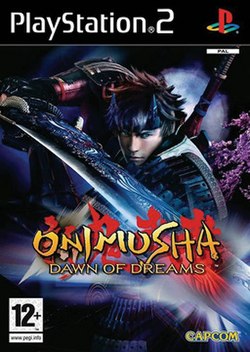
 Onimusha: Dawn of Dreams on PS2
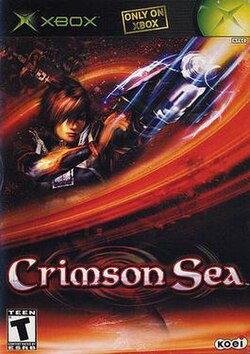
 Crimson Sea 2 on PS2
 Pirates: The Legend of Black Kat on PS2












 Another SquareThought Site