



If you picked up Vampire Hunter D on the PlayStation expecting a sumptuous translation of the moody anime and novels, you get a strange little half-measure: a game that wears its inspirations on its sleeve but stumbles over its own ambition. Victor Interactive Software has grafted the shadowy, gothic premise of the Bloodlust-era D onto a survival-horror structure very much in the mould of late-90s PlayStation fare - polygonal protagonists over pre-rendered backdrops, item-based puzzle progression and tense corridor encounters. For people who collect curiosities from the era, Vampire Hunter D is an intriguing footnote. For anyone expecting a polished survival-horror classic, it will feel like a castle with a few too many loose stones.
The mechanics will seem familiar to anyone who spent late nights with Resident Evil or the early 3D Castlevania experiments. Characters are rendered as full polygons against richly pre-rendered environments; exploration of Camila's castle is the game's central loop - search, collect, unlock, and solve - with a handful of platforming sequences thrown in when the designers remembered they were making a 3D game. D moves with two distinct personas: "battle mode," sword drawn, complete with an enemy lock-on and a modest combo set; and "search mode," sword sheathed, which makes rummaging through the environment less of a chore but leaves you impotent in the face of sudden attacks. The toggle between the two is simple in concept but it forces some awkward moments where you find yourself defenseless while fumbling for items. Combat introduces a few bits of color. D can perform a dash attack - run toward an enemy and unsheathe for a powerful strike - and the game offers blocking and three-directional dodges (via double-tapping d-pad inputs). Sub-weapons populate the inventory the way thrown knives once populated the pockets of any self-respecting 90s survival hero: wooden darts, flash bangs, grenades. Health and vampire power (HP and VP) are linked in a nicely thematic way: VP governs attack potency and the healing returned by blood pills, while potions restore HP at the cost of VP. Standing toe-to-toe with enemies and striking them to absorb blood raises VP, which in turn rewards aggressive play in a genre that habitually punishes it. Most distinctive is D's Left Hand system. The Left Hand operates on a meter that drains over time and fills when you absorb weakened foes. When charged, it allows D to unleash magic, heal himself, or - if you're lucky - gain an extra life signified by a hat-and-cape icon. This resurrection trick is theatrical, a literal ace up D's sleeve, and the Left Hand's resource management gives the game an additional layer beyond simple ammo counting. The inventory lives up to the era's expectations: maps, keys, environmental items to solve puzzles, and the now-familiar triage between limited healing supplies and offensive consumables. Where the game falls down is in execution rather than design. Reviewers at the time noted that added functions - jump, guard and strafe - should have liberated the player, but instead help create inconsistent and awkward controls. The extra mobility sounds good on paper, but the controls' implementation is the complaint GameSpot leveled most forcefully: flashy ideas undermined by clumsy responsiveness. Enemies and bosses vary, and there are three separate endings tied to exploration choices and story decisions, as well as three difficulty settings that alter item availability and enemy toughness. Those elements create replay value, but the core loop is hampered by combat that never reaches satisfying fluidity.
Graphically the game is a typical late-90s PlayStation oddity: pretty pre-rendered backgrounds that set tone and atmosphere, paired with polygonal characters and often stilted animation. The motion of D drawing and sheathing his sword receives praise for being convincingly weighty, yet many other animations feel undercooked, lending a stop-motion quality to encounters. The castle itself has moments of genuine mood - brooding corridors and gothic architecture that capture the series' bleak romance - but the character models and enemy animations frequently betray the hardware limitations and the developer's uneven polish. Critics at the time were divided: some saw competent aesthetic choices buried under technical hiccups, others heard the siren call of an unfulfilled license adaptation. If you strip away nostalgia, Vampire Hunter D looks like a game caught between cinematic aspirations and the PlayStation's polygonal reality.
Vampire Hunter D is best judged as a relic of a transitional time in game design. It attempts to synthesize the cinematic, melancholic world of the novels and anime with survival-horror mechanics that were only just starting to stretch beyond their Resident Evil roots. The Left Hand mechanic is an inspired touch, and the multiple endings and difficulty modes betray a team trying to add depth rather than just slapping a license onto a level pack. Unfortunately, control woes and inconsistent animation drag the experience down, and contemporary reviews were unforgiving - Metacritic aggregates a dismal 32/100, while outlets from GameSpot to Next Generation cited control and visual problems as major faults. Fans of Vampire Hunter D who want to experience a rare licensed experiment will find something to chew on here, and collectors of late-90s PlayStation oddities might smile at its ambition. Serious survival-horror players, however, will likely find it a frustrating stop on the road to better things. In short: an interesting idea, patched together with uneven craftsmanship - intriguing, but not recommended as your introduction to the series or to the genre.
 Tousouchuu: Shijou Saikyou no Hunter-Tachi Kara Nigekire! and Chou Tousouchuu Atsumare! Saikyou no Tousousha-tachi Combat Double Pack on Switch
 Monster Hunter Rise on PS5
 Monster Hunter Rise on Switch
 Obscure: The Aftermath on PS2
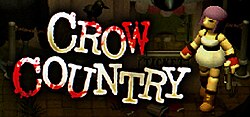
 Crow Country on PS4
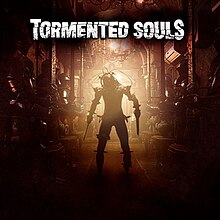
 Tormented Souls on PS5
 Green Hell on Xbox Series X/S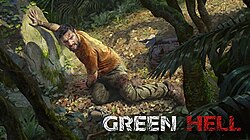
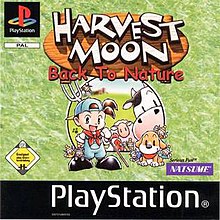 Reel Fishing II on PlayStation
 Rami-chan no Ōedo Sugoroku: Keiō Yūgekitai Gaiden on PlayStation
 Reel Fishing on PlayStation
 Contender on PlayStation












 Another SquareThought Site