

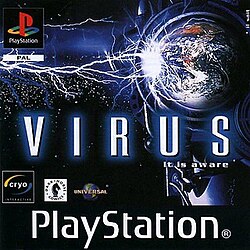

Tie-in games have a reputation for being rushed, cash-register-shaped apologies for art. Virus: It is Aware leans into that reputation with the commitment of a student who turned in an essay written in the taxi en route to class. Based loosely on the 1999 film and the Dark Horse comic it sprang from, Cryo Interactive's effort is an action-horror ride that tries to juggle survival mechanics, cinematic moments, and a cast of victims-turned-monsters. What it mostly juggles are missed opportunities. The premise is irresistibly pulpy: an alien electrical parasite called the 'Evil' infects a space station, then hops to the ship The Electra and begins turning crew into cyborg abominations. To avoid being limited to a single boat, Cryo relocates much of the dread to the Nakomi hotel, where our heroine Joan Averil, a police criminologist, and her partner Sutter investigate strange events. Joan wants answers. The game wants bullets. The audience wants something that feels finished. Few of us get what we want.
If the characters in Virus deserve an arc, the gameplay is the editor who ate half the pages. You control Joan in a third-person viewpoint with a default camera tucked behind her back, and you trudge through eleven levels facing forty enemy types, five bosses, and nine weapons. For a survival-horror fan, the checklist reads like a love letter to Resident Evil: limited resources, exploration, and a steady drip of enemy encounters. Yet the illusion of tension is undercut by control problems that suck oxygen out of dramatic moments. Joan's emotional investment in finding her brother Thomas, and the mounting dread as the infestation spreads, ought to be mirrored by tight, expressive controls that make every firefight feel consequential. Instead, Joan handles like a middle-aged sedan trying to salsa dance. Response lag and a lack of movement nuance-no sidestep, no roll, no strafing in the final release-turns even simple enemy encounters into awkward choreography. Sutter's arc is short and classical: partner, witty foil, casualty. He exists mostly to give Joan someone to talk to and a sacrifice that ups the stakes when he dies aboard The Electra. The game markets this as emotional punctuation, but when clumsy controls steal your focus during the moments meant to sting, the intended tragedy reads like a plot memo. Thomas, the missing brother who works on The Electra, is the emotional MacGuffin. Joan's desire to find him and save him humanizes her among the moaning metal and buzzing implants, but the payoff is lukewarm: he is found, the ship explodes, and then the ending camera pans to the space station, reminding us that the true antagonist was never a person but a spreading corruption. That final zoom out does the best work of character development in the entire game: it treats the infestation as a character unto itself-relentless, efficient, and inexorably spreading. Enemies are conceptually interesting because they were once human crewmembers; the game's lore implies tragic conversions rather than cartoonish monsters. This could have been a narrative thread: Joan encountering fallen colleagues who register for a beat of recognition before the implants take over. The game only hints at that mournful resonance, too often dropping the emotional thread in favor of room-clearing. Passwords let players skip to later levels, which is convenient and practically a confession that some segments are better experienced as highlights rather than full playthroughs. Boss fights exist, but poor camera placement and clunky aiming rob them of the cinematic confrontation they hope to deliver. The nine weapons give you choices, but aiming up and down is absent, sniping is nonexistent, and combat often feels like firing into a vat of noise. Where the gameplay and the characters should feed each other-Joan's growing resolve mirrored by more confident controls, or Sutter's decline amplified by tense, desperate scraps-the mismatched design leaves character beats feeling like an audiobook without good narration. The game attempts moments of rescue and investigation, and it does have the bones of a compact survival-horror experience, but technical limitations and design omissions blunt the narrative's emotional teeth.
Graphically, Virus is a case of two personalities: the cutscenes try to seduce you with cinematic intent, while the in-game visuals greet you like a computer from the previous decade trying to impersonate modern fear. Critics at the time singled out ugly in-game graphics and technical shortcomings, and that critique remains fair. Environments are blocky, textures muddy, and animation often stutters rather than flows. The Nakomi hotel and The Electra show flashes of atmosphere-shadowy corridors, flickering consoles-but these moments are intermittent and rarely supported by detail. Music and sound design follow suit and mostly fail to lift scenes; the score doesn't haunt, it hovers, and the effects rarely create the visceral dread the concept deserves. Cutscenes are the game's small mercies. They present a cleaner, more composed version of the story and characters, allowing Joan, Sutter, and Thomas to look like real people rather than moving mannequins. Those glossy moments highlight how the game might have been stronger if its in-play presentation matched its cinematic ambitions. Instead, the split personality makes the narrative feel uneven: the story wants operatic beats, but the gameplay gives it a stage with a couple of missing boards and a flickering spotlight.
As a character study Virus: It is Aware is an earnest but hamstrung experiment. Joan is a likable lead with a believable motive; Sutter plays the predictable but sympathetic partner; Thomas is the tether that gives Joan stakes; and the Evil is a tidy, ominous force that deserved a better stage. The game flirts with meaningful arcs-a sister desperate for her brother, a partner who pays the ultimate price, a parasitic antagonist that twists the familiar into the uncanny-but it rarely delivers the resonance those arcs demand. Technical flaws, poor handling, lackluster in-game visuals, and omissions in movement and aiming undermine narrative intent. The ending's ominous zoom toward the infested space station is the review's most honest moment: it says the threat continues, that the story could have been larger and deeper if given the chance. Cryo tried to transplant a cinematic property into interactive form and, in doing so, turned potentially mournful human stories into a checklist of mechanics that never fully gel. For curiosities, fans of late-90s horror tie-ins, or people who enjoy dissecting what went wrong, it's worth a look. For anyone hoping for a polished survival-horror character study, bring a stiff tolerance for disappointment and a healthy sense of irony.
 Virus: The Battle Field on PlayStation
 Time Commando on PlayStation
 Disney's Chicken Little: Ace in Action on PS2
 Onimusha: Dawn of Dreams on PS2
 Action Man: Operation Extreme on PlayStation
 Door Kickers: Action Squad on Switch
 Atlantis III: The New World on PS2
 Hard Boiled on PlayStation
 Egypt II: The Heliopolis Prophecy on PlayStation
 Ubik on PlayStation
 Atlantis: The Lost Tales on PlayStation












 Another SquareThought Site