

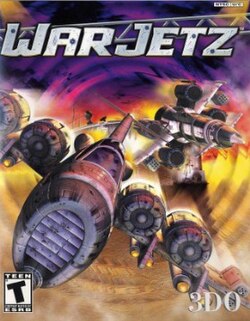

WarJetz bills itself as a chunky, arcade-style aerial brawler where futuristic jets zip around 33 arenas, snatching power-ups, collecting "bux," and doing the videogame equivalent of yelling "You got served!" at enemy pilots. The 3DO Company tried to follow up last year's vehicular mayhem with a skybound successor: nine planes, five game modes, and the option to carry two jets into each fight and swap between them mid-battle. The result is a game that gets a lot of the fundamentals right-intuitive dogfighting, easy-to-pick-up controls, and modes like search-and-destroy and capture-the-flag-while tripping over a few technical and design choices that make the challenge feel bumpier than the clouds.
If you're buying WarJetz for the fun of being a rogue wingman, you'll find a compact kit of mechanics that encourage quick thinking and split-second decisions. Combat happens from a fixed third-person camera: point, fire, dodge, and pick up whatever glowing token the level spat out. The key hook that affects challenge and skill is the two-jet system. You choose two planes for a sortie and can swap between them by grabbing a collectible power-up. That mechanic alone introduces a neat layer of strategy: do you carry a nimble interceptor for dogfights and a heavy hitter for ground targets? Do you play conservatively with fuel-and-weapon synergies or constantly switch to exploit situational advantages? Mastering when to swap can turn an ordinary skirmish into a satisfying chess match in the sky. Dogfighting in WarJetz is praised for being both intuitive and diverse, and that praise is deserved. Controls are refreshingly simple, which is a blessing for someone who doesn't want to read a 60-page flight manual before strafing a captured flag. But "simple" here does not mean "mindless"; the depth comes from reading the battlefield. Spatial awareness is your best friend. You'll be juggling altitudes, enemy vectors, and where the next power-up (or bux cache) spawns. Positioning often determines whether your short-range missiles score a cleaning blow or you end up as a pixelated smear on someone else's HUD. Map knowledge is another crucial skill. There are 33 arenas-small enough to learn quickly, large enough to reward memorization. Learning chokepoints, power-up spawn zones, and ideal ambush angles makes a huge difference, particularly in game modes like capture-the-flag, where predictable routes can be turned into tactical death traps. Search-and-destroy missions tilt toward objective play; you'll need to prioritize targets, protect bomb carriers, or hunt them down depending on the match flow. That target prioritization-knowing when to interrupt your dogfight to take out an enemy ground battery or when to ignore a straggling foe and save the flag carrier-is where the difference between a beginner and someone who looks cool on the scoreboard shows up. Resource management plays a role in pacing. "Bux" are a goofy but effective in-game currency; hoarding them can be the difference between outfitting a jet for a specific job and flying into battle under-equipped. Power-ups feel meaningful but are also contested, so timing and map control matter. The fact that swapping jets requires a collectible means you have to intentionally chase tactical advantages, not just spam a menu mid-combat. That design nudges you toward situational planning instead of living on reflex alone. Multiplayer is present but not quite the party it could have been. The game supports multiplayer modes, which is where the polish of the dogfighting system can shine, but reviewers at the time lamented the lack of broader support-IGN explicitly wished for four-player support. Playing against friends heightens the challenge because human unpredictability forces you to adapt strategies in real time. Unfortunately, if you're stuck in single-player, the AI can be easy at times. Several reviews called the gameplay 'dull and easy,' meaning the single-player challenge curve can peak early. To keep yourself engaged, ramping up self-imposed challenges-think jet-limited runs, no-power-up matches, or objective-only play-keeps your reflexes sharp and the skirmishes tense. The game's difficulty balance is a mixed bag. Skillful pilots are rewarded: better aiming, smarter jet swaps, and map knowledge translate directly into wins. But the AI isn't consistently ruthless, and without human opponents the long-term challenge can diminish. The best way to find challenge in WarJetz is to treat it like a competitive puzzle: refine your loadouts, learn where power-ups spawn, and force yourself into tactical situations where you have to out-think, not just out-gun, your opponents. If you like the idea of a dogfighting engine that rewards planning and positioning more than frantic button-mashing, WarJetz gives you that foundation-if you can accept that the single-player longevity might be limited.
The visuals are the part of the package that rubs most critics the wrong way, and with reason. Reviewers singled out muddy textures, a muted palette of greens and grays, blocky structures, and occasional disappearing polygons. Explosions often look like 2D decals pasted over the chaos, and slowdown creeps into hectic scenes like a party guest who can't take a hint. Those technical hiccups matter because they alter the game's challenge profile: when a polygon disappears mid-dogfight or the frame rate stutters as missiles fill the sky, your timing and situational reads get punished arbitrarily. That kind of inconsistency undermines skill expression-the very element the dogfighting system otherwise does well to encourage. On the plus side, the game's clear visual design for HUD elements and indicators means you rarely feel uncertain about your status or objectives. Voice acting gets a nod for being entertaining, which helps keep matches lively and injects personality into what could otherwise be a bland backdrop. In short, WarJetz looks and runs like a game that had its heart in the right place but ran out of polish money sometime around texture-mapping class.
WarJetz is one of those mid-era console experiments that offers a genuinely fun core but forgets to make the surrounding area match the engine's potential. If you care about the challenge, you'll be pleased by the dogfighting system: it's intuitive, varied, and rewards plane selection, positioning, and timing. You'll practice map control, jet-swapping discipline, and target prioritization-and those skills feel satisfying when they click. The downsides are significant: technical problems with graphics and occasional slowdown, an uneven single-player challenge that can peak too soon, and multiplayer support that could have been broader. If you want a low-barrier-to-entry aerial brawler where thoughtful flying beats twitchy reflexes, WarJetz is worth a rent-or a deep sale buy. If you need polished visuals, robust AI that scales with skill, or a full-on multiplayer party, this title will frustrate you. On the skill-and-challenge axis it earns points for rewarding smart play and tactical planning; on the execution axis it stumbles. Final verdict: a competent, occasionally clever dogfight sim with enough quirks to be charming but not enough sheen to be essential. Score: 6/10.
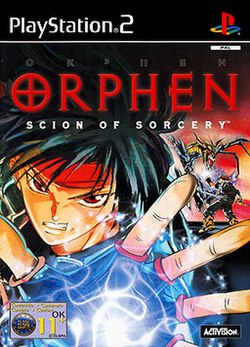
 Orphen: Scion of Sorcery on PS2
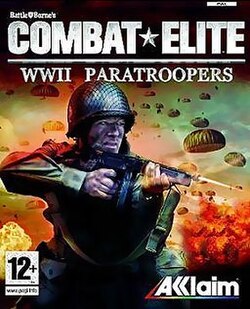
 Combat Elite: WWII Paratroopers on PS2
 Air Combat on PlayStation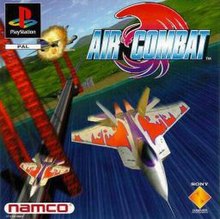
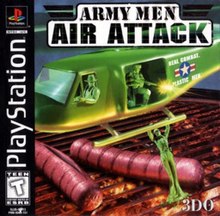 Army Men: Air Attack 2 on PlayStation
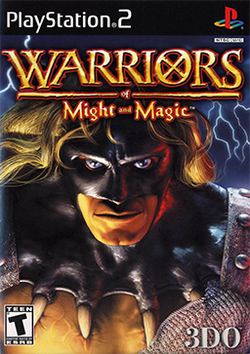
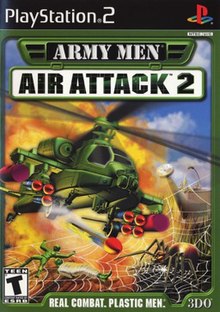 Warriors of Might and Magic on PlayStation
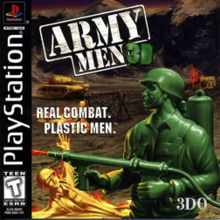
 Army Men 3D on PlayStation
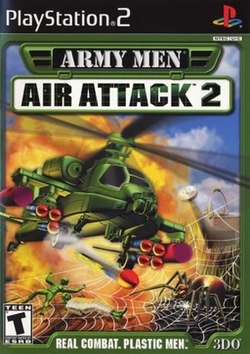
 Army Men: Air Attack 2 on PS2
 Army Men: Sarge's Heroes on PlayStation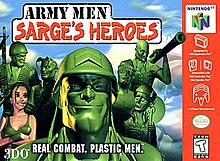












 Another SquareThought Site