

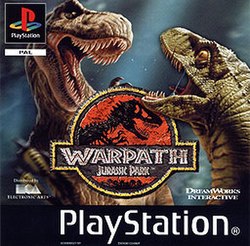

Warpath: Jurassic Park wears its movie pedigree like a T‑rex wearing a fedora - a little ridiculous, but impossible to ignore. The game is a late‑'90s PlayStation fighting spin‑off that swaps human heroes for a roster of stomping, chomping dinos, and it promises cinematic arenas, chomps that count as combos, and a museum mode for budding paleontologists with a button fetish. If you approach Warpath as a character study rather than a competitive fighter, it becomes oddly charming: each dinosaur arrives with the swagger of a movie archetype and the unresolved arc of a supporting actor sent to do the heavy lifting. Unfortunately, the scripts for many of these arcs are short on depth and long on recycled animations, but there are flashes of personality and some surprisingly thoughtful environmental storytelling that give the beasts actual roles to play.
Warpath is a fairly traditional 3D arena fighter with a Jurassic twist: instead of quarter‑circle fireballs you have tail swipes, gorey charges and head‑butts. The roster starts you off with eight playable dinosaurs - T. rex, Giganotosaurus, Ankylosaurus, Stygimoloch (marketed as a Stygimoloch but essentially the pachycephalosaur archetype), Styracosaurus, Suchomimus, Megaraptor and Acrocanthosaurus - and offers six unlockables through Arcade mode, including Spinosaurus, Triceratops, Carcharodontosaurus, Cryolophosaurus, Pachycephalosaurus and the video game Easter‑egg Albertosaurus. Each fighter is ostensibly a different archetype, which the game leans into as if writing cheap soap opera arcs for prehistoric celebrities. T. rex is the exhausted legend: introduced on the Cargo Ship stage from The Lost World, he enters fights with reputation rather than finesse. In practice this translates to solid single hits and a lot of presence, but not the size advantage you expect because of the game's inconsistent scaling. Giganotosaurus, by contrast, plays like the hungry upstart - faster, angrier, clearly trying to prove he's the new alpha. The Ankylosaurus is the stoic tank, an immovable object archetype whose arc is about endurance and brute force; its stomp feels like a character remaining true to itself in a world where combos rule. Stygimoloch (Stygi) and Pachycephalosaurus exist as the scrappy underdog head‑butters, their shortest arcs being a two‑button commitment to smash whatever's in front of them. Styracosaurus is the noble veteran, which the game dramatizes with arena choice (Heliport Landing Zone) and slower, deliberate attacks that feel like the final act of a warrior with something to prove. The Megaraptor fills the role of cunning antagonist - quick, animalistic and framed by the Velociraptor paddock aesthetic - while Suchomimus and Acrocanthosaurus play the outsider and wildcard respectively, their movesets offering strange, momentary spikes of fun that suggest a broader life offstage we never see. Arcs are encoded into arenas: the Visitor Center stage gives the Ankylosaurus a ceremonial homecoming; the T. rex paddock and S.S. Venture deck act as narrative backdrops where the fighters' histories echo the films. These locales aren't just eye candy - destructible set pieces and roaming edible creatures (goats, humans, dogs, and Compsognathus) function as both gameplay mechanics and small narrative beats. A dinosaur that hunts down a goat mid‑match gets a little health and a little dignity restored, which reads like a bit of character development in a 90‑second bout. Modes do a fair job of supporting the tiny sagas. Arcade mode strings eight fights into a mini‑campaign where winning unlocks new opponents and, by extension, new rivalries. Versus and Team modes allow you to stage interspecies wars that read like family feuds; Team mode in particular manufactures saga‑length conflicts between factions of four dinosaurs, which is oddly satisfying when you imagine a trilogy of sequels in one sitting. Practice and Museum modes exist for the player who wants to polish moves and read a plaque about a dinosaur's family and era, which is Warpath's way of saying there's an attempt at lore - thin, but present. Where the gameplay's dramatic intentions fall flat is in execution. Critics noted sluggish controls, poor AI and collision detection that makes characters feel like they're bumping into invisible plot holes. Many dinosaurs end up playing very similarly, which collapses the distinct arcs into echoing fights and robs the rivalries of long‑term interest. The AI being described as "the size of a peanut" means that once you learn a couple of easy moves, the narrative tension - the underdog comeback, the upset victory - evaporates. So the character arcs are conceptually enjoyable, but mechanically undercut: the story beats are set pieces without the dramaturgy to sustain them.
Graphically, Warpath is a mixed fossil. Each dinosaur model consists of about 750 polygons, which in 1999 was respectable enough to give the creatures weight and recognizable silhouettes. The animations earned praise: reviewers liked the way breaths, chomps and gaits felt dinosaury rather than blocky. Many arenas faithfully recreate film locations like the T. rex enclosure, the Visitor Center, the In‑Gen lab and the S.S. Venture deck, and those choices give the roster believable stages to act upon. When a level works - with breakable crates, collapsing scenery and ambient film callbacks - the result can be cinematic and surprisingly immersive. Problems arise with texture work and engine strain. Some levels are described as having "bland building textures" and "rushed backgrounds," and in the heat of combat surfaces will sometimes warp or buckle as the PlayStation struggles to render geometry and effects. Collision detection issues add to the visual awkwardness: you'll see a powerful bite collide with empty air, which looks less like a dramatic flourish and more like continuity errors in a low‑budget movie. The soundtrack, composed by Michael Giacchino (a name that would later become huge), is competent but was criticized as being too low in the mix and lacking punch; it creates atmosphere but rarely elevates a scene into something memorable. Overall, the visuals and audio give Warpath enough stagecraft to sell the dinosaur personalities, but they don't consistently support the dramatic arcs the game hints at.
If you judge Warpath as a story engine for prehistoric egos, it's an amusing experiment: the roster reads like a soap opera of claws and crests, the arenas double as backdrops for small tragedies and triumphs, and the Museum mode throws in a veneer of natural history that feels oddly sincere. The problem is that the gameplay doesn't always honor its own narratives. Sluggish controls, repetitive AI, dodgy collision detection, and inconsistent size scaling reduce many of the dinosaurs' arcs to a single line of dialogue repeated until you get bored. Critics at the time were mixed - comparisons to Primal Rage weren't flattering - and aggregate scores sit in the mid‑50s, which I translate to a pragmatic 5.7/10. For a rental or a nostalgia session where you want to watch a T. rex posture like a retired movie star while a Megaraptor tries to steal his thunder, Warpath is worth the ticket. For a collector or someone hoping for a deep, mechanically satisfying fighter with true character differentiation, this one's a fossil best left in the ground. Rent it, romp a few rounds, read the Museum entries for the paleontology flex, then return it before the credits roll - the dinosaurs' arcs get their moments, but not the resolutions they deserve.
 Park Beyond on Xbox Series X/S
 Planet Coaster: Console Edition on PS5
 Ultraman Fighting Evolution on PlayStation
 ACA Neo Geo: Art of Fighting 2 on Xbox One
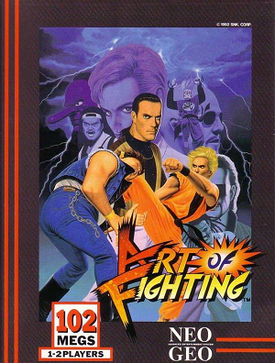 ACA Neo Geo: The King of Fighters '98 on Xbox One
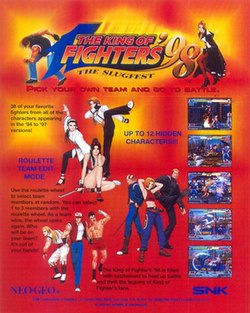 Touhou Hyoibana: Antinomy of Common Flowers on Switch
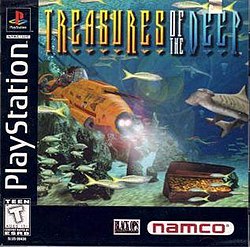
 Treasures of the Deep on PlayStation
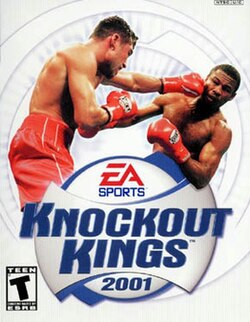
 Knockout Kings 2001 on PlayStation
 Knockout Kings 2000 on PlayStation
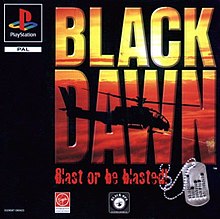
 Black Dawn on PlayStation
 NCAA March Madness 2001 on PlayStation












 Another SquareThought Site