

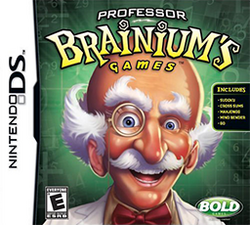

Professor Brainium's Games arrives in a world that had barely stopped arguing about who smelled like curry more: Mario or that weird plumber friend who keeps appearing in puzzle crossovers. It is an educational puzzle collection released exclusively for the Nintendo DS in 2008 by Polish developer Frontline Studios and published by Bold Games. The box copy and the game's intent are unambiguous: make you do little brain things so your neurons feel employed. It exists in the same neighborhood as Brain Age and Big Brain Academy, which means it shares the basic DIY neurotuning aesthetic-clean menus, a cheerful titular professor who probably wears a lab coat and a tie, a collection of bite-sized exercises, and the eternal promise that doing the same simple task every day will somehow stop you from forgetting where you left your keys. If you ever wondered what the DS would look like if it studied for exams and then took a nap, this is the answer. The game offers a suite of puzzles you must complete to progress, paired with single-player and multiplayer modes because apparently your brain wants company when it fails a logic question. There is little mystery about its goals: inform the player, present puzzles, and nudge you into thinking you're improving. Whether it actually sharpens anything besides your ability to recognize how many seconds have passed while staring at a multiple-choice screen is up for debate, but the intention is respectable and straightforward.
Professor Brainium's Games is built like a modest mental gym: no heavy machinery, no motivational posters, just a series of tiny challenges that gradually tax different cognitive muscles. The games are described-accurately and without hyperbole-as "various puzzles," which is a very diplomatic way of saying you will be squinting at numbers, shapes, and words until your brain files a formal complaint. The resemblance to Brain Age and Big Brain Academy is the most useful hint: expect short, timed exercises focusing on memory, arithmetic, pattern recognition, and basic logic. If you enjoyed timing your breath with a digital prompt and then accusing your handheld of being judgmental, you will feel right at home. Progression is literal and simple: finish puzzles to advance. There's no sprawling narrative or emotional investment in the protagonist's childhood birdhouse. The reward loop is functional: do a puzzle, get a score, repeat. The game is content with the dignity of that loop and doesn't try to make it dramatic. It also offers multiplayer, which turns what would be a private seminar in cognitive disappointment into a public spectacle. Multiplayer's biggest selling point is psychological: hope you like the sound of your ego being gently dismantled by a friend who has clearly been doing push-ups on their hippocampus. Controls are what you'd expect on the DS: straightforward input methods tailored to quick puzzle interactions. The portable design encourages short play sessions, which is appropriate for the genre-these aren't immersive RPG marathons where you bond with a goose; they're speed-dates with your working memory. Each mini-game delivers immediate feedback: pass, fail, maybe a statistic that tries to make you feel scientific about your mediocre performance. The scoring system seems reasonable for its purpose. It quantifies success so you can compare yourself to previous attempts, to friends, and to an imaginary standard of cognitive excellence you will never meet. There is no attempt to reinvent the interface or to aggressively monetize your sense of achievement. You won't discover complex unlock trees or DLC microtransactions that cost as much as mini-consequentials. Instead, the game is content to be a compact, polite package of puzzles. If you like variety, you'll find it-within the limits of what the developers could fit onto a DS cart and what your attention span will tolerate before you instinctively open another app on your phone. On the negative side, variety doesn't always equal depth. The puzzles are competent but not especially memorable. They are the kind of exercises you could do on a napkin, in the margins of a high-school notebook, or on the back of a receipt while pretending to listen in a lecture. That makes them perfectly serviceable for an evening of casual brain-warming, but not built for someone who wants escalating challenge curves or brain puzzles that make you feel like a scientist discovering a minor truth about the universe. The game is educational in intent and casual in execution; it teaches in small increments and rarely surprises. Another weakness-if it can be called that-is personality. The titular Professor Brainium provides the expected quips and encouragement, but the tone remains a little generic. This is not a game that will make you fall in love with its mascot or write fan fiction about a lab-coated mathematician. It is a polite tutor: encouraging, non-judgmental until you fail three times in a row, then mildly disappointed. Some players might find the anonymity comforting; others will miss the charm and character that made games like Brain Age feel like an oddly sincere fitness coach. Still, the game knows what it is: an assortment of puzzles for the DS. In that role, it is effective. You complete tasks, watch a score update, and repeat. For anyone whose main criteria is "puzzle variety on a handheld format," Professor Brainium's Games delivers. For anyone seeking a philosophically challenging meditation on cognition, it will be professional but unspectacular.
On a technical level, the visuals are plain without being ugly. The DS era had a particular palette for educational titles: pastel menus, cheerful icons, and a sense of visual restraint that often bordered on clinical. Frontline Studios leans into that palette. The interface is readable; text is legible, icons are clear, and the presentation rarely gets in the way of play. The titular professor is drawn in a style that suggests someone who knows basic anatomy and a little Photoshop. There is no pretense of visual extravagance-no pursuit of photorealism, no ambitious shaders-but that's entirely appropriate for a game whose primary job is to present information efficiently. Animations are minimal and functional. Winning a puzzle will elicit a small, friendly animation; failing will do the same but with less confetti and more polite existential disapproval. The color choices and layout make it obvious what you should tap and when, which is kind of the point in an educational puzzle package. If you were picturing a DS title with jaw-dropping visuals or a soundtrack that haunts your dreams in a good way, recalibrate those expectations. The game never competes in the visual arms race; it focuses on clarity and ease-of-use, and for this purpose, it succeeds. Multiplayer screens are equally utilitarian: efficient scoreboards, quick load-ins, and a clean design that prioritizes making the head-to-head experience painless. In short, the graphics are the visual equivalent of a good pen: it won't change your life, but it won't smear the ink at a crucial moment either.
Professor Brainium's Games is the kind of DS title that doesn't promise to be life-changing and therefore doesn't have to apologize when it isn't. It's an unassuming collection of puzzles designed to educate and entertain in small doses. If you already like Brain Age-style exercises, this will feel familiar and reliable: a modest set of brain teasers packaged neatly for short sessions. The positives are clear-clean presentation, a reasonable assortment of puzzles, and a multiplayer mode that turns private failure into shared laughter. The drawbacks are equally clear: limited depth, a lack of memorable personality, and a design that aims for competence over inspiration. For an 18-year-old audience, it's worth framing this practically. If you want a portable, no-frills way to pass some downtime while mildly convincing yourself that you're improving your cognitive faculties, Professor Brainium's Games is an agreeable companion. If you want a deep, addictive puzzle experience that will have you whispering strategies to your future self at 3 a.m., look elsewhere. The DS is full of quieter surprises; this is not one of them. It is, however, steady, polite, and functional-qualities that are underrated until you find yourself replaying a puzzle because your cat stepped on the stylus and you want to reclaim personal dignity. Final verdict: not revolutionary, but not offensive. It does what it sets out to do, and sometimes that is exactly the point. Score: 6 out of 10.
 The Wacky History of Platform Games
 Nintendo Switch
 Puzzle by Nikoli 4: on PS4
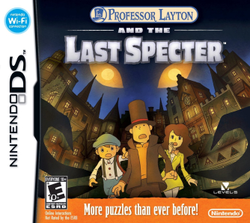
 Professor Layton and the Last Specter on DS
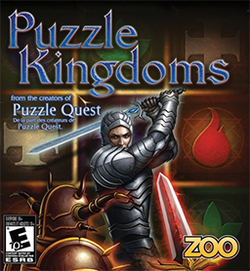
 Puzzle Kingdoms on DS
 Puzzle de Harvest Moon on DS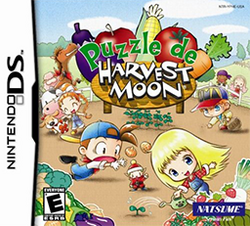
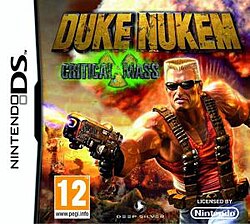
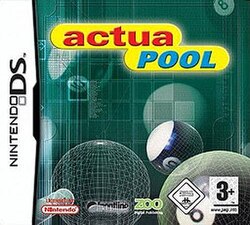 Duke Nukem: Critical Mass on DS
 M&M's Kart Racing on DS












 Another SquareThought Site