

 Sep 2025
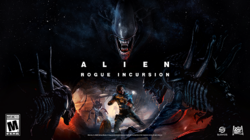

This is a review of Alien: Rogue Incursion Evolved Edition - Part One as played on Nintendo Switch 2, which is to say: I took a game built for the visceral intimacy of VR, politely removed its helmet, and handed it a controller. The result is a reasonably faithful non-VR conversion that keeps the franchise's favorite mood-claustrophobic corridors, ambient terror, and the sense that something is going to crawl out of a vent and make your future very awkward-while also reminding you that some things are best experienced with a headset strapped to your face. You play as Zula Hendricks, an AWOL Marine with good instincts and questionable timing, who jets off to the planet Purdan (LV-354) after a distress call. She's accompanied by Davis 01, an android who, like every good supporting character in a sci-fi horror, is charming and ultimately useful for plot convenience. The facility they arrive at, Gemini Exoplanet Solutions' Castor's Cradle, is overrun by xenomorphs. That should be the whole logline; the rest is negotiating what you can shoot, what you can sneak past, and what will inevitably chew through your plans and possibly your chest cavity.
Rogue Incursion began life as a VR experience and you can feel that heritage in every door creak, every directional noise cue, and every close-call encounter. In Evolved Edition the developers adjusted controls, camera angles, and pacing to non-VR standards, which mostly works. You still get the series staples: a motion tracker that chirps like a guilty cricket, a limited arsenal (pulse rifle, shotgun, revolver), proximity grenades, and the comforting scarcity of ammo that turns even a hallway fight into an argument about resource management. Combat is functional if unsexy. The guns have weight on paper and a satisfyingly blunt feel in practice, but the selection is deliberately small-Zula's loadout never aspires to be an armory, more a handful of tools you learn to treat like precious heirlooms. Ammo is scarce by design, which keeps the tension up but also nudges the game toward repetition: clear a room, hustle to the next save point, listen for the motion tracker, repeat. Stealth is rewarded; creaky doors and trash cans are petty betrayers, creating noise the xenos will cheerfully use against you. There are panic rooms that double as save points, which is a nice nod to safe-room design in the franchise and also a polite way for the game to say "If you die here, try not to scream too loudly." The AI aims for pack behavior. Survios modeled xenomorphs as faster, smarter predators-think velociraptor vibes-so you can expect leaping attacks, wall-crawling ambushes, and creatures that will flank you if the level designers are feeling especially cruel. This is where the conversion to Switch 2 shows its two faces: on the one hand, the non-VR Evolved Edition introduces camera and control changes that smooth movement and make these encounters manageable with thumbsticks; on the other, the AI sometimes exposes its inflation seam and behaves more like a scripted horror movie extra than an actual predator. Reviews of other platforms noted occasional barebones AI and pathing glitches; the Switch 2 port inherits the design and benefits from performance stability patches but can still feel inconsistent when multiple xenos decide choreography is optional. Exploration and puzzle solving are straightforward: unlock terminals, read worker emails and VO logs, and occasionally fiddle with a switch so a door will open. This portion is mostly exposition wrapped in a scavenger hunt. The game does a surprisingly human job of fleshing out the world-emails and video logs turn Gemini Exoplanet Solutions from a series of sterile lights into a place where people made small, terrible choices. Zula's relationship with Davis 01 is the emotional center, offsetting bleakness with some genuine warmth. The plot delightfully reminds you that in Alien media, things can get gross quickly: facehuggers appear, the game leans into body-horror, and at one point Zula is captured and impregnated, leading to one of the more memorable sequences in the chapter. Where the Evolved Edition on Switch 2 really earns its keep is pacing. The original VR game's intense focus on immersion occasionally dragged; here, the camera tweaks and pacing edits keep the tension kinetic. The cost is a few of the VR-specific scares that only work when something is breathing in your ear, but you gain a more cinematic third-person-adjacent run through of the facility that actually fits portable play. Save points remain frequent enough for short bursts-perfect for commutes or getting unnerved in public without anyone else noticing. The game is only Part One of a planned two-part story, and the chapter ends on a cliff that smartly feels like a cliff rather than a soft suggestion to buy the sequel. You overload reactors, face off against androids, and make difficult decisions involving detachable robot heads. Story beats land because Alex White, who previously wrote Alien novels, knows how to make lore feel lived-in rather than tacked on.
Graphically, Rogue Incursion wears its Unreal Engine 5 lineage proudly. On Switch 2 the visuals are competent and atmospheric rather than photorealistic. Textures and shadow work are tuned down compared to the high-end PC and PS5 builds-Quest 3 reviewers pointed out fuzziness and lower-resolution character models, and the Switch 2 port makes similar compromises. That said, the game's lighting design does more than half the heavy lifting; moody corridors, emergency strobes, and a good use of darkness cover a multitude of polygonal sins. Character models occasionally wander into uncanny valley-lite territory, but voice acting-Andia Winslow as Zula and Robbie Daymond as Davis 01-carries emotional weight and helps sell the scenes. The audio design is where the game really shines: Sara Barone's score and the ambient creaks, clangs, and distant skitters create an audio map that often tells you more than the visuals can. On Switch 2 the music and sound effects are preserved well, and the machine-noise-versus-xenomorph-lurking ambiguity the team aimed for survives the downgrade, which matters more than whether a reflection map is high-res.
Alien: Rogue Incursion Evolved Edition on Nintendo Switch 2 is a competent conversion of a VR-first experience. It won't punch you in the face with the same immediacy as the headset version, but it keeps the essentials: solid atmosphere, a decent if compact arsenal, and a story that understands the franchise's beats. Flaws follow it across platforms-occasional AI oddities, some repetitive level design, and the occasional bug-but those are mostly quibbles relative to the game's ability to make a narrow, cold corridor feel life-or-death. If you want pure, stomach-twisting VR fear, this isn't that. If you want a neat, well-crafted Alien story to play on the go with the Switch 2 controller, you'll find Rogue Incursion delivers the goods with a few caveats. Consider it a good first course that leaves you hungry for the main dish: Part Two. Buy it if you like tense atmospherics, resource management that feels mean but fair, and scolding your motion tracker like it's a misbehaving pet. Skip it if you need your AI to behave like it's read strict parenting manuals or if you demand absolute graphical fidelity on a handheld. Otherwise, bring a light jacket and maybe avoid standing near vents.
 One Piece Grand Battle! on PS2
 Microsoft Xbox One
 Disney's Chicken Little: Ace in Action on PS2
 Onimusha: Dawn of Dreams on PS2
 Resident Evil 7: Biohazard on PS4
 Tokyo Xanadu eX+ on PS4










 Another SquareThought Site