

 Jan 2026
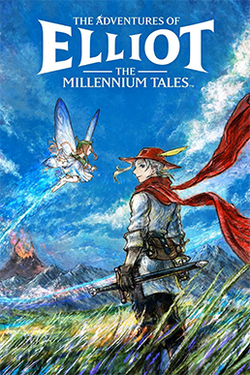

The Adventures of Elliot: The Millennium Tales arrives carrying the familiar Team Asano crest: HD-2D visuals, a melodic pedigree, and a tendency to make genre expectations wobble like a poorly balanced tripod. Announced during a 2025 Nintendo Direct and offered in a roughly 90-minute demo on the Nintendo Switch 2 eShop, Elliot is Square Enix's attempt to translate the studio's signature visual style to a more action-forward, real-time experience. Instead of HD-2D's usual turn-based faceoff, this title pushes into sword-and-shield skirmishes, dash-and-teleport mobility, and co-op with a fairy sidekick. The setup is classic fantasy: ruins, a barrier-maintaining princess, and a time-bending artifact called the Doorway of Time. From a technical lens, the intriguing part is how Team Asano marries HD-2D's diorama aesthetics with mechanics that demand crisp input fidelity, predictable AI, and tight level streaming - especially on a handheld-forward console like the Switch 2.
At its mechanical core, Elliot swaps the party-laden, turn-based structure of earlier Team Asano projects for a compact, skill-and-resource driven real-time loop. Combat revolves around seven distinct weapon archetypes - swords, bows, chains, sickles, and their kin - each tagged with unique ability vectors and status effects. The design choice to limit Elliot to two equipped weapons with instant swap functionality simplifies decision bandwidth in encounters while preserving tactical variety. From a systems-design perspective this is smart: fewer equip slots reduce menu friction, and the instant-swap implies an expectation of low input latency and a responsive frame budget. Movement and spatial tools are foundational to the combat and puzzle loops. Elliot has a dash plus a warp that teleports him to the fairy Faie's location. The warp mechanic doubles as an emergency reposition and a puzzle anchor; it demands immediate state updates for both character positions, collision contexts, and camera framing. Faie can be player-controlled in local co-op, which introduces a second input stream that must be synchronized to the game's state machine. Because the demo allowed co-op interactions (retrieving items, assisting platforming, executing her own combat abilities), it's clear the engine supports multi-agent control without shoehorning gameplay into purely single-player timing windows. Parry and shield mechanics suggest a precision-first combat design. Blocking with a shield and parrying are called out as functional options, and successful parries typically require tight parry windows and deterministic enemy telegraphs. For this to be satisfying, hitboxes and attack animations must remain consistent across weapon types and enemy variants. The team's stated aim of "simple and easy to understand gameplay" belies a surprisingly deep mechanical substrate: weapon status effects (applied via magicite fragment enhancements), two-weapon loadouts, bomb-based environmental interactions, and the interplay between dash/warp and parry windows create emergent combat choreography. Dungeon and shrine design is another area where the technical scaffolding matters. The game contains caves, dungeons, and puzzle shrines that reward completion with maximum health increases and magicite fragments. The magicite system acts as a modular augment pipeline - players find fragments in chests and shrines and slot them to add effects to weapons. This implies an item-affix architecture with runtime modifiers feeding into damage/healing/service hooks, which must be balanced to avoid combinatorial power spikes. From a meta-design view, limiting augmentation sources to specific in-dungeon rewards helps control power curve ramps and retains puzzle value. Multiplayer is local co-op and reportedly centered on Faie control; the demo's local play establishes the game as at least partially designed for shared-device ergonomics. That reduces the need for full online rollback netcode but raises expectations for split-input polling, predictive movement smoothing, and cooperative camera logic. Even in local co-op, the codebase must manage authority over puzzles and loot - who gets what when Faie triggers a chest? - and reconcile two-actor interaction with single-world state. Comparatively, the combat leans into Zelda-esque simplicity mixed with Mana/Ys pace. The removal of party mechanics means enemy density, encounter pacing, and difficulty curves rely on encounter scripting, enemy behavior trees, and careful tuning of cooldowns and status durations. My take: the system promises crisp, accessible action with enough depth for mastery, provided the underlying timing and collision systems are tight. The demo hints at that discipline; the true test will be expanded content variety, boss telegraphs, and augmentation balancing across later dungeons.
Visually, The Adventures of Elliot continues Team Asano's HD-2D tradition: layered pixel sprites seated on pre-rendered diorama planes, with modern lighting, depth-of-field, and particle systems layered on top. This hybrid pipeline is technically elegant - it leverages low-overhead sprite assets for character fidelity while applying shader-driven effects to sell volume and atmosphere. On Nintendo Switch 2, the art direction appears optimized to accentuate readability during combat. Enemy silhouettes are distinct, hit effects are punchy, and special-ability VFX are tuned not to obscure player read on-screen. Because the game features time-anchored environments (the Doorway of Time connects past and present), asset streaming and scene-state swaps are core rendering concerns: toggling between temporal variants requires consistent occlusion culling, texture streaming, and lighting recomputation to avoid frame hitches. The demo indicates Team Asano has invested in smooth transitions - shrine and ruin interiors load with minimal stutter and particle spawn rates are moderated when the camera compresses the scene. Shader choices lean on bloom, soft shadows, and layered parallax to maintain the diorama illusion while remaining performant. The particle budgets and post-process chain feel conservative by necessity; Switch 2 still benefits from those efficiencies. UI and HUD are unobtrusive, with clear affordances for weapon switching and Faie-assist prompts. Camera management in tight dungeon corridors is robust, maintaining line-of-sight and preserving parry timing even when the diorama perspective shifts. Overall, the visual architecture balances spectacle and function: it's stylish without sacrificing the clarity that precise action combat requires.
The Adventures of Elliot: The Millennium Tales is an interesting technical pivot for Team Asano: take HD-2D's aesthetic strengths and apply them to a low-latency, real-time action design. The demo showcased a combat framework that emphasizes responsive inputs, deterministic parry mechanics, and a tidy augmentation system through magicite fragments. Co-op with Faie is more than a cosmetic add-on; it's integrated into navigation, puzzles, and combat, which raises the bar for state synchronization even in local play. Graphically, the title respects readability and framerate stability, leveraging HD-2D's layered pipeline to deliver pretty and purposeful visuals on Nintendo Switch 2. There are still open questions. Balance across seven weapon types and the magicite augmentation system will be crucial to prevent trivialization or frustrating difficulty spikes. The long-term viability of the real-time loop depends on a steady escalation of encounter design and boss complexity. If Team Asano can maintain their control over timing, hitboxes, and streaming transitions while expanding enemy kits and shrine variety, Elliot could stand alongside the studio's best work - but in an action guise. Scored as an early impression based on the July 2025 demo and available materials, this version of Elliot earns an 8.5/10. It's technically confident, enjoyably modular, and visually polished; the final polish and balance across full-length content will determine whether it becomes a classic or a very pretty near-miss. Either way, it's one of 2026's most promising hybrids between classic JRPG smarts and modern action design.
 Adventures of Pip on PS4
 Fat Princess Adventures on PS4
 Combat Elite: WWII Paratroopers on PS2
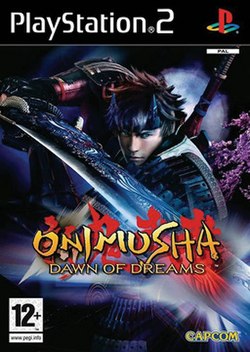
 Onimusha: Dawn of Dreams on PS2
 Disney's Chicken Little: Ace in Action on PS2
 Tokyo Xanadu eX+ on PS4










 Another SquareThought Site