

 Feb 2026
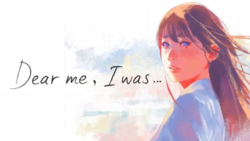

Readers of a certain vintage will recall that the best games of the 1990s often trusted the player to fill in a story with their own quiet attention rather than a flood of exposition. Arc System Works' Dear me, I was... practices that old-school faith with a modern polish. This textless, nine-chapter vignette follows an unnamed woman through the long arcs of her life: childhood loss, adolescent rivalry, adult compromise, small joys and small elegies. It is not a loud game. It does not blink. It is the sort of title that places a single clean image across the table and asks if you will look at it properly. The particulars are simple and specific. The protagonist receives a notebook and crayons from her mother after her father dies, goes to art school, suffers a painful misunderstanding with a friend, drifts into an office job, begins and pauses a relationship with a photographer, adopts a pregnant cat, mourns parents and lovers, and eventually returns to the act of drawing to order her memories. The game is directed by Maho Taguchi with art direction by Taisuke Kanasaki, who leans into rotoscoped animation to render each chapter as if it were a memory played against real film. If you prefer loud action or twitch reflexes, this will ask a lot of you. If you can bear to sit with a handful of gestures and a well-timed musical swell, rewards arrive quietly and insistently.
Dear me, I was... is an adventure in the classical sense - you proceed through scenes, observe, interact and assemble a sense of continuity. The 'gameplay' label is used loosely here; the core experience consists of short interactive vignettes stitched together by illustrated transitions and scrimmed in with a sparse interface. There are nine chapters in total, each one a self-contained episode that contributes to the whole. Mechanics rarely exceed the modest: point, tap, sketch, pick up an object, or nudge the camera to reveal a detail that shifts meaning. Because the story contains no written dialogue, everything must be coaxed from the picture. Facial expression, body language and small props are the vocabulary. This design choice is brave and occasionally exasperating - in a few spots the intent is painstakingly clear, while in others the game assumes a cinematic literacy that not every player brings. Still, this silence is the game's strongest rhetorical device. It forces you to slow down, to infer, and to be held accountable for the human tendency to fill uncertainty with imagination. Interactive segments are short and intentionally unchallenging. You will sketch with the protagonist on the ground at a park, clean up an animal carrier, align a photograph in a gallery space and, in one memorable stretch, piece together a ruined journal. These moments feel less like puzzles and more like rituals. Critics have faulted the title for its brevity and the thinness of its interactive bones; that complaint is not without merit. At about three to five hours depending on how dawdling you are, Dear me, I was... is an artful postcard more than an epic. Nevertheless, time invested pays off in tonal consistency. Each choice of interaction, each stationary tableau, functions as a small essay about memory: how we edit, how we love, and how we clutch at artifacts - a seashell, a photograph, a child's crayon drawing - to keep continuity in a life that erodes. The structure mirrors memory itself: non-linear, impressionistic, sometimes cruelly elliptical. The payoff is emotional rather than mechanical. The game is strongest when it trusts that you will supply the connective tissue between a girl's crayon figure and an old woman's framed sketch. For players raised on heavier-handed narratives, this approach may feel coy. For those who remember the days of reading expression into a single thumbnail, it is deliciously familiar. The limited interactivity is not a failure so much as a curatorial decision: Arc System Works has chosen to make interactive cinema where the cinema is often less about spectacle than about noticing. If you come to the Switch version expecting an expanded bouquet of mechanics compared to its Switch 2 and mobile releases, temper that hope. This is a port that largely preserves the original's brevity and restraint.
The visual work in Dear me, I was... is the headline act. Taisuke Kanasaki returns to rotoscoped techniques that recall his work on titles like Last Window and the stylistic lineage that includes Another Code and Hotel Dusk. Characters glide with an unsettling, intimate realism; gestures are captured with the kind of fidelity that makes small pauses - a hand lowering, a gaze turning to the window - carry dramatic weight. The palette leans toward watermarked pastels and museum greys, with bursts of color reserved for crayons, seashells and the rare, delicious photograph. These objects are the game's exclamation points. Because everything communicates without explicit text, the art must do double duty: it establishes mood and carries plot. It mostly succeeds. Backgrounds are lovingly detailed without being fussy; faces are expressive without caricature. On the Switch hardware the animation is smooth and the sepia-tinged filters never feel overbearing, though one detects slight texture loss compared to higher-end platforms - a concession acceptable for a port that keeps the essence intact. Satoshi Okubo's score underwrites the proceedings with a gentle, piano-forward score that knows when to recede. The credits song 'Strange Journey' featuring ITSUKA is a memorable, plaintive coda and was released on streaming services alongside the game. Sound design is economical: doors, ocean surf, a camera shutter - small sonic anchors that keep scenes from feeling untethered. If the game is a sketchbook, the visuals are the charcoal and the music the deliberate hand that traces the outline.
Dear me, I was... is a grown-up game that might have been born in an earlier era of storytelling - the 1990s sensibility of trusting the player's patience and intelligence - and translated gracefully into modern form. It is not for everyone. If you require systems, branching trees or significant gameplay heft, you will leave it wanting. If you appreciate leisurely, well-composed vignettes, rotoscoped humanity and a soundtrack that knows how to make silence feel dense, this title rewards attentiveness. Arc System Works aimed at an older female demographic, and that focus shows in the small kindnesses and thematic gentleness of the design. Yet the game is not exclusionary; anyone willing to sit and look will find value. Critics have been generally favorable - a Metacritic in the mid-70s and several 8/10 scores reflect a consensus: well executed, artful, and brief. As a reviewer who keeps one foot in print-era conventions and the other in contemporary standards, I find Dear me, I was... admirable. It is a short, sure meditation on memory and art, with a few rough edges and an elegance of restraint. It deserves a place on the Switch shelf next to other quiet experiments in form. Bring a soft heart and a little patience; you may find it lingers longer than you expect.
 Dear Boys: Fast Break! on PS2
 Disney Dreamlight Valley on Xbox Series X/S
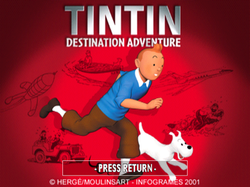
 Tintin: Destination Adventure on PlayStation
 One Piece Grand Adventure on PS2
 Taiko no Tatsujin: Dokodon! Mystery Adventure on Switch
 Taiko no Tatsujin: Don to Katsu no Jikū Daibōken on Switch
 Dragon Ball FighterZ on PS5
 Granblue Fantasy Versus: Rising on PS5
 Guilty Gear Strive on PS5
 Dragon Ball FighterZ on Switch
 Dragon Ball FighterZ on PS4










 Another SquareThought Site