

 Dec 2021
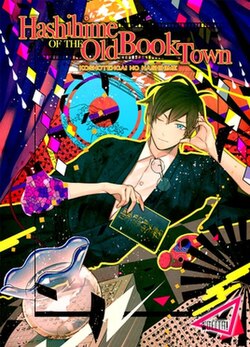

If you imagine a rainy Taishō-era alley lined with secondhand books, and then imagine your brain being politely shoved into three looping days of mystery, longing, and occasional Noh-masked violence, you've got the right mental postcard. Hashihime of the Old Book Town append is the Switch port (and slightly tamer 'append' incarnation) of ADELTA's doujin BL visual novel about Tamamori, a twenty-year-old failed examinee who becomes an apprentice in Umebachidō bookstore and finds that the real reading material is the people around him. The game sells itself on atmosphere: a surreal, psychological narrative that folds fantasy, metafiction, and romance into multiple routes that reward replay. If you enjoy character-driven mysteries where emotions are the real clues, this one is worth a rainy afternoon-or several.
This is a visual novel in the most literal sense: you read, you click, you live in the sticky ink of a 1922 June downpour. Mechanically there are no combat systems or mini-games to break the mood: the craft here is entirely narrative structure and the branching routes that let you press the same three rainy days into different shapes. The append release on Switch adds short stories to every route and tones down explicit content without neutering the emotional center, which is the right call for a port aimed at a wider audience. Where Hashihime really earns its keep is in character architecture. Tamamori is both narrator and unreliable lens; his failed Imperial University entrance and dream of literary fame make him perpetually ill-at-ease, an ambitious daydreamer whose perceptions fray under stress. The looping three-day structure is a clever externalization of his inner inability to move forward: literally reliving the same days forces him, and the player, to question causality, memory, and responsibility. Over the course of different routes he is pushed to distinguish illusion from truth, and each route peels back parts of his self-deception. His arc is about ownership-of guilt, of failure, of the stories he tells about himself. Minakami is the soft center to Tamamori's anxious periphery. Bookish and gentle, he functions as both emotional anchor and mirror: his appreciation of Tamamori's writing underlines the protagonist's yearning for validation. As a route interest he rarely explodes; instead, his arc is a study in the quiet power of steadfastness-how a steady affection can be accusatory or redeeming depending on context. The sweetness here is not cloying; it's a kind of moral pressure that helps pry Tamamori out of escapism. Kawase plays foil and provocateur. A genius with a sarcastic tilt, he's the one who teases Tamamori into facing uncomfortable truths. His admiration for Hanazawa and knack for criticism mean his arc is less about changing Tamamori and more about forcing honesty. The best scenes involving Kawase are verbal sparring matches that reveal not only intellectual compatibility but a brittle emotional core: sarcasm frequently hides terror of intimacy in this story. Hanazawa is the hot-blooded stoic who reads like an older brother with a bayonet. His protective streak and military past lend a blunt, righteous weight to his route. With him the narrative leans into questions of duty and justice-how do ideals protect or crush people you love? His presence in Tamamori's life is both a shelter and a standard; his arc complicates romance by demanding that affection survive under principles as well as passion. Hikawa Kijuurou, the eyepatch-wearing inventor, is the story's inquisitive limb: polite, nervous, and brilliant, he ties together the scientific and occult, the rational and the uncanny. Hikawa's involvement in investigations gives certain routes an investigative backbone; his arc explores curiosity as intimacy. Dating is recast as collaboration in experiment-both emotionally charged and intellectually thrilling. The Man in a Noh Mask is the darkness at the story's basement-literally and figuratively. Taciturn, violent, and enigmatic, he represents the narrative's supernatural hinge. When the plot tips into hallucination and the town's repeating days, the Masked Man's presence refracts Tamamori's guilt and possible complicity. He isn't merely a villain; he is fate's costume. Several endings play with whether the mask is an external force or a reflection of internalized anger and grief. Because routes show overlapping events from different perspectives, reading everything is less a chore and more an exercise in assembling a mosaic. The append short stories add meat to secondary beats-small, important conversations that strengthen character motivations and make later revelations land harder. Replayability is genuine: each playthrough recalibrates what you thought you knew about the loop, relationships, and the town itself. The game's psychological motifs-repetition, metafiction (Tamamori as an aspiring writer), and unreliable memory-aren't just set dressing. They are active mechanics of emotional discovery. Choices don't lead to arbitrary happy or sad flags; they change Tamamori's internal logic, letting romance emerge naturally or implode under the pressure of truth. The writing leans literary and occasionally theatrical, which is perfect for a story about books, failed ambitions, and people desperate to be read.
Rinko Kurosawa's art direction is the aesthetic heartbeat of Hashihime. The Taishō-era setting is evoked through muted palettes, wet streets, and cramped bookshop interiors that feel photographed through fogged glass. Sprites are expressive without being anime-angst caricatures; CG illustrations punctuate key emotional beats with painterly intensity. The Noh mask imagery and the basement scenes are particularly well-composed-they turn the uncanny from boutique horror into symbolic weight. On the Switch, the visual sheen reads crisply, and the append fullscreen release adds higher-resolution assets and character profiles that make repeated route-reading feel fresh. If you love mood over motion, this game's visuals deliver: they never try to distract you from the text, but they dress the text in very good clothes.
Hashihime of the Old Book Town append is a love letter to melancholy, bookstores, and the slow surgical work of understanding people. It is not trying to be accessible blockbuster fare; it's a brooding, route-heavy visual novel that rewards patience, replay, and a taste for literary surrealism. The strength lies where BL and mystery overlap: in tension between longing and truth. Tamamori's journey from dreamy failure to someone who must account for his choices is quietly affecting, and the supporting cast-Minakami's steadiness, Kawase's barbed intellect, Hanazawa's righteous heat, Hikawa's curiosity, and the Masked Man's looming dread-are all written with enough nuance that their routes feel distinct and necessary. There are places where the surrealism can feel wantonly opaque, and players looking for clear-cut answers or fast pacing may grow impatient. The append additions and the somewhat toned-down adult content on Switch make this version the best platform for newcomers: you get added lore without losing the emotional bite. For readers who like to peel back narrative layers and savor character growth, this is a satisfying, sometimes haunting trip through rain, books, and the fragile architecture of human hearts. Bring an umbrella and a notebook. You will need both.
 Realms of Arkania: Blade of Destiny on PS4
 Wonderbook: Book of Spells on PS3
 Root Film on PS4
 Tokimeki Memorial Drama Series Vol. 3 Tabidachi no Uta on PlayStation
 Oshiete! Popotan on PS2
 Princess Princess on PS2










 Another SquareThought Site