

 Aug 2025


There are games that arrive with the confidence of a Hollywood blockbuster and games that creep up like a cunning housecat and then proceed to rearrange your living room. Minit belongs firmly to the latter category - a tiny, black-and-white action-adventure that makes a conceit into a mechanic and a mechanic into a philosophy. Launched by a quartet of indie developers whose resumes read like the guest list at a developer convention (Jan Willem Nijman of Vlambeer fame, Kitty Calis, composer Jukio Kallio and artist Dominik Johann) and shepherded to retail by the provocateurs at Devolver Digital, Minit is as much an argument about design limits as it is a game. The premise is disarmingly simple: you pick up a cursed sword and every sixty seconds you die and respawn at home. The hook is spectacularly persistent: as short loops accumulate, the map, its secrets and its characters unfurl in ways that reward patience, curiosity and the kind of stubborn problem-solving that made 1990s readers cut their thumbs on strategy guides. A review written in the brash tone of a 1990s magazine should confess two immediate truths. First, Minit is not trying to be a sprawling epic; it is deliberately compact, pared down and unapologetically minimal - indeed, its very name declares the design mandate. Second, do not mistake minimalism for poverty of ambition. The one-minute life loop is more than a gimmick; it is the engine that forces you to parse an overworld into digestible tasks, to learn locations and shortcuts like you would memorize cheat codes, and to savor each micro-quest as if it were a radio drama episode between commercials. On the Switch, with its pick-up-and-play ethos, Minit feels like it was loaned the perfect platform.
If you enjoyed the top-down adventuring of earlier console eras, the bones of Minit will be comfortably familiar: an overworld populated with oddball NPCs, a stabby combat input (you swing the sword in the direction you move), inventory items that unlock new interactions, and environmental puzzles that read like tiny riddles. The twist is temporal: the player character, a duck-like chap with the long-term ambition of retrieving restful sleep, lives precisely sixty seconds per life. Death is immediate and absolute - you return to your house, but crucially you retain the items and knowledge you accrued. The result is a loop-based progression model that reframes every inch of the map as part of a larger, time-sliced puzzle. The design team did not take the easy route of making the timer a punitive obstacle. Instead, they use it to scaffold discovery. Each life is a concise mission: dash across a section of the map, trade with an NPC, unlock a gate, recover an item, or learn a warp point. With only a minute on the clock you are encouraged to plan deliberately and then to act decisively. After several runs the map becomes a mental flowchart: ''go here to pick up the gardening glove, use it to clear trees near the northern bridge, then ride the sled to the island'' - small chains of actions that coalesce into genuine progress. The game is tightly tuned so that the reward for learning a route or an NPC's hint is immediate and gratifying. Combat is intentionally spare and leans on the emergent comedy of awkward sword physics rather than deep mechanics. It matters just enough to present a hazard and occasionally a puzzle element (bumping certain enemies or objects opens a path), but Minit never asks players to master finesse swordplay. Instead it offers the designer's equivalent of a pocketknife: useful in many small situations but never the point of the whole affair. Items augment this toolkit in clever ways - the Gardening Glove breaks trees, the Sled grants new traversal options, and various keys and tools gate access to the game's many secrets. Minit's structure resembles a curated scavenger hunt. The world is divided into distinct sections, each containing secrets the team promised to pepper throughout development. The presence of an NPC mailman who repeatedly nags about the sword factory provides a throughline: you eventually make your way to the titular factory, upgrade the weapon, and end the curse in a climax that is surprisingly cinematic for a game of this scale. There are three principal game modes: Normal (the sixty-second default), Second Run (which unlocks after completion and raises the difficulty with a 40-second timer and tougher restrictions), and the unlockable Mary's Mode in which the timer disappears and the soundtrack behaves oddly. These additional modes extend play for completionists and those who crave a harder regimen of restriction. From a 1990s magazine perspective the game reads like the distilled essence of addictive cartridge-era design: short sessions, a persistent hook, and secrets that demand repeated playthroughs. There is also a level of meta-humor in the way the factory plot resolves: gadgets overload, a boss mutates into a sword-like creature and you are asked to stab it into oblivion, which somehow fits the game's self-aware, slightly absurdist tone. The soundtrack, composed by Jukio Kallio, cleverly accommodates the sixty-second reset by making music in minute-long loops that dovetail as lives restart, creating an auditory breadcrumb trail that encourages continuing exploration. The Switch's portability accentuates Minit's strengths - it is a game to be nibbled in between bus stops, a title that rewards small windows of concentration.
A critic in 1994 might have applauded the pixel clarity and palette choices; in 2018 the observation is similar but in a different key. Minit is presented in a stark black-and-white visual style with crisp, minimalist sprites and environments. The lack of color is not an impoverished aesthetic choice but a design statement: by restricting the visual vocabulary, the developers focus your attention on layout, silhouette and the clever juxtaposition of objects. Each region of the map has its own visual signature even within the monochrome constraint - a coastal zone with washed-up items, an industrial complex with menacing geometry, and pockets of whimsical oddity where NPCs congregate. Animation is economical but expressive; characters convey personality in a handful of frames the way a cartoonist gets emotion across with a single line. The art direction by Dominik Johann and Kitty Calis feels like a distant cousin to the '90s era top-down adventure games yet is thoroughly modern in its restraint. On the Switch screen the crispness of the sprites and the simplicity of the UI make navigation painless; the handheld mode accentuates the game's toy-like charm while docked play gives the same visuals a poster-like stillness. There are no graphical pyrotechnics here - no shaders, no bloom, no push for photorealism - but what Minit sacrifices in spectacle it redeems in clarity and charm. The visual design sells the gameplay loop with the same unadorned confidence the rest of the game exhibits.
Minit is a demonstration in disciplined design: limit the palette, limit the playtime, and watch how the space for invention grows. The sixty-second life loop could have been a stunt; instead it becomes the organizing principle for a compact, intelligent adventure that rewards curiosity, planning and a willingness to tinker. It is, in many ways, the sort of title that would have sat proudly on a special feature page in a 1990s magazine under the headline 'Small But Brilliant.' The Switch version is an excellent home for the game: its portable form factor matches Minit's episodic cadence and the hardware presents the visuals and sound with the precise crispness the developers intended. There are, inevitably, limits. Combat is simple to the point of being incidental, and players used to sprawling RPGs or precision action may find the scope tiny. Lengthwise it is closer to an amuse-bouche than a full-course meal; those seeking epic narratives or dozens of hours' worth of systems will have to calibrate their expectations. Yet for players who appreciate smart constraints, clever world design and an indie team willing to turn a game-jam idea into a cohesive product, Minit is a tiny triumph. It snuggles comfortably between a zine recommendation and a collector's corner endorsement: thoughtful, occasionally hilarious, and entirely of a piece with the indie sensibility that prizes idea over ornament. If you own a Switch and have even a marginal fondness for the era when maps were inked by hand and secrets were real, Minit is worth every one-minute life you'll gladly waste to see what comes next.
 Minit on Xbox One
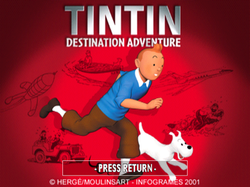
 Tintin: Destination Adventure on PlayStation
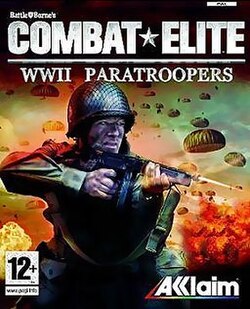
 Combat Elite: WWII Paratroopers on PS2
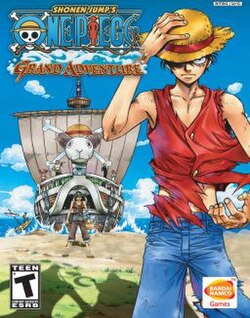
 One Piece Grand Adventure on PS2
 Taiko no Tatsujin: Dokodon! Mystery Adventure on Switch










 Another SquareThought Site