

 Feb 2020
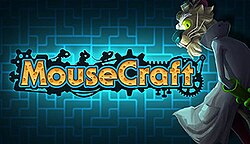

MouseCraft arrives on Switch like a small, polite rodent carrying a Tetris block and a mission statement: solve puzzles, shepherd mice, and feel weirdly proud of guiding digital vermin to cheese. On paper it's a tidy 80-level package from Poland's Crunching Koalas - a studio that clearly believes in cute critters and physics - with a level editor tacked on for people who like to torment themselves creatively. Framed as an adventure but played as a puzzle sandbox, MouseCraft doesn't sell itself on grand narrative flourishes; instead it offers a surprisingly emotional micro-drama between a handful of archetypal characters. If you're expecting an epic plot, you'll be disappointed. If you expect the kind of quiet character arcs that can happen in eight-to-twelve-room vignettes about cheese and blocks, then buckle up. This review examines MouseCraft through the weirdly satisfying lens of characters and their story arcs: the Mice, the Blocks, the Player-Architect, and the Levels-as-Antagonist. There's also a minor cameo by reception statistics, because even mice must answer to Metacritic sometimes.
Treat MouseCraft like a stage play where the cast is unshakably small and the set changes a lot. The mice are the protagonists: mute, single-minded, and emotionally invested in cheese. Their arc is simple but oddly cinematic - they begin as vulnerable pawed dramas, wandering aimlessly when left to their own devices, and progress into efficient, sometimes heroic little navigators when the player scaffolds a path for them. You don't control the mice directly; their agency is limited to following physics and available routes. That means their growth arc is externalized: they become better at reaching goals because you - the invisible director - have learned to choreograph the environment. Watching a single mouse survive a gauntlet you've built feels like a tiny triumph, and the game is smart enough to make those victories matter. The Blocks are the game's supporting cast and moral foils. They are the mentors, the tools, the rigid-but-sincere friends who show up in a shadow of Tetris-shaped dignity. Each block type arrives with a distinct personality: solid, floating, bouncy, or combustible (if you like dramatic license). The player stacks and positions these blocks to create paths, barriers, and Rube Goldberg solutions. Their arc is functional rather than emotional - blocks begin as raw geometry and, through the player's choices, graduate into purpose. A single perfectly placed block can redeem an entire act; conversely, a misused block becomes tragic comic relief when ten mice fall into a pit that was entirely avoidable. This lends each level a Homeric tension: will the stoic block rise to its destiny, or will it crumble under weight and poor timing? Then there is the Player-Architect, the character you play by proxy. This role is flamboyant in its silence - your only dialogue is the occasional click and the holy act of placing a piece. The player's arc is pedagogical. Early levels function as warm-ups where tutorial beats teach you the basic grammar: how mice behave, what blocks do, and how to anticipate momentum. Midgame levels ratchet up into cunning contraptions that test your ability to think in several mouse-heights at once. Late-game puzzles are where the player either becomes a maestro of timing and space or a burnt-out block-stacker muttering, "I used three perfectly good L-pieces for this?" There's a satisfaction in the arc: you start as clumsy builder, graduate to clever engineer, and, if you're lucky, achieve elegant solutions that feel like poetry in physics. The Levels themselves play the antagonist. Instead of a single villain, you're facing an escalating series of constraints: timed doors, fragile platforms, conveyor belts, and those moments where the game says, "We hope you like creative suffering." Each level is a micro-narrative: mice are introduced, hope is kindled, strategies are tested, and either cheese is attained (happy ending) or catastrophe ensues (tragic cliffhanger until you try again). Across 80 levels this becomes a serialized drama with recurring motifs, and the level editor functions as fanfiction: a place for players to remix canon and write their own cruel but delightful episodes. Mechanically, MouseCraft borrows shrewdly from Lemmings and Tetris, two classics that also featured constrained agents and falling geometry. The game uses those influences to craft puzzles that reward foresight and penalize improvisation. The difficulty curve is mostly fair, though it occasionally spikes into mean puzzle territory where solutions hinge on one-frame timing or a very specific block orientation. For some players that spike translates into revelation - for others it translates into rage involving small squeaky animals. The level editor extends the narrative by letting players craft their own arcs: you can design a tender vignette where a single mouse navigates a pastoral staircase, or a diabolical test where dozens of mice meet untimely ends. The editor is the game's gift to storytellers and sadists alike. MouseCraft's pacing is deliberately episodic. Short puzzles allow for progress in bite-sized bursts, which suits Switch play: you can solve a level on the bus and feel morally superior about saving a mouse. There's replay value in optimizing solutions - achieving three-star or cheese-per-mouse runs - and in the joy of watching the cast perform after you've arranged the set. The emotional takeaway is odd but real: you care about the mice more than you expected to, and you celebrate asymmetric victories like a block placement that causes domino rescue sequences. This is a testament to the game's disciplined design: characters don't need words to have arcs if the systems are expressive.
MouseCraft's visual presentation is charmingly workmanlike. It doesn't try to be the prettiest thing on your Switch; instead it aims for clarity and personality. The mice are cartoonish and immediately readable, which is essential for small-screen play. Blocks have distinct silhouettes inspired by Tetris archetypes, making decision-making quick and frictionless. Color palettes shift between worlds, giving each batch of levels its own mood: brighter hues for introductory levels, moodier tones for trickier mechanics. Animations are simple but snappy; mice scamper and fall with enough character that you can read their fate before it happens. If you're judging on spectacle, MouseCraft won't win an art-house award, but that's not its intent. The visuals function as an effective theatrical backdrop for the character-driven puzzles. UI is clean and the camera stays usefully out of the way, which is critical when you're shepherding a parade of panicked rodents. On Switch the game runs smoothly and feels crisp in handheld mode. The aesthetic supports the narrative vision: it's about small characters in small dramas, and the graphics respect that scale.
MouseCraft is a puzzle-adventure that sneaks up on you emotionally. It doesn't have a sprawling cast of voiced characters or a twisting plot, but by treating its gameplay systems as personalities it creates satisfying character arcs where you'd least expect them. The mice graduate from helpless extras to triumphant survivors under your tutelage; the blocks transition from anonymous geometry to heroic linchpins; the player evolves from fumbling amateur to elegant architect. With 80 levels and a level editor, there's enough material here for a full season of miniature dramas. Critically, reception has been mixed-to-favorable depending on platform and patience for spikes in difficulty. If you enjoy methodical puzzle design, the joy of constructing paths, and the absurd idea of becoming emotionally invested in rodents and tetrominoes, MouseCraft will deliver bursts of delight on the Switch. If you require a narrative with speeches, betrayals, or existential monologues, you'll be left wanting. For its price and pedigree - Crunching Koalas' polished indie sensibility - MouseCraft earns a solid 7.7/10. It's not a masterpiece, but it's a small, clever play where the cast of mice give surprisingly moving performances, and the standing ovation is a pocket of cheese at the end of each stage.
 Tintin: Destination Adventure on PlayStation
 One Piece Grand Adventure on PS2
 Professor Layton and the Last Specter on DS
 Puzzle by Nikoli 4: on PS4










 Another SquareThought Site