

 Sep 2023
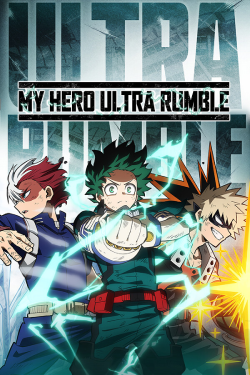

My Hero Ultra Rumble rolls anime spectacle into the increasingly crowded free-to-play battle royale ring and, as the paperwork promised, it brings My Hero Academia characters to a 24-player, third-person battlefield. Built on Unreal Engine 4 by Byking and published by Bandai Namco, the game is explicitly designed to be a hybrid: a battle royale core layered with MOBA-like class roles, cooldown-driven 'Quirk' abilities, and an item upgrade economy. On Switch, that aspiration translates into a game that often feels clever in systems design and occasionally clever at punching its own balance in the face. This review leans into the technical guts of Ultra Rumble - matchmaking design, ability cooldown architecture, upgrade/currency systems, cross-platform engine constraints, and live-service operations - while keeping the tone playful enough that you won't fall asleep mid-ability-cooldown.
At its mechanical nucleus, Ultra Rumble is a third-person battle royale where matches start with up to 24 players, typically split into eight teams of three. The core loop is familiar: the map periodically shrinks until only one team remains. What differentiates Ultra Rumble is how it maps its anime characters into a quasi-MOBA template without abandoning the emergent chaos of battle royales. Each playable character has three Quirk skills plus a unique action. The three-ability setup is a tight design constraint: it forces each hero into a small, focused vocabulary of actions that need to interact cleanly with cooldowns, resource gating, and item-based upgrades. Cooldowns vary by ability strength and are the primary pacing tool. Strong, high-impact abilities have long cooldowns, creating windows where positional play and teammate synergies matter more than pure spamming. That cooldown architecture functions as the game's heartbeat: tuning it changes match tempo, burst windows, and the prominence of individual skill versus team coordination. The game also includes unique character actions that affect the state machine of a player beyond damage-dealing. For example, Izuku Midoriya can carry a downed teammate - a high-level design choice that adds rescue and extraction layers to combat encounters. Implementing these interaction-heavy actions requires careful animation blending, state replication across the network, and predictable latency handling so that 'carrying' doesn't turn into a desynced mess on other clients. The decision to give unique non-damage utilities to characters increases tactical depth but raises the technical bar for solid multiplayer execution. Itemization in Ultra Rumble is both immediate and incremental. Players collect cards to upgrade Quirk strength and potions to increase a Guard Point gauge that mitigates damage and knockback. The card system creates a short-match RPG-lite progression: item pickups are temporary modifiers that stack with base abilities, producing power spikes and reverse-comeback moments. From an engineering standpoint, persisting the effects and synchronizing pickups in a 24-player free-for-all requires authoritative server logic to prevent item duplication, loss, or client-side prediction errors. The Guard Point system is an interesting mechanical layer because it changes the effective hitstun and knockback math; guard mechanics like this force designers to consider not just HP but collision responses and animation interruptions. Character roles are sorted into five playstyle groups: Assault, Rapid, Strike, Support, and Technical. Grouping characters into archetypes is a smart design choice for onboarding and balance: it constrains the space of interactions so designers can tune archetype vs archetype rather than every hero vs every hero. Six characters are unlocked by default (Izuku Midoriya, Ochaco Uraraka, Cementoss, Mt. Lady, Tomura Shigaraki, and Dabi), while additional heroes are gatekept via a Special License battle pass or a gacha system. The presence of both a battle pass and gacha introduces both a time-based progression funnel and a monetized randomness funnel - from a systems perspective this means the live team must operate two distinct reward pipelines and balance player perception of fairness across both. Early previews called the game "rough and unbalanced," which isn't surprising for an entry that mixes genres and has a rotating roster. Balance in such a game is a moving target: new characters, seasons, and items will shift the meta. The team-based default (trios) helps mask individual overpowered picks but also amplifies the importance of matchmaking quality. The game had closed and open betas before launch, which indicates the developers used staged tests to gather latency, match composition, and balance telemetry. For a 24-player format, reliable matchmaking is more than pairing players - it's about distributing skill, ensuring reasonable queue times, and handling partial-party joins. Match variants expanded post-launch: two-person teams and solo modes were added later. Those additions reveal a flexible matchmaking architecture that allows different lobby sizes and composition rules without a full backend rewrite. Adding modes mid-cycle is a sign the developers built for live operations: seasons released approximately every two months with new characters, modes, mechanics, stages, and cosmetics. That cadence implies a content pipeline that feeds both client patches and server-side configuration changes - a non-trivial engineering commitment that requires robust CI/CD for client builds and careful database migrations to avoid breaking live sessions. From a user-acquisition and player-retention angle, the game mixes free-to-play accessibility with monetization mechanics: battle pass (Special License), gacha for characters/cosmetics, and occasional rental tickets for trialing locked characters. Balancing monetization and perceived fairness is a live-system problem: telemetry must be monitored for acquisition funnels, conversion rates, and player churn, while design must mitigate pay-to-win concerns via catch-up mechanics or non-gameplay cosmetics. Voice work reprises the anime actors in both Japanese and English, which is a nice fidelity win for an IP game. It enhances perceived quality but introduces localization and audio pipeline complexity; widespread voice lines require asset packing optimizations for Switch and platform-specific audio callbacks to ensure lip-sync and timing consistency across clients.
Ultra Rumble runs on Unreal Engine 4, which is a versatile foundation for cross-platform projects. The choice of UE4 is practical: it provides a mature networking stack, robust animation systems, and a pipeline well understood by live-service studios. For a game intended to ship on Switch alongside more powerful hardware, the engine made it feasible to maintain a common feature set while scaling visual fidelity per platform. On the Switch specifically, Unreal-based projects typically need targeted optimizations: LOD management for character models, effect budget capping for large team fights, texture streaming adjustments, and careful post-process usage to protect framerate and memory. The game's spectacle-heavy design - multiple Quirk effects, area attacks, and item pickups - can push particles and shaders. A sensible engineering approach is to implement effect LODs that reduce shader complexity at greater distances and to bake or reuse particle pools to avoid expensive spawn/despawn spikes. Given the match size (up to 24 players) and the number of simultaneous abilities, effect optimization is a major factor in maintaining playability on Switch hardware. Animation and visual feedback are crucial for a game's readability, especially when ability cooldowns and unique actions are the main pacing elements. Designers need crisp VFX readouts for ability telegraphs and impact so players can react; otherwise, gameplay devolves into 'did I get hit or was that just dramatic smoke?'. The game's implementation of unique actions and carry mechanics also requires clean animation blending to avoid visual desyncs that confuse both local and remote players. Voice lines and UI callouts complement visual cues and help make the action readable when the screen is crowded. Lastly, cross-platform parity on an engine like UE4 also means art assets and animation rigs are shared, then scaled or stripped for weaker platforms. That reduces development friction but demands a robust profiling and QA loop to catch platform-specific hitches.
My Hero Ultra Rumble is an ambitious mash-up of battle royale chaos and MOBA-like structure. On Switch, the game's technical foundation (Unreal Engine 4), its 24-player matches, and the three-ability Quirk architecture create a compact and tunable mechanical space. The item/card upgrade system and Guard Point mechanic add interesting non-linear power curves that reward map exploration and on-the-fly decision-making rather than pure aim. Live-service commitments (seasons every couple months, new heroes, modes) show the project was built with ongoing operations in mind, which is encouraging for a free-to-play title. The downsides are largely the expected ones for a hybrid live-service release: initial balance roughness, the complexity of monetized progression lanes (battle pass + gacha), and the engineering challenges of keeping large spectacle fights smooth on a constrained platform like the Switch. If you care deeply about anime-faithful character kits and enjoy ability-driven, team-focused chaos, Ultra Rumble is worth a download; its millions of early downloads suggest you won't be the only person in the lobby. For competitive purists or players who demand impeccably tuned balance day one, the game may feel a touch unpolished - but it's also the kind of live product that can improve with seasons, telemetry-informed balance passes, and steady post-launch support. Score: 7.5/10 - a technically interesting and frequently fun fighter with room to grow into a finely tuned, long-running live service.
 DJ Hero on PS3
 My Hero: One's Justice 2 on PS4
 Hero Must Die. Again on PS4
 Orphen: Scion of Sorcery on PS2
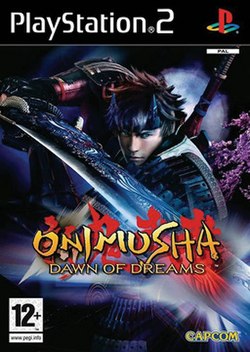
 Onimusha: Dawn of Dreams on PS2
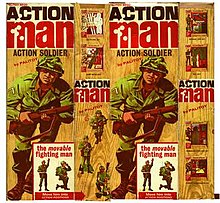
 Action Man: Operation Extreme on PlayStation
 Bakugan Battle Brawlers: Battle Trainer on DS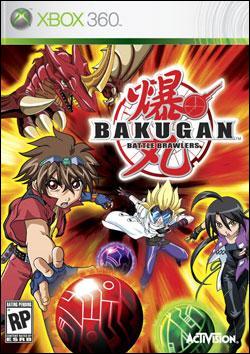
 My Hero: One's Justice on Xbox One
 My Hero: One's Justice on Switch
 My Hero: One's Justice 2 on Switch
 My Hero: One's Justice on PS4










 Another SquareThought Site