

 Aug 2025


My Hero One's Justice is the eyebrow-raising, muscle-flexing 3D arena fighter adaptation of Kōhei Horikoshi's My Hero Academia. Built in Unreal Engine 4 by Byking and published by Bandai Namco, it landed on the Nintendo Switch in late 2018 and promptly asked anime fans to punch, blast, and 'quirk' their way through destructible cityscapes. On Switch the game sits somewhere between a faithful anime spectacle and a mechanically inconsistent brawler: it nails the look and sounds of the source material, but under the hood you'll find trade-offs - a fighting system with promise that trips over camera, AI, and online stability. This review focuses on the technical side of the Switch version: how the engine, controls, netcode, and design choices behave when the controller is in your hands and the arena is crumbling beneath your feet.
At its core, My Hero One's Justice is a 3D arena fighter that prioritizes spectacle. Matches happen in large, destructible stages where knockback sends characters flying through buildings and set pieces react to clashes. The decision to go fully 3D rather than a side-on anime fighter opens up verticality and environmental interaction, which is technically interesting: collision detection must account for dynamic geometry, hit transferrals during knockback, and camera reorientation in three axes. The execution is a mixed bag. Controls and input feel generally responsive - reviewers noted that character controls are a strong point - but the combat system's depth is limited by mechanical inconsistencies. There are light and heavy attacks, ranged abilities tied to each character's Quirk, special moves, and an assist/partner system that lets you call in support characters. From a technical standpoint, hit detection usually reads well when abilities connect at close range, but ranges and tracking can be inconsistent. For a switch port where button timing and latency are critical, the responsiveness is commendable, but the system doesn't reward frame-precise play the way a more competitive fighter would. That makes matches feel cinematic rather than technically tight. Camera behavior is one of the game's more problematic technical aspects. In 3D arena combat the camera must simultaneously showcase action, maintain target tracking, and avoid clipping into geometry. Critics repeatedly flagged the camera as a design friction point: it will frequently lose sightlines or swing unpredictably during multi-hit combos and environmental collisions. Those swings sometimes cause attacks to visually appear to connect while the camera's perspective says otherwise, creating a perception problem: did the move miss, or did the camera lie? This undermines both the player's situational awareness and the clarity of hit registration moments. AI presents another area of compromise. Reviewers pointed out that enemy behavior can feel erratic - sometimes rubber-bandy to your inputs, other times aggressively optimal. From a technical perspective, this suggests a straightforward state-machine AI with rudimentary prioritization (close-range attack, block, special move when meter is available), but lacking advanced decision trees or adaptive heuristics. The consequence is predictable bouts against lower-difficulty CPU opponents and sporadic spikes of difficulty from AI that seems to cheat via damage or positional advantage rather than via learned tactics. Online play on the Switch is functional but flawed. Multiple outlets and the source material called out laggy network performance. On a technical level, lag in a fighting game manifests as delayed inputs, desynced animations, or rubber-banding during positional state changes - all of which were observed in various reports. The game's netcode appears to be delay-based rather than modern rollback-style, which tends to amplify the feel of input latency when packet loss or higher ping occur. The practical effect is that online matches can be unsatisfying for players who expect tight input windows and immediate action confirmation. Content-wise, there are multiple modes: story mode, 'if' side stories, and multiplayer (local and online), plus the addition of an Arcade Mode update post-launch and several DLC characters. The story mode received criticism for being opaque to newcomers - it assumes knowledge of the franchise and sometimes uses the player's expectations of canonical events as a shortcut for plot beats. Technically, story presentation relies on in-engine cutscenes that visually match the anime's energy, but the pacing of interactive beats vs. cinematic playback can leave players feeling like they're watching more than playing. The 'if' stories were singled out as a positive, since they offer novel situations that the engine can stage without conflicting with established lore. Roster balance also becomes a technical gameplay concern. Several reviewers noted imbalanced characters - some kits feel overtuned while others require gimmicks or stage-specific exploitation to be competitive. Balancing a roster in an engine that supports wide-ranging abilities, projectiles, and knockback requires tight parameter tuning (damage scaling, frame data, hitbox sizes, invulnerability windows). The patch history and DLC additions (such as pre-order characters turned paid DLC and others like Inasa Yoarashi) indicate ongoing balancing attempts, but the initial release shows the typical teething problems of a licensed fighter where character fun and faithfulness sometimes trump parity.
Graphically, My Hero One's Justice is where the Unreal Engine 4 tooling is put on a date with anime aesthetics and asked to behave. The result is generally successful: cel-shaded models, bold outlines, and motion-exaggerated animation deliver a faithful My Hero Academia look. Multiple outlets praised presentation and visuals, and for good reason - the character models capture silhouettes and facial expressions well, while particle effects (explosions, energy blasts, and quirk flares) are convincing and punchy. On the Switch specifically, the developers made smart compromises. While the documentation doesn't provide raw resolution or frame-rate telemetry for the Switch build, the praise from Switch-focused outlets suggests that the game maintains a level of visual fidelity disproportionate to the platform's limitations. That implies optimizations such as LOD (level-of-detail) management for distant geometry, baked lighting for static elements, and careful particle count culling during hectic scenes. Animations are key to the game's cinematic feel, and the frame-to-frame posing during special moves sells impact even when technical fidelity is scaled back. There are still graphical trade-offs that have gameplay consequences. Destructible environments, while visually satisfying, can introduce visual noise that complicates hit clarity: dust, debris, and collapsing geometry may momentarily obscure characters, blending with particle effects in a way that makes tracking harder. Combined with camera irregularities, this occasionally blurs the line between spectacle and obfuscation. On the audio-visual front, voice lines, soundtrack cues, and animation-sync work well to sell hits and quirk activations, and the frequent nods to the source material (easter eggs, signature poses) are implemented as in-engine assets, not pre-rendered cinematics, which is technically preferable for consistency and performance.
My Hero One's Justice on Switch is a textbook example of a licensed game that excels in presentation but stumbles over the fine-grained mechanical details that fighting-game aficionados live and die by. Technically, it's impressive that Unreal Engine 4 was used to deliver anime-accurate visuals on Switch hardware while also powering destructible arenas and large particle effects. Controls are responsive, and the characters feel true to their quirks, but camera issues, AI fluctuations, online lag, and roster balance problems keep it from being a competitive staple. If you are an anime fan who prioritizes spectacle and faithful representation - the kind of player happy to watch a well-staged superpower collision and occasionally mash towards a flashy finisher - the Switch version will make you smile and occasionally fist-pump. If you're chasing depth, tight competitive play, or pristine online matches, you'll find the technical compromises frustrating. The game's commercial performance (over 500,000 shipments) and the existence of a sequel suggest a solid fanbase and an engine with room to grow. For now, consider My Hero One's Justice a visually successful, mechanically middling arena fighter on Switch: a game that's fun to watch and often fun to play, but technically let down when you look too closely at the critical details that separate a memorable fighting experience from a good-looking one.
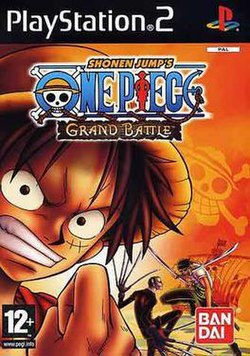
 One Piece Grand Battle! on PS2
 Microsoft Xbox One
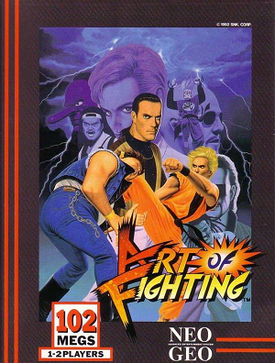
 ACA Neo Geo: Art of Fighting 2 on Xbox One
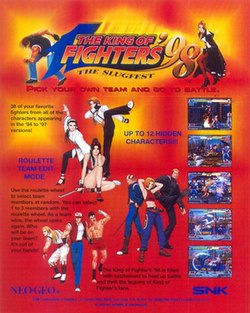
 ACA Neo Geo: The King of Fighters '98 on Xbox One
 Touhou Hyoibana: Antinomy of Common Flowers on Switch
 Art of Fighting Anthology on PS2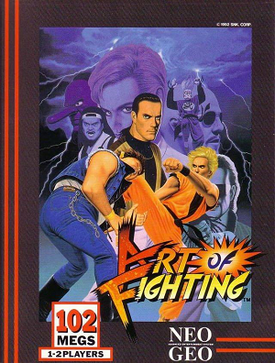
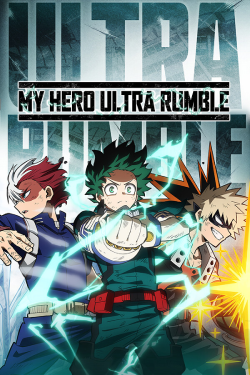 My Hero: One's Justice 2 on Xbox One
 My Hero: One's Justice on Xbox One
 My Hero: One's Justice 2 on PS4
 My Hero: One's Justice on PS4










 Another SquareThought Site