

 Aug 2025


Nights of Azure 2: Bride of the New Moon arrives bearing the same Gothic perfume as its predecessor: blue blood, fiendish nights, and a cast that looks like it walked out of a tragic opera. Officially a sequel to Gust's original Nights of Azure, this follow-up doubles down on relationships, responsibility, and the weirdly fetching idea that blood can be both a weapon and a wallet. If you came for hack-and-slash mayhem you won't be disappointed, but what the series really sells is personalities - messy, contradictory, frequently dramatic personalities - and Nights 2 (as the fans whisper into their plush blankets) asks you to care about them. This review centers on how the game's characters and their arcs are written and expressed through the systems inherited from the first game: transformations, demons-as-companions (Servans), and the ever-present stain of the Nightlord's blue blood. Consider this an in-depth character dissection performed with a scalpel that also happens to be a blood-sword.
Under the hood the combat rhythm is familiar to anyone who sampled the first Nights of Azure: you're sharing the battlefield with contracted demons called Servans, and tactical success hinges on summoning the right sort of subordinate - attack types for damage, supports for utility - while juggling SP and Arnice's transformation gauge. Stamp on light and heavy attacks to build chains, unleash a transformation when the meter is full, and watch the protagonist switch into demon, rabbit, or phantom stances that alter speed, damage, and recovery. Weapon swaps - blood-made daggers versus longswords - remix your movesets and change how your Servans behave. Blue blood functions as both loot and experience: you collect it from foes and quests, spend it at shops, or invest it back into Arnice. The Ende Hotel again plays hub-world, where daytime activities, equipment fiddling, and quest-taking frame the darker trips into Ruswal's night. An optional arena offers bite-sized challenges for people who enjoy rulesets more rigid than a knight's oath. Yet it is through those mechanics that Nights 2 attempts to translate interiority into action. Arnice, the original game's protagonist and the heart of the series, is archetypically problematic in the most interesting way: part holy knight, part monster. Her contact with the Nightlord's blue blood gives her a bloodsucking ability and the knack for fashioning a demon sword out of her own body fluids, which is the sort of character detail that makes you laugh and then feel bad about laughing. Mechanically her transformation gauge is a literalization of the tug-of-war inside her: fill it by chaining strikes and you can lean into the monster side - more power, less restraint. That same meter becomes a storytelling device. Each transformation isn't just stats on a screen; it's a visible reminder that Arnice is constantly weighing the cost of victory against the erosion of self. Lilysse, introduced in the original as a saint destined to seal the Nightlord, exists as Arnice's counterpoint. Where Arnice is compromised blood and moral friction, Lilysse is duty, light, and consequence. Their friendship occupies the center of the narrative tension: loyalty versus obligation. Scenes that pair Arnice's reckless, bloody effectiveness with Lilysse's crushing responsibility allow the sequel to explore the ethics of protection - is saving a life worth trading away a bit of someone's soul? The game stages this debate with quests that force choices, dialogue that lingers on guilt, and combat scenarios where the saint's mandate and the knight's instincts pull the party in different tactical directions. Christophorus, the opera-house pure-blood demon, is the franchise's elegant enigma. Voiced with a slippered kind of menace, he represents what the Nightlord might have been without hubris. Rather than an obvious villain he's an ambiguous mirror: alluring when you look directly, dangerous when you look away. Corrine, Arnice's senior and fellow Curia knight, serves as mentor and moral scaffold - duty-heavy but not unfeeling - while Professor Alucard provides the series' mad-curiosity lens. His researcher impulses make him a reliable flavor text machine for lore dumps about apparitions, fiends, and blue-blood contamination, and his presence raises perennial questions about the ethics of study: is naming and cataloging monsters the same as controlling them? Lloyd the merchant and Simon the hotel manager are quieter, utilitarian anchors, but their small arcs - Lloyd's secretive skepticism, Simon's weary caretaking - are the sort of beats that make Ruswal feel inhabited. Mistral, the fragrant and secluded apparition, plays the role of the unreachable temptation, a character whose sweet perfume hides an agenda as ancient as the island's curse. If Nights 2 keeps one foot in spectacle and the other in soap-opera, it's because the systems here are tools for relationship storytelling. Servans can be read as externalized friendships or debts-grow them, and they learn new abilities; abandon them, and they remain flat. The blue blood currency is never just money: in every shop transaction and level-up menu it whispers that corruption is monetizable. Some players will find this allegory subtle and compelling; others will find it on-the-nose. Either way, Nights 2 leans on its characters to turn mechanical repetition into narrative weight, which mostly works because Gust drew figures you want to see evolve.
Yoshiku's hand - responsible for character sprites and backgrounds in the original - remains the series' visual calling card. The island-kingdom of Ruswal is rendered as a shadowy, slightly theatrical playground: opera houses, palaces, and coastal hamlets all drenched in moonlight and the hint of something ominous lurking in the fog. Character portraits are expressive in that anime-adjacent way where a single eyebrow tilt can convey a whole backstory. Fiends and apparitions are designed to be unsettling rather than gross; their layouts suggest both grace and threat. On a purely aesthetic level the game trades in contrast and mood rather than polygonal fireworks, and that choice suits the narrative - Nights of Azure wants you to feel small and ephemeral against its night. Technical fidelity isn't the point; atmosphere is. If you're playing this on a portable like the Switch, what matters is that the art direction translates: the silhouettes remain readable, the environments retain their brooding textures, and the character designs still pop in handheld view. Frame rates and draw distance were never sold as the franchise's strong suit in press materials; instead, Gust relies on composition, lighting, and a steady soundtrack to sell the drama. Some reviewers called the package 'mixed' overall, but when the lights are low and the music swells, the visuals do the heavy lifting in convincing you the world and its people are worth your time.
Nights of Azure 2: Bride of the New Moon isn't a pristine, genre-defining masterpiece - the series has never aimed for that - but it is a committed, occasionally melodramatic exploration of identity, duty, and friendship wrapped in a playable frame. Critics gave the franchise mixed marks historically, and that ambivalence is fair: combat and progression are solid if repetitive, and pacing can make the story feel like a slow-burn soap that occasionally forgets to burn. What the sequel (and the original material it builds on) does particularly well is craft characters who earn empathy. Arnice's half-human, half-monster liminality is expressed not only in flavor text but in the way you play; Lilysse's saintly burden is a constant narrative pressure; Christophorus and Mistral complicate every black-and-white assumption about demons and duty. If you care about character arcs more than raw mechanical novelty, Nights of Azure 2 will reward you. If you buy games for pristine optimization and pace that never hesitates, this might feel like a haunted house with a leaky roof. For anyone who enjoys Gothic JRPGs where relationships are the real currency, Bride of the New Moon is worth a night or two - bring a flashlight and maybe a blood-sword. Score: 6.5/10 - charmingly flawed, convincingly melancholic, and frequently more interested in emotions than efficiency.
 Ultra Street Fighter IV on PS3
 New Pokémon Snap on Switch
 New Frontier Days: Founding Pioneers on Switch
 Combat Elite: WWII Paratroopers on PS2
 Onimusha: Dawn of Dreams on PS2
 Action Man: Operation Extreme on PlayStation
 Project Sakura Wars on PS4
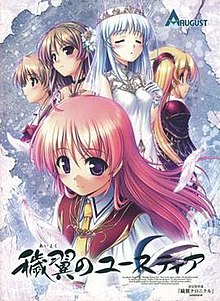
 Aiyoku no Eustia on Switch
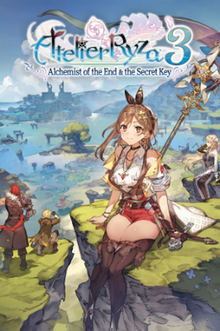
 Atelier Ryza 3: Alchemist of the End & the Secret Key on PS4
 Atelier Sophie 2: The Alchemist of the Mysterious Dream on Switch
 Atelier Ryza 3: Alchemist of the End & the Secret Key on PS5
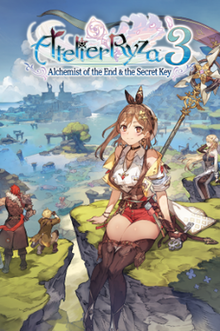 Atelier Ryza 2: Lost Legends & the Secret Fairy on PS4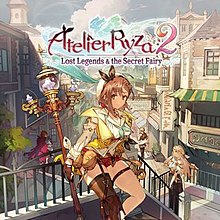










 Another SquareThought Site