

 Jan 2020
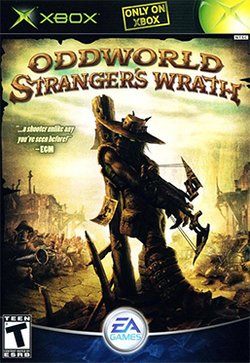

Oddworld: Stranger's Wrath is the game you bring to a bar fight if you want something equal parts weird, clever and vaguely tragic. On Switch it arrives as a port of a 2005 cult classic - the bounty hunter action-adventure that swaps between third-person platforming and first-person shooting with the kind of panache that suggests the Stranger personally taught the designers how to stare menacingly. But this review is less about the gimmicks and more about the people - or in Oddworld's case, the people-creatures - whose arcs slash and hiss across the screen. The Stranger begins the game as a motor-mouthed, mystery-shrouded bounty hunter working for cash to pay for a life-saving operation. He's a walking paradox: tough, cynical and utterly single-minded about 'moolah', yet built around a secret that turns his motivations from mercenary to deeply personal. The Switch version clunks and shuffles through towns inhabited by Clakkerz and Grubbs, sees him exposing dried rivers and corporate nastiness, and eventually peels away layers that turn a simple bounty-hunter plot into an identity story. The array of side characters - Sekto, the Grubb tribe, the fragile Steef memory, and the dickish D. Caste Raider - all orbit Stranger's arc and reflect different versions of power, loss, and survival in Oddworld's dusty, acidic world.
Gameplay in Stranger's Wrath is a two-headed beast that mirrors the lead's split life. You spend big chunks in third-person tracking through Gizzard Gulch, Buzzarton and New Yolk City: climbing, rope-swinging, and beating up thugs for cash. Then you flip into first-person for ranged combat with Stranger's signature crossbow, which fires live ammunition - literal critters you buy or find and load like tiny, squirming projectiles. The live-ammo system is more than a quirky weapon mod; it's an extension of character and theme. Using Stunks as gas grenades, Thudslugs as cannonballs, Boombats as rockets or Stingbees as buckshot is like handing the Stranger different moods: brutish, subtle, explosive, or annoying. The ammo choices often match the emotional tenor of the scenes - sometimes the game asks you to solve a problem by being sneaky (Stingbees or Stunks), sometimes by plowing through it (Thudslugs), and sometimes by embracing dramatic chaos (Boombats). Mechanically this serves the story: Stranger is a bounty hunter, so every capture (preferably alive) pays more. The capture mechanic itself is narratively loaded - when you attempt a capture you become vulnerable, forced to commit and take responsibility for your quarry. That vulnerability is a core part of his arc. Stranger's obsession with getting money for an operation makes him transactional, but the game keeps tugging at that transactional nature, nudging him into moments of mercy or revelation. The interplay of stealth, straight-up fight, and the moral twinges around whether to kill or capture alive turns a simple earnings loop into a character test at every turn. The plot stages Stranger's arc in three acts across towns and through encounters with the Grubbs and the Steef backstory. Initially you see him as a one-man machine: witty quips, gruff competence, and a well-stocked crossbow. Midway the narrative sharpens: the dried river near Buzzarton is not just geography, it's the sign of something corrosive. Sekto's dam is an ecological and moral wound, and Sekto himself is the personal antagonist whose choices reverberate beyond him. The interrogation by D. Caste Raider is a clean, brutal narrative beat that forces the Stranger's identity into the open: he is a Steef, and this truth changes everything. What seemed like a mercenary quest becomes an attempt to reclaim or reconcile a lost people's legacy. This revelation reframes previous encounters. The Grubbs' torment and the extinction of the Steef are not just worldbuilding trivia, they are mirrors showing what the Stranger might be fighting to save - not just cash, but a cultural memory. Sekto as antagonist amplifies this: his dam is economic exploitation, but the later reveal - that Sekto is an Octigi parasitically controlling a Steef - adds a mythic body-horror punch. Stranger's confrontation with Sekto isn't just the boss fight; it's a reckoning where personal and communal arcs collide. Sekto swimming away afterward is oddly fitting: the body may be defeated, but the parasite-era trauma keeps slithering elsewhere. Even peripheral characters matter. The Grubb leader and tribe provide the emotional stakes: without water their lives are hollowed out. The Steef, though extinct, are omnipresent as a ghostly standard for what the world has lost. D. Caste Raider functions as a foil to Stranger - a hired muscle who helps reveal the protagonist's origin but also demonstrates how curiosity and cruelty can be indistinguishable. Across the map, NPCs and bounty targets are rarely blank wallpaper; they are punchlines, tragedies, and occasional moral rubs that force the player to decide what kind of hunter they want to be.
On Switch, Stranger's Wrath arrives as a port of a game that originally received HD treatment: enhanced 720p visuals, more detailed character models and remastered dialogue were part of the later remaster pedigree. The art remains the strongest thing the engine has - Oddworld's design aesthetic is bizarre without being cute, grotesque without courting disgust. Character models do a lot of heavy storytelling: the Stranger's hunched silhouette, Clakkerz facial flaps, and the Grubbs' wet-souled expressions telegraph history and hardship without a single line of exposition. The Switch's hardware has to work a little harder to juggle the texture detail and the zany creature animation, and the port isn't flawless (load hiccups and a slightly softer frame rate pop up), but the charm carries through. Scenes like the dried riverbed and the dam are visually economical: the world feels used, scarred, and lived-in, which complements the game's narrative of extraction and loss. The HD remaster and later ports added polish - remastered dialogue makes the character beats hit cleaner, and updated models help communicate subtlety in faces and posture. On Switch, you're mostly getting the same strange museum of oddities with portability as the bonus feature. Metacritic's Switch score of around 72/100 reflects that some players find the port rougher than modern native Switch titles, but the visuals themselves still deliver the crucial Oddworld vibe: think gritty, inventive puppetry rather than photorealism.
Oddworld: Stranger's Wrath on Switch is less a simple nostalgia play and more a character-driven western in which identity, survival and exploitation tangle like a bad bar fight. Stranger is the engine: a bounty hunter who begins transactional and ends complicated, haunted by the revelation of his Steef heritage and by the consequences of corporate-like opportunists such as Sekto. The Grubbs and the Steef's memory supply the moral stakes, and even the weird weaponized wildlife becomes narratively meaningful. The gameplay loop - toggling between third- and first-person, choosing how to capture bounties, and deciding how to spend rewards - keeps you implicated in Stranger's choices. The Switch version is not without technical warts, but the story and characters are resilient; they carry the game where the port stumbles. Awards and high critical praise from the original release era weren't wrong: the writing, the world and Stranger himself are memorable in a way most triple-A antiheroes aren't. If you want a portable game that makes you laugh, squirm and occasionally feel real sympathy for a bandolier-clad loner with a soft spot for live ammunition, Stranger's Wrath is worth the trip. Score: 8.5/10 - because the narrative muscles flex beautifully, even if the Switch port sometimes grinds a gear or two.
 Oddworld: Soulstorm on PS5
 Oddworld: Abe's Exoddus on PlayStation
 Tintin: Destination Adventure on PlayStation
 Disney's Chicken Little: Ace in Action on PS2
 Pirates: The Legend of Black Kat on PS2
 Crimson Sea 2 on PS2










 Another SquareThought Site