

 Aug 2025


Tiny Bookshop is the kind of game that smells faintly of paper and sea breeze even through a screen. Developed by Neoludic Games and ported to the Nintendo Switch alongside Windows, Mac and Linux releases, it asks you to be a bookseller with a trailer rather than a corner shop, a storyteller who moonlights as a small-business entrepreneur, and a reluctant therapist for anyone who wanders by. The premise is deliciously simple: you run a mobile bookshop in the seaside town of Bookstonbury, decorate your trailer-turned-bookshop, sell and recommend real-world books, and slowly become entangled in the lives of dozens of locals. Critics called it cozy and charming - it won 'Most Charming Game' at Indie Cup Germany 2022 and took home the Ubisoft Newcomer Award at the German Developer Award in 2023 - and with a Metacritic of 79 and a Switch review score of 8/10 from Nintendo Life, it mostly delivers on that promise. This review will look less at sales numbers and more at the beating heart of Tiny Bookshop: its characters and the gentle, oddly moving arcs that grow out of recommending the right book at the right time.
Tiny Bookshop is built on a deceptively small loop: buy or curate books, decorate the trailer, set up at a new spot in town, talk to people, and fulfill missions. On a mechanics level it's a cozy sim - approachable, slow, and deliberately low-stakes - but the way those mechanics intersect with character work is what transforms it into a quiet narrative tapestry. The player's avatar is mostly a blank canvas, which the game encourages you to fill out through decor choices and book selections. That blankness is a smart decision: it makes the player simultaneously protagonist and audience. You're not just restocking shelves; you're shaping an identity through taste. The trailer's shelves and knickknacks become a diary of decisions, and every cushion and plant you add is a shorthand for who you want your bookseller to be. Bookstonbury's townsfolk are written as archetypes at first - the anxious artist, the stoic fisherman, the elderly reader who remembers everything - but Tiny Bookshop doesn't leave them static. Missions are the engine for character arcs: a neighbor who never leaves their house might need a memoir to confront a buried regret; a teenager obsessed with screens may be nudged toward a graphic novel that sparks a new creative hobby. The game uses the simple act of recommending real-world books as a dramatic device. It treats reading as action: handing someone a title is the equivalent of offering an olive branch, a therapy session, or a dare. Because the books you stock are plausibly real, the recommendations feel credible; the emotional beats land because they have referents in the real world. You aren't just giving NPCs generic items - you're suggesting specific narratives that can change how they see themselves. As you meander between markets, docks, and the town square, the relationships progress through small, believable exchanges. The fisherman who starts as gruff and monosyllabic becomes solicitous about your shop's comfort; the cafe owner who initially sees your trailer as competition ends up delivering pastries and gossip. The game is keen on slow metamorphoses: no sudden confessions or melodramatic reveals, just incremental trust earned over cups of tea, recommended reads, and helpful gestures. It turns the playlist of missions into a playlist of lives, where each side-quest is less a fetch quest and more a line in someone's story arc. There's also a meta-arc at play: the trailer itself evolves from a transient novelty into a community fixture. Early on, customers drift past you like background characters; by the midgame, regulars expect you at certain spots and schedule visits. That progression mirrors how a small business grows roots in a town, and the game frames this growth as a narrative reward for attentiveness rather than a scoreboard achievement. Customization choices - shelving arrangements, posters, cushions - are mechanical but read as personality. Choosing to stock poetry will attract dreamy types; a focus on practical non-fiction pulls in the curious, problem-solving crowd. The interplay between curation and social reaction is Tiny Bookshop's quiet genius. Interactions are intentionally low-drama, but the game knows how to escalate a human story into something tender. A mission might ask you to find a book that helps an NPC reconcile with a sibling. The real emotional payoff isn't in the mission's completion screen; it's in the small animation when the NPC returns, book in hand, eyes softer. It's the game whispering that stories can change people, and that recommending the right book is an oddly intimate act. Humour is peppered throughout: pedantic locals who correct your genre labels, a suspicious cat who judges pricing, and townsfolk who have very strong opinions about bookmarks. The art of the recommendation becomes the art of listening. Players who treat conversations like tick-box interviews will find the arc thinnest; those who lean into curiosity reap the warmest relationships. The game's pacing supports character development. There are no brutal timers or punishing economic loops. Revenue matters, but it never eclipses the human relationships. If you want to grind for profit, you can, but Tiny Bookshop nudges you toward spending an afternoon helping someone find closure or rediscovering a childhood comfort read. And those nudges work because the game's missions are plausible: they are tasks rooted in life - lending empathy rather than just items. By the time your trailer becomes a landmark in Bookstonbury, you've built an informal anthology of lives you altered in small ways. That anthology is the most satisfying story arc of all: one person's decision to carry books rippling outwards to mend small fractures in a community.
Visually, Tiny Bookshop wears its heart on its sleeve. The art style leans toward warm pastels and soft edges, like a Sunday morning watercolor of a seaside town. The Switch version renders this palette with enough charm that the technical limits never feel like limitations; framerates stay steady and the UI is clear and tactile. Character portraits and idle animations are brief but expressive - an eyebrow twitch here, a small, grateful smile there - which is remarkable given how much of the game's emotional currency depends on these fleeting moments. The trailer interior is rendered lovingly: you can almost feel the grain of the wood, and the way light filters in when you open the door is consistently pleasant. There are no grand graphical fireworks - no engine-pushing vistas or ray-traced sea - but Tiny Bookshop doesn't aspire to that. Its visuals are functional and affectionate, designed to support intimacy rather than spectacle. Menus and book icons use readable typography, which is important in a game where titles matter. The overall presentation complements the narrative goals: cozy, readable, and quietly evocative. When the town changes over the course of your playsession - a new mural here, a shopfront freshened up there - those details are small visual confirmations of progress that feel satisfying rather than gamified.
Tiny Bookshop is a demonstration of how a tight premise and empathetic writing can blossom into something unexpectedly affecting. It is not a sprawling RPG with heroic quests, nor does it need to be. The game's focus on character arcs - tiny metamorphoses achieved through book recommendations, meaningful conversations, and a steady presence - is its central accomplishment. Running a mobile bookshop becomes a narrative device that invites you to witness and occasionally nudge the lives around you. The emotional stakes are intentionally modest, which is the point: Tiny Bookshop asks us to celebrate the small acts that matter in real life, the kind of kindness that looks like listening and ends in a paperback. If you want mechanical complexity or high-octane drama, this is not your siren song. If you are into cozy sims with a heart and a hilarious, judgmental cat population, Tiny Bookshop will reward the attention you give it. The Switch version is a portable antidote to busy brains: pick a spot by the in-game pier, recommend a book to a shy patron, re-shelve a few titles, and feel the pleasant, cumulative tug of community. By the time credits roll - if you ever let them - you'll realize the game's real victory: it turned the simple act of recommending a book into an entire moral economy of care. It's charming, considered, and quietly wise - a solid 8/10 for anyone who wants their games to come with a mug of tea and a sense that small changes matter.
 Tiny Tank on PlayStation
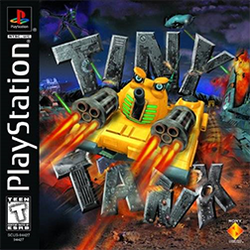 Tiny Troopers: Joint Ops DX on Switch
 Combat Elite: WWII Paratroopers on PS2
 Arcania: The Complete Tale on PS3
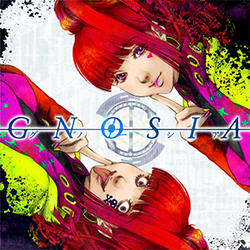
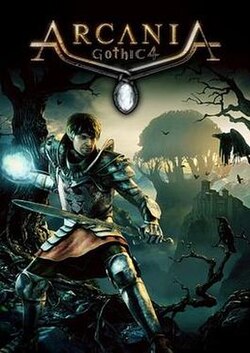 Gnosia on Xbox Series X/S
 The Banner Saga 2 on PS4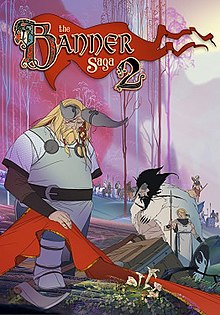










 Another SquareThought Site