

 Dec 2022
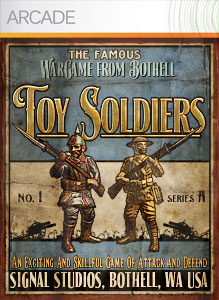

Toy Soldiers started life as a deceptively cute XBLA hybrid: part tower defense, part third-person action, all diorama charm. The HD remaster that made its way to the Switch in late 2022 presents the same core design - two opposing toy armies on World War I dioramas with 50 controllable units - but repackaged for modern platforms by Accelerate Games. If you care about how a game is assembled under the hood, Toy Soldiers HD is an interesting specimen: it sits at the intersection of clearly defined gameplay systems and old-school optimization trade-offs, and the Switch release forces a number of engineering compromises that are worth unpacking.
Toy Soldiers is technically simple at first glance, but that simplicity hides a non-trivial interplay of systems that the engine stitches together. The design splits into two primary modes: a strategic, overhead command layer where you kit out fixed emplacements and manage resources, and a direct-control action layer where you can hop into any created unit - machine guns, mortars, tanks, biplanes and even heavy howitzers - and play them in third-person. The game claims about 50 different controllable units; from a systems perspective that means a fair number of distinct weapon scripts, fire-rate timers, projectile prefabs, and hitbox configurations to maintain. From an input and camera standpoint the HD port on Switch preserves the original duality but pays attention to ergonomics. The overhead layer is fundamentally a point-and-select model adapted for controller inputs; the remaster's challenge is keeping selection cursor sensitivity predictable while swapping the mouse-driven precision of PC for joystick deadzones and rumble feedback. When you take direct control of a unit the camera moves into a third-person perspective with behind-the-shoulder aiming. The transition between macro and micro control introduces implicit AI responsibilities: stationary emplacements you leave are handed off to AI control, which runs pathfinding and targeting heuristics in the background. Those heuristics are intentionally lightweight - priority-target selection, simple LOS checks, and a money-gated upgrade decision tree - but they need to scale because the game spawns waves of enemies in tower-defense fashion. The campaign structure is a tower-defense backbone: 24 unique levels across British and German campaigns, each level built as a diorama set in a child's bedroom, library or lounge. The level geometry is primarily static occlusion-friendly props (dressers, lamps, rugs) with predefined walkways for infantry and lanes for vehicles and aircraft. On the algorithmic side this makes culling and LOD straightforward: unit count is high during waves, but the units are small, repeatedly instanced meshes (plastic soldiers), which lets the renderer reuse draw calls and texture atlases. Survive modes and four difficulty settings increase spawn density and aggression parameters, which stresses the same systems differently. The remaster maintains the progression and upgrade systems for fixed emplacements - a money model grants currency for kills, which gates upgrades to more powerful weapons and better survivability. Those upgrades are simple parameter changes (damage, firing arc, reload time) rather than adding entirely new behaviors, which keeps CPU overhead modest. The two DLC packs from the original release - The Kaiser's Battle and Invasion! - introduced additional unit skins, mini-campaigns and enemy types. On Switch the DLC content is folded into the HD package, expanding the enemy behavior set with more chaotic patterns (space tanks, flying saucers) that are still handled by the same AI routines, just with different spawning parameters. Multiplayer was historically an XBLA-only feature with split-screen and Xbox Live matches; the Switch release focuses on single-player, which simplifies the netcode discussion but also removes the need to reconcile lockstep synchronization or client-side prediction. That decision reduces complexity but means the HD port can optimize solely for single-device resource management: memory streaming of diorama assets, aggressive texture compression, and conservative background-threading for AI and audio streaming.
The art direction of Toy Soldiers is its strongest technical talking point: the game deliberately mimics a hand-built diorama, which gives the renderer permission to be stylized rather than photorealistic. Plastic and wood materials, toy-scale lighting, and a strong silhouette design help the switch port mask lower-resolution textures or simplified shader models. The HD label implies higher-resolution assets and refined post-processing, but the Switch hardware requires careful trade-offs. On the asset side, the remaster likely leans on higher-res diffuse maps for close-ups (when you're controlling a single unit) while using mipmaps and atlasing to shrink memory pressure when units are distant. From a rendering pipeline perspective the most expensive visual systems in Toy Soldiers are particle effects (exploding plastic chunks), dynamic shadows for key emplacements, and the occasional vehicle smoke and tracer lines. The original's particle systems are CPU-light but visually punchy; the HD port probably compresses particle textures and throttles particle spawn rates based on a dynamic quality scaler to keep frame pacing smooth on Switch. Level-of-detail (LOD) churn and occlusion culling are your friends here: the levels are tightly choreographed, so the engine can precompute occlusion zones and aggressively collapse distant soldier meshes into simple impostors. Shading is intentionally simple: there's little reliance on heavy PBR materials or complex global illumination, which makes the visual upgrade task less about adding modern shader complexity and more about increasing texture fidelity and fixing aliasing. Anti-aliasing and post-process antistrophic filtering do a lot of visual heavy lifting on a small screen. Audio is compact and clever: a mix of era-appropriate ditties and Stan LePard's original compositions provide a surprisingly rich aural backdrop without requiring monstrous audio bandwidth. Compression and smart channel mixing let the Switch carry a full music and SFX mix while reserving memory for gameplay assets. Porting-wise, the Switch release had to reconcile a codebase designed for XBLA/Windows architecture with Nintendo's platform constraints. That typically means remapping platform-specific APIs (graphics, input, filesystem) to Switch equivalents and profiling hotspots to prevent CPU/GPU stalls. Because the single-player focus removes networking demands, the engineers could reassign some thread budgets to AI and streaming, tightening up pop-in and texture streaming for a more consistent experience on handheld screens.
Toy Soldiers HD on Switch is an instructive example of pragmatic remastering. It doesn't reinvent the wheel technically, but it polishes a compact, well-architected game so that its core systems - the overhead strategy, the direct-control fun, the charming diorama presentation - still work cleanly on modern hardware. If you're a technical-minded player, you'll appreciate how asset reuse, instancing, and lightweight AI let the game present large-looking battles with a modest performance budget. Conversely, the HD treatment mostly means cleaner textures and UI tweaks rather than a ground-up graphical overhaul; the Switch build leans into this by prioritizing consistent frame pacing and memory-friendly streaming. For players who enjoy tightly integrated hybrid gameplay and care about how a game's mechanical systems are implemented, Toy Soldiers HD is a compact, efficient piece of engineering wrapped in toy-soldier whimsy. It's not flashy in the 'next-gen tech demo' sense, but it does exactly what the original did - and does it with surgical, optimization-minded care for the platform it now lives on. Score: 7.5/10 - solid engineering, polished presentation, and a game design that still clicks, even if the HD label is more tidy-up than tectonic shift.
 Toy Story Racer on PlayStation
 Toy Home on PS3
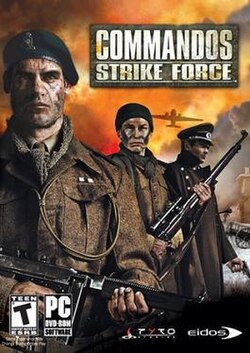
 Commandos: Strike Force on PS2
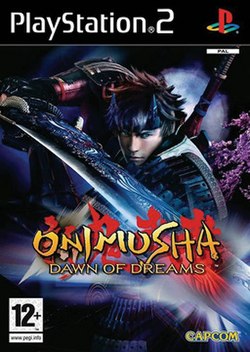
 Onimusha: Dawn of Dreams on PS2
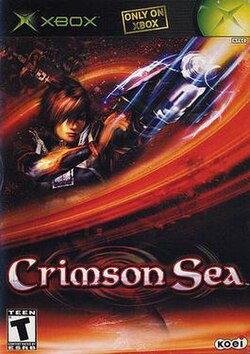
 Crimson Sea 2 on PS2
 Warhammer 40,000: Boltgun 2 on Xbox Series X/S










 Another SquareThought Site