

 Nov 2018


Transistor is the kind of game that sneaks up on you like a polite city official who then confesses to being a literal plot device. On Switch, its isometric streets and velvet-voiced narration still feel like being serenaded through a very pretty cyberpunk veil. But beneath the gorgeous brushstrokes and Darren Korb's unforgettable soundtrack is a small, precise human story folded into a glowing greatsword. This review follows the game's beating heart - its characters - and reads the mechanics, art, and sound as parts of their arcs. I care about Red, mostly because she makes being mute look melodramatic in the best possible way, and because the Transistor is less a weapon and more a complicated roommate who keeps stealing voices.
Transistor's combat is routinely described as a hybrid of action and paused tactical planning, and that description is true, but it understates how the system mirrors the characters' relationships. You control Red in real time: you dodge, dash, and swing. Then, when you activate Turn(), the world freezes into a quiet board where choices are deliberate and consequences feel personal. That mechanical pulse - the alternation between instinctive movement and careful planning - is also the rhythm of Red's arc. In the opening, she loses her voice when a man is struck down and his essence is absorbed into the Transistor; she must learn to move a world that no longer answers with sound. Combat mechanics ask the same of the player: act, absorb, adapt. Functions are the game's collectible powers. Each Function belongs to someone the Transistor has integrated: victims, Process-integrated citizens, members of the Camerata. Equipping a Function is not just a gameplay choice; it's the equivalent of carrying someone with you. Slotting Sybil Reisz's Function into your deck is like hauling her secrets into every fight; using Spark() as a passive or an augment feels like choosing what part of a person you keep. The game encourages experimentation - a deliberate design decision from the makers - and that experimentation reads as intimacy. You learn characters not only by talking to them in fragmented lore dumps, but by repeatedly using the patterns of their abilities until you know their strengths, flaws, and the niches they fill in Red's life. Limiters are worth a paragraph: optional handicaps that increase experience. On a story level they're an elegant metaphor for sacrifice and risk. Red takes on limiters in order to grow faster, just as she sacrifices clarity and comfort to free Cloudbank. The Turn() bar that depletes and refills becomes a recurring emotional beat: you can only do so much planning before you must act with what you have. The player's sense of pacing - when to pause and when to commit - maps directly onto the way Red negotiates her attachments, especially the quiet, pleading consciousness trapped in the Transistor's circuitry. Enemies called the Process are less faceless baddies and more an environmental narrative force. They 'integrate' people, flattening texture and personality into functionally efficient blocks. As the Process advances, districts of Cloudbank are simplified and blanched until the city itself starts to read like a character losing memory. Fighting Process units thus becomes less about clearing rooms and more about resisting erasure. When you finally confront members of the Camerata - the human architects of this calamity - combat mixes moral ambiguity with strategy: power you collect is a story you carry, and every ability you wield is a conversation with the person it came from.
Jen Zee's art direction is the emotional shorthand of Transistor. Cloudbank is 'romanticized, anachronistic quasi-futuristic' - a phrase the developers used and a perfect summation of how the city feels like a gilded stage set for intimacy. Visuals do a lot of heavy lifting for character work: Goldwalk and Fairview don't just look different, they feel different in the way characters change when you meet them. When districts get Processed, they lose ornamentation the way a personality loses nuance. The Transistor glows like an apologetic lighthouse; its panels and threads are design cues that hint at who's embedded in it. Sound is practically a character of its own. Darren Korb's 'old-world electronic post-rock' score and Ashley Lynn Barrett's voice parts serve as emotional punctuation marks. The game overlays an EQ blur during Turn() menus to create a distant, dreamlike effect - as if you're listening in on someone's memory. That processing of audio when time halts reinforces the theme that parts of people are being heard through a filter. The soundtrack sold well for good reason: it does not merely accompany the scenes, it interprets them, giving Red and the Transistor their emotional timbre. The performances in narration - the trapped man's cadence when he speaks through the sword - are quietly devastating, turning a narratorial device into a living, pleading presence.
Transistor's plot plays like a love story written in code and gold leaf. Red begins as an exposed, public figure: a singer whose identity is built on being heard. Stripped of her voice, she becomes physically and emotionally vulnerable, yet freed to act. The man in the Transistor, who narrates and guides, is simultaneously companion and captive; his arc and Red's are braided into one final, sacrificial duet. Royce Bracket's offer to cooperate, and the eventual clash that forces Red to choose between return and reunion, reads as the most painful kind of character work: to save a city, she must decide who she is saving herself for. The ending - her impalement and reunion inside the Transistor's virtual world - is not a defeat but a carefully scripted resolution that honors both agency and surrender. Mechanics, art, and music are all tuned to this compact, elegiac story. The combat system rewards learning people as much as learning combos; the art shows us a city being reduced to functions as people are integrated; the music converts grief into melody. If you want a rollicking open-world saga, this isn't it; if you want an intimate meditation on voice, memory, and what it means to carry others inside you, Transistor on Switch is a polished short novel you can play. It rewards attention, experimentation, and a willingness to be quietly wrecked by someone else's narration. Ten seconds of Turn() rarely felt so reflective. If Red's arc teaches anything, it's that sometimes the loudest acts of love are the ones that end in silence - and that silence, when finally filled, can be the most honest kind of song.
 NFL Quarterback Club 97 on PlayStation
 Coloball 2002 on PS2
 Combat Elite: WWII Paratroopers on PS2
 Onimusha: Dawn of Dreams on PS2
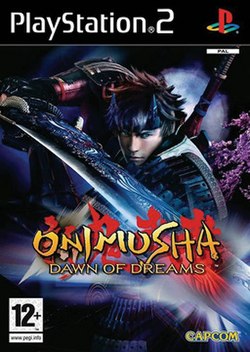 Nobunaga's Ambition: Rise to Power on PS2
 Hades on PS5
 Bastion on PS4
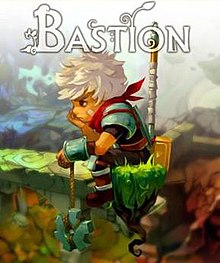 Bastion on Switch
 Hades II on Switch 2










 Another SquareThought Site