

 Jan 2025


If you had told me back in 1994 that a game called TRON: CATALYST would one day attempt to wear the franchise's glowing circuitry like a well-tailored leather jacket, I would have nodded, put down my Super NES controller and pretended to consult my notes on 'how to be cynical yet hopeful about licensed properties.' Bithell Games - the studio that surprised a lot of people with the quietly clever detective visual novel TRON: Identity - returns to the Grid with CATALYST, a Metroidvania that wears the neon aesthetic of the films as proudly as the old arcade cabinets wore their marquees. This review is written in the spirit of the serious 1990s reviewer: direct, mildly bewildered by marketing budgets, and still fond of manuals. On the Switch, CATALYST is a pocket-sized jaunt through corridors that look like someone's idea of the future in the year 2000; it is equal parts exploration, ability-gated progression and franchise fan service. It won't convert those who loathe backtracking, nor will it make purists forget the films' more cinematic ambitions, but it does enough with its tools to merit a seat at the console's indie table.
CATALYST arrives with the structural bones of any respectable Metroidvania: a branching map, locked doors, power-ups that double as answers to previously inscrutable puzzles, and a sense of gradual empowerment that is the genre's oldest trick. Bithell leans into that template, dressing its rooms and corridors in the Grid's signature glow and layering in a handful of systems that attempt to make exploration feel like discovery rather than busywork. The player is guided by objectives that often read like motion-captured sticky notes - 'investigate this node,' 'recover that fragment' - and the detective instincts honed in TRON: Identity surface here as optional investigative beats. When you find a clue, you're rewarded not only with a waypoint on the map but occasionally with lore nodes that link back to the films' mythology: light cycles, identity discs and Recognizers get name-drops and affectionate winks. For fans this is the equivalent of a midway pinball score; for newcomers it's free garnish. Combat is less extravagant than the visuals. Encounters are brisk, relying on a handful of move upgrades - dash, parry-like timing windows, and charged disc throws - that feel serviceable rather than sublime. The enemy design recalls arcade-era logic: predictable patterns with one or two nasty surprises. Boss fights are larger set pieces and hinge on pattern recognition and correct use of the tools you've accumulated. Difficulty leans to the accessible side of things, with boss checkpoints and generous respawn points; this is a game that wants players to learn through repetition without being punished by archaic checkpoint cruelty. That said, the pacing sometimes stalls. The urge to gate content with a new ability occasionally becomes an excuse for filler corridors, and several map segments demand traversal precision that feels fiddly on the Switch's Joy-Con sticks. Metroidvania staples are present: upgrades that alter traversal (double-jump, wall-run, a light-glide), optional areas that tuck away collectibles, and a layered map that rewards attention to detail. There are a few mini-games and arcade-flavored interludes - a nod to the franchise's arcade roots - but the most interesting twist is Bithell's attempt to fuse puzzle-led investigation into an action framework. These investigative moments offer breathers from combat and, when they succeed, deliver genuinely satisfying 'of course!' payoffs that feel like unlocking a secret in a paper manual. However, the ambition of that hybrid occasionally outstrips the clarity of its execution. Some clues are slipperier than they should be, and a handful of backtracking sequences would have benefited from clearer signposting or a less labyrinthine layout.
Graphically, CATALYST is a portrait of neon restraint. The Grid's palette is strictly enforced: blacks, electric blues, acid cyans and acid-laced magentas. On the Switch's handheld screen the effect is impressive - the glow blooms well and silhouettes read cleanly even in hectic firefights. Textures are purposely spare; this is not a game trying to dazzle with photorealism, but rather to suggest a digital world with a consistent visual language. Particle effects and lighting are the stars here, and they mostly carry their weight. Cutscenes and lore cards lean heavily on the franchise's cinematic motifs, referencing light cycles and identity discs in mannerisms that will make longtime fans smile like teenagers catching a cheat code. Frame-rate is generally stable in docked and handheld modes, though there are occasional dips when the screen fills with enemies and environmental effects. The Switch hardware is not asked to perform miracles and the art direction masks most technical compromises. UI design follows the '90s manual-school of simplicity: clear, no-nonsense, and possibly designed for easy printing. Sound design borrows from the films' reverent audio palette - synth washes, mechanical whirrs and the satisfying thunk of a disc strike. There's no Daft Punk-level soundtrack here, but the music does its job: it sets mood and punctuates exploration with a steady electronic pulse.
TRON: CATALYST is not a revolution, and nor does it pretend to be. What it is, admirably, is a faithful and occasionally clever Metroidvania that knows what fans like about the Grid and attempts to expand that vocabulary into a game structure that rewards curiosity. Bithell Games plays it safe in spots: combat rarely dazzles, and level design falls back on genre tropes that can feel familiar to the point of predictability. Yet the blend of investigation, a tight neon aesthetic, and respectful nods to the franchise's arcade DNA make for an experience that, on a rainy afternoon or a long commute, sits comfortably on the Switch's roster. For those who grew up with cartridges and can appreciate that satisfying 'unlock' feeling, CATALYST will hit the right buttons. For players who demand constant mechanical innovation, this is more of a polished homage than a landmark. Scorewise, it earns a solid 7.5 out of 10: a respectable entry in the TRON games catalogue, not a legacy restorer, but a game with enough light to keep the Grid lit in your pocket.
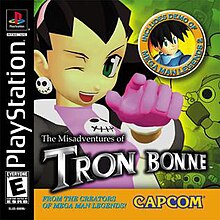
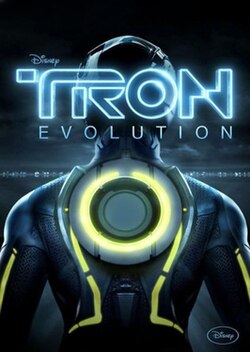 The Misadventures of Tron Bonne on PlayStation
 Tron: Identity on Switch
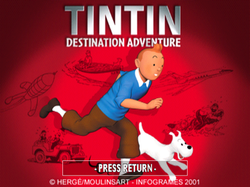
 Tintin: Destination Adventure on PlayStation
 One Piece Grand Adventure on PS2
 Taiko no Tatsujin: Dokodon! Mystery Adventure on Switch
 Onimusha: Dawn of Dreams on PS2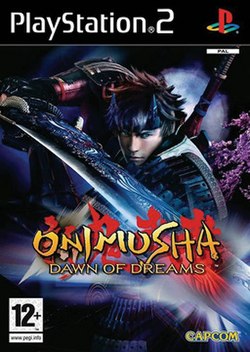
 John Wick Hex on PS4
 Quarantine Circular on Switch










 Another SquareThought Site