

 Apr 2021


Turnip Boy Commits Tax Evasion is a tiny, rude vegetable-shaped indictment of modern civic responsibility that somehow came bundled with a Zelda-lite overworld and more memes than a mid-2010s group chat. You play as Turnip Boy, a turnip who rips up a tax bill and is promptly sentenced to errands by Mayor Onion. If that premise sounds absurd, that's because it is - and the game largely treats absurdity as both its engine and its user interface. The Switch version launched with the rest of the crowd on April 22, 2021, and it's exactly what you expect: a top-down action-adventure with hack-and-slash trimmings, inventory management, puzzles that sometimes feel handcrafted and sometimes feel like someone held a brainstorming session and then left the room. The humor is relentlessly silly, the world is cartoonish in a charming way, and the whole thing wraps up quicker than most modern celebrity scandals. If you like short games that know what they are - and if you have a soft spot for vegetables behaving like mobsters - you'll get more joy here than the IRS would like.
Gameplay is straightforward: you move Turnip Boy from screen to screen, swing whatever weapon you have equipped, solve a few environmental puzzles, and collect quest items. It borrows mechanics liberally from classic top-down adventure games - a fact reviewers politely call "Zelda-lite" - but reframes them in a world where the important NPCs are narcissus-tier onions and suspiciously well-dressed lemons. Combat is simple hack-and-slash with a heart-based health system. You have a limited number of hearts; lose them all and you respawn at the last checkpoint. That's fine. The weapon handling is serviceable, though critics noted (correctly) that the sword controls can feel floaty at times. "Floaty" is being kind - it's more like the sword is on a different timezone than your thumb - but it rarely ruins a fight. Most enemy encounters are forgiving, which helps when the controls don't precisely match your expectations. Exploration is where the game earns its keep. There are a handful of distinct areas to poke around, each with small puzzles and environmental gimmicks. Boss fights usually hinge on either hitting the boss directly or using an area trick - push a block, light a thing, curse an avocado - the sorts of modest puzzle solutions that reward observation more than muscle memory. Beating bosses nets items that open new zones, and those items have a satisfying, old-school key-to-door feel. Inventory management is intentionally minimal. Turnip Boy carries a few items - tools, weapons, quest pieces - but can only equip one at a time. Equippable items can be used in any direction and are oriented by input, which occasionally leads to amusing moments where Turnip Boy tries to stab a shrub while looking the wrong way. There are sidequests from NPCs scattered around the map. They're short, often silly, and sometimes outright pointless in a very charming way. A quest log would have been handy; several reviewers, Shacknews among them, wished for one. This is the kind of game where you might forget what you're supposed to do, wander into a hat shop, and feel fine about it. Puzzles are a mixed bag. When they click, they're clever little things that make you grin. When they don't, they feel thin - as if the designer had run out of time and replaced a brain-bending riddle with a fetch quest. The balance of charm versus content depth leans heavily toward charm. If you want sprawling dungeons with layered systems, this isn't your tax accountant. If you want a compact, humorous romp with enough brain-teasing to keep you interested, it mostly delivers. The game's length is short, and that's deliberate. Many reviewers noted the brevity: the main story wraps up quickly, with a few hours of tightly packed content plus optional hats and side tasks. There was free DLC released later that extended playtime for those who wanted it, but the core package is a snack rather than a meal. That brevity is a strength for some and a gripe for others. Personally, I prefer snacks that don't pretend to be banquets. Narrative-wise, the plot is gloriously ridiculous. Turnip Boy rips up his tax bill, is forced into penance, and uncovers a corrupt vegetable hierarchy involving an onion mayor and some very shady citrus characters. There's a twist where Turnip Boy's dad used to be a mafia boss named Don Turnipchino. The greenhouse deed gets ripped up twice, which feels on-brand. The story leans hard on absurd humor and pop-culture references; if you dislike memes or meta-jokes, the script might exhaust you. If you enjoy giggling at the idea of an avocado named Annie helping you overthrow a vegetable mayor, you'll be comfortable here.
Graphically, Turnip Boy is intentionally cartoony in a way that reads perfectly on Switch's handheld screen. It runs on Unity, and the art uses clean, colorful sprites with a pleasant, hand-drawn vibe. Nothing here is trying to win a photorealism award; everything is trying to look like a very wholesome nightmare sketched by a bored breakfast chef. Performance on Switch is competent. You won't see jaw-dropping effects, but you also won't be hit with framerate problems or long load screens. The environments have personality: towns feel lived-in by vegetables with bad ideas, dungeons have just enough texture to be interesting, and enemies are recognizable enough that you rarely misidentify a threat. The visual charm carries much of the game's tone - it's cute, slightly weird, and confidently simple. Sound design supports the aesthetic without overstaying its welcome. The soundtrack is jaunty and the sound effects are satisfyingly squishy when turnips get thwacked. Dialogue is short and punchy, and the writing is the star of the audio show. Some jokes land harder than others, but the delivery is consistently deadpan and committed, which fits the game like a glove that only exists to hoard taxes.
Turnip Boy Commits Tax Evasion on Switch is a compact, witty, and occasionally frustrating little adventure. It earns points for personality: the script is relentlessly silly, the cast of produce is memorable, and the overall design knows when to be small and when to be clever. It loses points when controls feel floaty, when puzzles underdeliver, and when the joke-heavy dialogue leans too much on fleeting references. Critically, the game landed in the "mixed or average" range on Metacritic (around 74/100 for Switch), and that feels fair. It's not a masterpiece, nor is it a scandalous waste of good soil. It's a short, polished indie romp with more charm than depth, and there's grace in that. For a low asking price and some free DLC later on, it's an easy recommendation if you like bite-sized adventures with a strong sense of humor. If you want a meaty multi-day epic, look elsewhere. If you want to spend an afternoon laughing at a turnip's increasingly poor life choices and then toss the deed to your greenhouse into a metaphorical shredder, this is the game for you. Play it on Switch in handheld mode for maximum grocery-store-satire efficiency.
 Monster Boy and the Cursed Kingdom on PS4
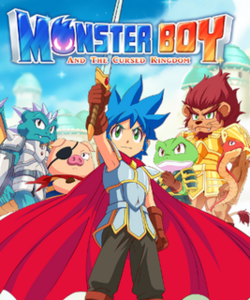 Bulb Boy on Switch
 Tintin: Destination Adventure on PlayStation
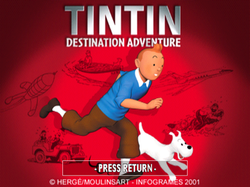 Disney's Chicken Little: Ace in Action on PS2
 One Piece Grand Adventure on PS2
 Taiko no Tatsujin: Dokodon! Mystery Adventure on Switch










 Another SquareThought Site