

 Jul 2021


Unbound: Worlds Apart arrives on Switch like a hand-drawn postcard from a parallel dimension: charming, a little melancholic, and suspiciously full of portals. At the centre of this tidy mess is Soli, a young mage whose day job quickly devolves from village participant to reluctant interdimensional locksmith. The game's pitch - you create circular portals around Soli and use the different reality inside each to solve platforming puzzles - is clever enough to carry the whole package. But it's Soli's story, and the handful of supporting people he meets, that raise Unbound from 'neat indie puzzle-platformer' to 'a game that wants you to feel things while also making you think about gravity.' This review is less about itemized systems and more about what those systems say about the people inside them. If you like your platformers with a side of tiny tragic backstory and characters who evolve because the world literally lets them step into other versions of themselves, buckle up. I'll be poking at Soli, the lost villagers, the faceless Demon King, and how the game's mechanics double as a metaphor for the emotional arcs they ride.
On paper Unbound's gameplay loop is refreshingly pure: you run, jump, die once (Soli is fragile), and summon portals with a button so you can practically rewrite a local patch of reality. There are ten portals total, each its own little rulebook: stop time, invert gravity, turn the environment black-and-white, or even alter Soli himself. Only the circular patch inside the portal changes, which leads to a steady stream of lateral puzzles where the solution is about perspective as much as timing. Soli's mechanical arc mirrors his narrative arc. Early on he is reactive: a portal appears involuntarily in Rhu and an animal slips through, then the world collapses around him when the Guardian's crystal shatters and the Demon King invades. This trauma is gameplay-coded into your abilities. Picking up the first crystal gives him agency - the player gains the power to place portals at will - but the world still punishes mistakes harshly. The one-hit deaths make Soli feel small and human, which is intentional; vulnerability keeps the player emotionally invested in his progress. As you acquire more abilities (a mid-air double jump, a dash), previously mundane spaces reveal secrets and alternate routes. That's the game's Metroidvania-ish promise: revisiting an area with new tools reframes it, and that nicely parallels Soli revisiting the idea of home after the loss of Rhu. Lost villagers you rescue are a nice mechanical carrot, unlocking harder levels as a reward for empathy and thorough exploration. They also serve as the game's portable memory: each rescued villager dumps lore into your inventory of context, filling in worldbuilding that the main narrative sometimes leaves skeletal. The portal mechanics are where the game truly sings. They force you to think inside and outside the circle at the same time: how will a frozen platform behave when half of it lives in stopped time? Which enemies become threats when their physics are inverted? Some portals actively change Soli, which allows the game to play with avatar identity - you can quite literally become someone else to solve a problem. The designers use these transformations both for puzzle variety and to tease thematic ideas about change and grief. That said, the story itself can feel thin. Multiple outlets that covered Unbound noted the narrative is sometimes underdeveloped or generic, and that critique has teeth: you get the main beats (village destroyed, Demon King invades, collect crystals, close gates) but not a ton of personal detail on secondary cast members beyond a line or two. Nintendo Life nevertheless praised the cast, which suggests that the world is textured enough in places to imply deeper histories even when the script doesn't fully deliver them. When the writing leans into visual storytelling - ruins, fragments of ceremony, the way villagers talk about The Guardian - it works better than when it tries to explain everything in dialogue. Difficulty here is intelligent rather than cruel. Expect brain-benders that ask you to chain two or three portal effects together, and occasional platforming sections that will make you mutter at your Joy-Con. Portals can also interact with fauna, turning neutral creatures into hazards or vice versa, which is a small heaven for level designers and a delightful headache for players. The checkpoints are fair, and the fast-travel cairns let the game avoid feeling punishingly long when you want to return to an earlier area to squeeze out an extra secret or two.
Visually, Unbound is gorgeous in the way indie hand-drawn games aspire to be: every area has its own palette and mood, and the art actually makes the portal transitions feel like slipping into a different painting. The Sea of Reality, the connective tissue between worlds, is a particularly nice set-piece - it looks like someone spilled ink over a map and decided that was a feature, not a bug. On Switch the style translates well, but not without caveats. Nintendo Life reported framerate issues, and in practice Unbound occasionally stumbles when too many effects and portal transitions happen at once. These slowdowns never break the game, but they do blunt the sharpness of precise platforming at times. The animation and sprite work are excellent, the environmental design gives you visual hints about puzzle solutions, and composer Alexey Nechaev's score underpins the mood like a patient narrator: melancholic where it needs to be, energetic when portals demand it. If you care about pixel-perfect input for hardcore platforming, the framerate dips might annoy you. If you like to savor artful scenery and well-tuned puzzles and can forgive the odd hiccup, the Switch version remains an excellent way to play. The trade-off is mostly one of performance versus portability: the game looks splendid on the move, but sometimes the frame pacing makes you wish you were docked.
Unbound: Worlds Apart is a game of bright ideas that doubles as a small emotional parable. Mechanically, its portal systems are one of the most inventive twists on puzzle-platforming in recent years: each portal is a fresh rule to exploit, and chaining them creates genuinely satisfying aha moments. Narratively, Soli's arc - from accident-prone villager to someone bearing the responsibility of opening and closing worlds - is elegantly echoed by the gameplay. The supporting cast, especially the lost villagers, gives the world a sense of communal loss and slow rebuilding, even if the script sometimes skates over deeper motivations. There are rough edges: the story could have been pushed further and the Switch build suffers from occasional framerate wobbles. Those gripes, however, don't undermine the core experience. If you enjoy puzzles that make you think in circles (literally), an art style that looks like it was painted mid-cry, and a protagonist whose growth is both literal and metaphorical, Unbound is worth the trip. It won't rewrite the book on narrative complexity in games, but it will convince you that walking through a portal can mean more than moving from point A to point B. Sometimes it means becoming someone new, even if that someone still trips over spikes now and then.
 The Outer Worlds: Spacer's Choice Edition on Xbox Series X/S
 Battle Worlds: Kronos on PS4
 Puzzle by Nikoli 4: on PS4
 Twinbee Taisen Puzzle Dama on PlayStation
 Tokimeki Memorial: Taisen Puzzle-Dama on PlayStation
 Professor Layton and the Last Specter on DS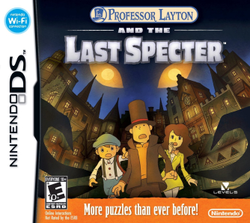










 Another SquareThought Site