

 Feb 2020


Under Night In-Birth Exe:Late[cl-r] is the kind of fighting game that sneaks up behind you, whispers "tactical tug-of-war," and then smashes your jawline with a ridiculously stylish super move. On Switch, this updated edition delivers the full roster and story trappings French-Bread spent years layering across arcade revisions: hand-drawn sprites, a mechanics-packed GRD system, and a cast roster that reads like a gothic high-school anime if it were written by people who take their tragic backstories very seriously. This review leans hard into the narrative - because while the combat will keep you playing, the characters are the reason you'll keep coming back between matches to read a dozen endings and feel mildly guilty about hating a boss for being both charismatic and morally bankrupt.
Under Night's mechanical heart is conspicuously clever: weak/medium/strong attack buttons, a fourth Grind-linked button, and cancels that encourage improvisation. The GRD (Grind) gauge is the tug-of-war that turns matches into momentum stories - exactly the kind of system that rewards reading your opponent and timing your desperation. It also mirrors the game's narrative conceit: balance shifting between humans, Voids, and the hungry forces of Hollow Night. Playing Hyde is like reading the protagonist arc in motion: a normal kid turned In-Birth who inherits the Insulator and gets dragged into destiny. Hyde's playstyle reads as straightforward but meaningful - the sword, the promise to Linne, and the eventual duty to end immortality are all mechanical and narrative throughlines rolled into one. If you came for characters, Exe:Late[cl-r] gives you a suburban pantheon of trauma and motives. Linne, the 500-year-old immortal who keeps getting reborn into child bodies, is the series' emotional center. Her arc is a melancholic loop: lived centuries, seeks final death, finds a kid who can wield the Insulator. She's not melodrama for the sake of it - the game stages her loneliness against banded groups like the Night Blade and Liecht Kreis to show how immortality is a social prison as well as a curse. Her relationship with Hyde is both tender and bleak; Hyde's arc resolves in a grimly poetic way when he finally must honor the promise to end her cursed existence. In match terms, Linne's presence in your arcade story gives weight to Hyde's moveset and the dramatic finishers that feel more than cosmetic. Hilda the Paradox is the textbook rival/boss who starts as an ideology and ends as a crisis. As Amnesia's leader she goes from opportunistic rebel to something unhinged after excessive power usage twists her psyche. Her evolution - other-self takeover and eventual fall to Zero Vessel - makes her one of the better antagonist arcs in fighting games, because her downward spiral is both tragic and narratively functional: she catalyzes the conflict between groups and pushes other characters into choices that define them. Waldstein, Carmine, Gordeau and Orie show how the roster populates ideological space. Waldstein is the ancient half-Void bodyguard whose loyalty complicates allegiances; his centuries of perspective make his betrayal and later choices land like a sledgehammer. Carmine is the delinquent with Re-Birth ambitions and placebo-blood hangups, which cleverly ties a gameplay weakness into story flavor: if he uses his power too long, he feels weakened - excellent for a character who's narratively reckless. Gordeau the Harvester is a mercenary bartender-philosopher whose exit from Amnesia after losing a friend humanizes a merciless-sounding organization. Orie and the Licht Kreis members are the show's institutional counterpoint: disciplined, mission-driven, but riddled with secrets. Characters who complicate moral binaries are the best. Merkava and Vatista use FLS instead of EXS and force you to question the human/void divide; Merkava's amnesia and hidden human consciousness make his arcade endings a small masterclass in writing ambiguity into a fighter. Byakuya's descent into insanity and Strix's Zero Vessel state give quieter, creepier paths that reward players who read between the combat prompts. Mechanically, Exe:Late[cl-r] layers Guard Thrust, Force Functions, and Cross-Cast Veil Off on top of the core GRD system (Veil Off combo-burst appears in the st/cl-r updates). These systems feed into character arcs because they let story-defining moments land in gameplay: a desperation Veil Off often feels narratively appropriate during an in-story confrontation. The Chronicle Mode visual novel additions in st/cl-r are not window dressing; they fill in motivations, letting you watch Hyde wrestle with his promise or Linne talk shop about immortality - and yes, the pacing here is sometimes slower than the fighting, but it's essential for players who want to know why a giant wolf-man decided loyalty was a better plot point than being a literal void monster.
French-Bread and artist Seiichi Yoshihara doubled down on hand-drawn, high-resolution sprites, and the Switch port wears that legacy well. Character sprites feel dense with personality - Linne's small, tragic silhouette, Waldstein's hulking presence, Carmine's bratty swagger - all read clearly even on the Switch's small screen. The backgrounds are moody, saturated urban nights that sell the Hollow Night atmosphere without distracting from the action. Raito's soundtrack and the sound design help the game keep its gothic anime tone; super attacks come with satisfying audio punctuation. On Switch performance: Exe:Late[cl-r] runs cleanly and keeps the animation fidelity intact for the most part, with UI and palette options added in the cl-r revision. It's not the newest netcode era - rollback netcode appears later in II [Sys:Celes] - but the presentation and sprite work are intact. For players who obsess over frame-perfect inputs, local play will feel excellent; online will work but is not the technical centerpiece ArcSys fans expect from newer releases.
Under Night In-Birth Exe:Late[cl-r] on Switch is a rare hybrid: a finely tuned technical fighter that actually rewards attention to story. French-Bread built a roster where mechanics echo motivations and every boss defeat is another line in a sprawling, sometimes bleak chronicle about the cost of power and immortality. If you want a brawler with spectacle and deep systems, you'll love the GRD-driven fights; if you care about characters, the Chronicle modes and multiple arcade endings make the cast feel alive in a way few fighting games attempt. It's not flawless - the learning curve can be steep and the visual-novel pacing won't be everyone's cup of midnight tea - but the combination of excellent sprite work, a thoughtful cast, and layered mechanics make Exe:Late[cl-r] one of the more emotionally satisfying fighters on Switch. Recommended for players who want their combos to mean something and their villains to leave bruises on your conscience. Score: 8.5/10.
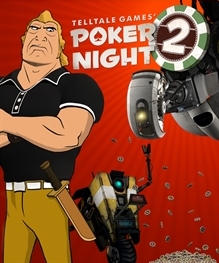
 Poker Night 2 on PS3
 Night Trap: 25th Anniversary Edition on Switch
 Ultraman Fighting Evolution on PlayStation
 Root Film on PS4
 Tokimeki Memorial Drama Series Vol. 3 Tabidachi no Uta on PlayStation










 Another SquareThought Site