

 Dec 2010
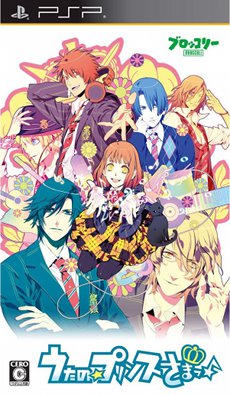

There is a certain charm to being a stern games critic in the 1990s: deadlines carved into the spine of a review copy, the scent of toner and cheap coffee, and the unshakable conviction that every new format would either change the world or at least sell a lot of magazines. Viewed through that decade's jaundiced eye, Uta no Prince-sama: Amazing Aria reads like a product designed with laser focus on a particular audience and refuses, often proudly, to be anything else. This title, first appearing on the PlayStation Portable in late 2010, now presents itself on Nintendo Switch as a faithful reproduction of the otome visual novel experience. If you came expecting fireworks and gameplay complexity in the modern sense, prepare to be politely corrected. If you are here for performed songs, polished voice work, and romance routes that will reward persistence, Amazing Aria delivers what it promises - just without pretending to be anything grander.
Amazing Aria is, at its core, a branching visual novel. You assume the role of Haruka Nanami, an earnest composer who enrolls at the prestigious Saotome Academy with the dream of writing music for an idol. Gameplay is dominated by reading, choices, and the occasional minigame - a simple but effective combination that determines which of the multiple endings you will reach. The branching structure is classic otome fare: multiple routes (seven main plotlines to see in full according to series documentation) and replayability that hinges almost entirely on choice selection and replaying segments to unlock alternate scenes. Decisions are presented in a stop-and-choose format. Text halts, options appear, and you steer Haruka toward specific relationships and production outcomes. This is not a game that disguises its engine; it wears the visual novel label proudly, and in so doing it relinquishes pretence. The minigames sprinkled throughout are functional rather than showy. They exist to punctuate narrative beats and, on occasion, to influence stat-like outcomes that feed into the endings. In practice they are brief and often more charming than challenging - a design choice that keeps the pacing brisk and the focus on character interaction. The writing toggles between sincere and comedic, leaning into the romantic-comedy sensibilities of the source material. Haruka's goals are charmingly straightforward: write the perfect song and navigate the peculiar social mores of a school where romance is technically forbidden. The cast - the boys who will occupy your route list - read as archetypes, but archetypes are not a failing when the writing and voice work give them color. The dialogue is where the game earns its keep. Multiple endings force the player to replay the game with different choices in order to soak up all of the narrative content, a boon for completionists and fans of character-driven stories. From a 1990s reviewer's vantage, the mechanical simplicity might be faulted as 'thin' by action-game standards of the era, yet that misses the point. Amazing Aria is designed to be an authorial vehicle for character moments and music. Where it succeeds is in pacing - scenes are crisply delivered, choices have tangible narrative impact, and the minigames, while unambitious, break up the reading without feeling tacked-on. If you dislike repeated playthroughs, prepare to do a fair bit of them to see everything; if you enjoy savoring routes and replaying for different outcomes, the game respects your time with short chapters and immediate access to previously encountered scenes.
Graphically, Amazing Aria is faithful to its portable roots. Character art and CG scenes are polished in the anime style of the era - clean lines, expressive poses, and the sort of close-ups that read well in handheld mode. The Switch's screen gives the artwork a crispness the original PSP could only dream of; background art is serviceable, and character portraits pop in cutscenes. This isn't a technical showcase; it never tries to be. Instead, it offers an attractive, consistent presentation that complements the writing. One area that bears mentioning is the voice work and music. The theme song for Amazing Aria, "Amazing Love," is performed by Takuma Terashima, Kenichi Suzumura, and Kisho Taniyama; it, along with the rest of the soundtrack produced by Elements Garden, is the lifeblood of the experience. The franchise leans heavily on its musical output, and those audio moments are often the high watermark: scene transitions accompanied by sung pieces, cast performances, and the richly produced tracks that have helped the series sell thousands of CDs in Japan. In short, where polygons are absent, studio-quality voice acting and music pick up the slack. For fans of character songs and seiyuu performances, the game is a small treasure trove. If one must gripe like a veteran reviewer, it's that animation is limited to the occasional lyric-video style sequences and static CGs; this is not a kinetic title. Expect page-turn visuals, not set-piece spectacle. But remember: the game's priorities are story and song, and the graphical work supports those priorities sufficiently well.
Uta no Prince-sama: Amazing Aria on Switch plays exactly the role it intends: a portable, polished delivery of an otome visual novel whose primary attractions are its cast, its music, and its branching romances. Viewed through a nostalgic 1990s lens, the title lacks the mechanical bravado of action-heavy releases of that decade, but then it was never competing in that ring. It's a character piece, and on those terms it often hits the mark. The Switch presentation benefits the source material, supplying better screen fidelity and a more comfortable handheld experience than the original PSP. The content itself remains faithful: Haruka Nanami's earnest ambitions, Saotome Academy's ridiculous-but-endearing rules, and a roster of idol hopefuls who are archetypal but richly voiced. If you value replayability rooted in narrative divergence and you like your games served with a side of well-produced music, Amazing Aria is worth the ticket. If you demand flashy interactivity or modern visual-novel innovations, you may find the package politely antiquated. Final tally for the nostalgically inclined and the musically devoted: a respectable 7 out of 10. The game knows what it is, and for many players-particularly fans of the broader Uta no Prince-sama franchise-it will be more than enough. For the rest, it remains an earnest relic of an era when handheld story games were content to woo players one romance route at a time.
 Uta no Prince-sama Debut on Switch
 Uta no Prince-sama: Sweet Serenade on Switch
 Root Film on PS4
 DearS on PS2
 Oshiete! Popotan on PS2










 Another SquareThought Site