

 Feb 2011
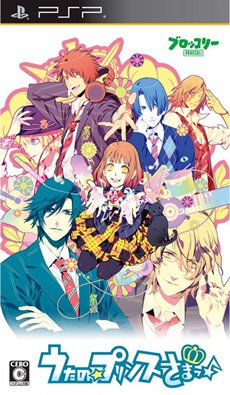

If you told me a game whose main apparent activity is reading dialogue and choosing between 'flirty-scheme A' and 'flirty-scheme B' could still be a test of skill, I would have rolled my eyes - then replayed seven different endings for hours and quietly admitted defeat. Uta no Prince-sama: Sweet Serenade is the franchise's second main entry and an otome visual novel that wears its musical heart on its sleeve. On Switch, the game behaves mostly like a pretty, animated book with branching romance threads, a handful of minigames, and the kind of character-driven choices that will eat your afternoon and demand you come back for seconds. If you're judging difficulty by how many times your heart gets stomped on, this title is a boss rush. If you're judging challenge by traditional twitchy gameplay, it's more like a puzzle box: subtle, patient, and fiendishly efficient at making you replay chapters until you get the outcome you want.
At first glance Sweet Serenade looks like the usual otome checklist: introduce the earnest heroine (Haruka Nanami), meet a roster of handsome classmates, and navigate a school where romance is officially banned but unofficially the whole point. Underneath that cutesy veneer is a deceptively tactical structure. The game is built around branching plotlines with multiple endings - seven main routes in total - and only three routes are unlocked from the start. That design alone turns the experience from a single-story stroll into a replay-intensive scavenger hunt for narrative triggers. Your primary 'mechanic' is decision-making. Choices pause the prose and present options whose consequences can be immediate or delayed, subtle or game-changing. The payoff system isn't always telegraphed: one innocuous line can trigger an entirely different sequence three chapters later, which trains you to think like a romantic detective. Good players learn to read context clues, spot dangling lines of dialogue that double as plot levers, and think several scenes ahead. The minigames are the other explicit test of skill you need to master. The Wikipedia-sourced notes for the series tell us Sweet Serenade requires players to complete various minigames that influence endings. They aren't the manic rhythm-blur of a dedicated music spin-off, but they add a different tempo to the challenge: pattern recognition, timing, and sometimes a sprinkle of manual dexterity are involved. Treat them as short puzzles - failing a minigame won't ruin your route, but repeated flubs will force extra playthroughs and slow your progress. Because one clear design goal here is replayability, efficient save management becomes a bona fide skill. Veteran visual novel players rely on quick saves before major decisions and maintain a branching save tree so they don't have to replay entire afternoons for one different outcome. If you're not used to manual save discipline, prepare to learn - and to curse your earlier nonchalant autosave. Memory and attention to detail are also tested. To see all plot lines you must replay the game multiple times, selecting different options to steer the plot into another character's orbit. That means remembering which choice led you to which emotional beat, which NPC reaction unlocked a later invitation, or which route required a certain minigame performance. Keeping a short decision log - yes, like a hacker's notebook, but for love - will save you time and sanity. There's an element of resource juggling too. While Sweet Serenade isn't a stat-heavy otome where you grind stamina or charm points, your narrative resources are time and curiosity: which route do you tackle first, which dialogue choices do you prioritize, which scenes are worth rewatching? Good route planning shortcuts unnecessary backtracking. The game's challenge curve is mostly cognitive rather than reflexive: comprehension, inference, strategic saves, and pattern recognition in minigames carry the weight. Patience and stamina are soft skills the title demands; you're likely to hit a fatigue wall after three consecutive routes and start making dumb choices just to finish. On Switch, the portability helps: short sessions on the bus can be perfect for one decision-tree experiment, while long nights at home are where you brute-force the rest. If you're the sort of player who likes to optimize, there's real satisfaction in mapping out every choice node and converting that map into a complete walkthrough. For completionists, the emotional challenge of seeing every boy's story is real - the game will make you commit time and emotional bandwidth in a way that feels like training for a romantically themed triathlon.
Visually, Sweet Serenade leans on the franchise's anime pedigree. Character portraits are expressive, event CGs pop when they appear, and the presentation is designed to feel like an interactive episode of the anime series. The Switch doesn't transform the art into photorealism - and it shouldn't - but the crisp screen and stable performance make reading long dialogue passages easy on the eyes. If you're expecting flashy 3D, you're in the wrong aisle; this is a game where still frames and thoughtful facial expressions do the heavy lifting. The art direction helps the game's challenge: subtle changes in posture, eye direction, or background lighting are often the nonverbal clues that hint which dialogue choice is the 'right' one for a desired outcome. Sound design follows the same cadence: character voices (when present) and the series' music give narrative beats extra weight, which can be a cognitive hint when you're deciding how to respond. Overall the graphics are functional and charming - no barrier to gameplay, just the supportive set dressing for your strategic flirting.
If your mental image of a difficult game is 'bosses with too many HP' then Uta no Prince-sama: Sweet Serenade will pleasantly annoy you because its bosses have lines of dialogue, not health bars. The game's challenge comes from systems usually overlooked by button-masher players: branching narrative architecture, strategic save management, minigame consistency, and the ability to parse emotional and textual cues. It's a scrambling-of-the-brain exercise in inference and memory disguised as a romance comedy, and that clever disguise is its biggest strength. Fans of the series will love diving into alternate routes, and methodical players who enjoy mapping choices to consequences will find the game rewarding. If you're after twitch-based difficulty or a hardcore mechanical gauntlet, look to the spin-off rhythm games instead. For anyone who likes a puzzle wrapped in peaches-and-pale-shirted-idols, Sweet Serenade on Switch offers a satisfying, sometimes fiendish, and always charmingly theatrical test of your reading, reasoning, and romance-management skills.
 Tokimeki Memorial Drama Series Vol. 3 Tabidachi no Uta on PlayStation
 Uta no Prince-sama Debut on Switch
 Root Film on PS4
 DearS on PS2
 Oshiete! Popotan on PS2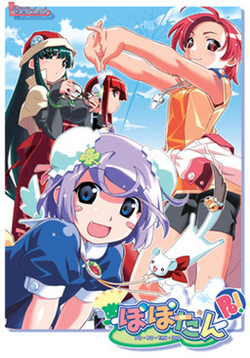
 Shin Seiki Evangelion: Ayanami Ikusei Keikaku with Asuka Hokan Keikaku on DS










 Another SquareThought Site