

 Oct 2018
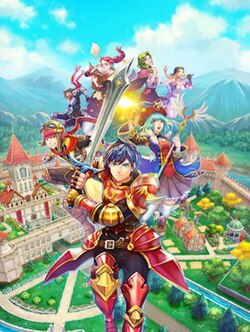

Valthirian Arc: Hero School Story is the kind of game that hands you a chalkboard, a budget spreadsheet, and a bunch of eager, slightly clueless teenagers who want to stab goblins for glory. On Switch it feels like a clever blend of management sim and classic RPG flair: you run a school for adventurers, train them in classes, graduate them into the wider world and occasionally watch them die in flavorful ways. The charm is undeniable, but the real meat of the experience - the part that will either make you fist-pump or throw your Joy-Con at a nearby plushie - is its approach to challenge. This review digs into those challenge aspects and the actual skills the game asks you to bring to the battlefield, classroom and scheduling app of your chaotic little academy.
At its core Valthirian Arc hands you the role of principal and taskmaster: you assign students to classes, equip them, and assemble teams for quests. There are two quest flavors - hands-off missions that run on a timer, and interactive dungeon crawls where you control one adventurer alongside three AI companions. The hands-off missions are deceptively consequential because they lock you out of interacting with those students and, crucially, can put the whole school on a 15-minute real-time cooldown if you send everyone off together. That tiny mechanic is a masterclass in design-sourced annoyance: it forces you to plan your downtime and staggers your play sessions, turning what could be a leisurely grind into a game of calendar Tetris. Challenge in Valthirian Arc is multi-layered. On the macro side you have resource and time management. Requests for specific classes pop up and award bonuses if fulfilled, so you need to plan curriculums with an eye on incoming demand. New classes unlock over time, but training takes both time and opportunity cost; putting a student in one long course means skipping another short, useful course. This is the kind of decision space that rewards forward-thinking: create a pipeline of students at staggered maturation points so you always have competent teams for varying difficulty levels. On the micro side the game demands tactical sense. Interactive quests are combat-light but positioning, skill choice and equipment matter. Party composition is a recurring test: the game's difficulty spikes punish poor mixes of roles or undergeared students. There's a real mental checklist to juggle before sending a team out - do I have a healer? Will this dungeon require magic resistance? Can this party survive the boss? If you rush and throw together an underprepared squad you'll feel the sting of a difficulty spike that can wipe out progress and morale. Adaptability is another key skill. Reception of the game mentioned uneven, disparate elements, and that's exactly right: systems don't always mesh perfectly, which makes improvisation valuable. You'll often have to shift plans when a key student is on a timed mission or when a request expires. Successful players are the kind that can rotate strategies: turn a failed experiment into a new plan, and use lower-tier missions to level up oddball classes for later use. Risk management is a recurring theme. The game's ephemeral parties - students leave school as they graduate - create an emotional detachment but also a logistical headache. You can't rely on long-term veterans forever; instead you must build depth across multiple classes simultaneously. This is tough for players who prefer deep attachment to single characters, but it's a satisfying puzzle for those who like to optimize a roster like it's a fantasy sports league. Grinding and pacing are important mechanical skills. Early game is slow and can feel plodding: training cycles and the timer-based missions make significant progress a matter of patience. TouchArcade's note that the early game can stall out is fair. You must be willing to put in the gradual work of leveling several students in parallel before the real fun - and harder challenges - unlocks. For players who dislike repetition, this is the point where the game will frustrate. For completionists and planners, the feeling of watching an entire class mature into a capable squad is oddly addictive. Finally, there's a bit of meta-challenge in learning how the game's odd systems interact. The reward loops for fulfilling requests, faction support after the ruler dies, and unlocking classes all feed back into one another in small ways. Discovering that sending a slightly underlevelled party with great synergy beats a more obviously powerful but clumsy group gives a rush that feels earned. The flipside is the sudden difficulty spikes reviewers complained about: they'll come out of nowhere and force you to rethink training priorities mid-campaign. Practical tips for players who want to master the challenge: stagger training schedules so not everybody graduates or leaves on the same timer; keep one ''utility'' student in reserve to fill last-minute requests; don't send every student on simultaneous non-interactive missions to avoid long forced waits; invest in equipment that shores up weaknesses rather than merely increasing raw stats. Those simple management skills will transform a chaotic school into a resilient academy.
Graphically Valthirian Arc isn't trying to win any console beauty contests, but on Switch it's perfectly serviceable. The sprites and classroom layouts have a cute, indie charm that fits the school theme - think cozy RPG textbook rather than photorealistic nightmare. The dungeon visuals are readable and functional, which is important when tactical clarity matters more than eye candy. Performance on Switch is stable enough for long sessions, though the UI sometimes feels a hair clunky for quick menu navigation. It's not the reason you'll play or quit the game, but it leaves you smiling during the quieter, planning-heavy beats.
If you like being tested by spreadsheets and monsters at the same time, Valthirian Arc: Hero School Story will scratch that scrappy itch. Its big strengths are the neat overlapping challenges of scheduling, roster-building, and light tactical combat. You'll need patience for the slow early pacing, the strategic mind to juggle class requests and training, adaptability when systems clash, and a steady hand to manage occasional difficulty spikes. The game's quirky charm and satisfying progression loop make the management puzzle rewarding, though its rough edges - unpolished system interactions and the sometimes brutal difficulty jumps - keep it from being a flawless experience. For Switch players who enjoy methodical planning, roster optimization and the odd tense dungeon crawl, this is a solid school to enroll in. For those who want instant action and deep attachment to named characters, it can feel like learning homework. Scorewise, it sits comfortably at 7/10: smart, occasionally maddening, but worth the tuition if you enjoy the kind of challenge that requires both brains and slightly sadistic scheduling skills.
 Puyo Puyo Fever 2 on PS2
 Let's School on Xbox Series X/S
 Combat Elite: WWII Paratroopers on PS2
 Octopath Traveler on Switch
 Gnosia on Xbox Series X/S
 The Banner Saga 2 on PS4










 Another SquareThought Site