

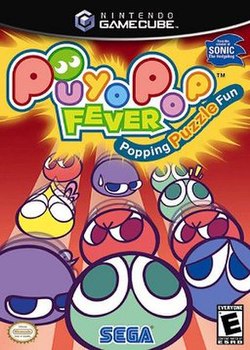

Puyo Puyo Fever 2 for PS2 is the sequel that sneaks into the same sugary, chain-happy classroom as its predecessor wearing a slightly different hat. This entry keeps the Fever formula intact while sliding in a new lead, Sig, alongside familiar faces from the Primp Magic School: Amitie, Raffine, Professor (Ms.) Accord and the tiny chaos-blessed Popoi. If you came for radical reinvention, you might leave disappointed; if you came for character-driven puzzle sparring where personalities matter as much as combos, you get an odd little soap opera disguised as a falling-block puzzler. This review leans hard into the story arcs and characterization, because for all the game's bright colors and poppy tunes, Puyo Puyo Fever 2 is still claiming to be a school story-complete with secrets, memory lapses, rivalries and hero worship. The game may not reinvent gameplay icons like the Fever meter, but it doubles down on narrative structure by giving each protagonist a distinct story path with three difficulty lanes and different encounter orders. That means the same match can feel like an episode focusing on Amitie's optimism, Raffine's ambition, or Sig's newcomer energy, each promising slightly different emotional payoffs.
At its mechanical core, Fever 2 is still basic Puyo logic: place 2-piece pairs on a 6x12 grid, make groups of four to pop them, and chain cascades to send garbage to your opponent. Fever mode returns-the lovely little metronome of crisis and opportunity where a filled Fever meter spawns ready-made chain puzzles and rewards players who can spot trigger points under time pressure. The PS2 version keeps the 3D puyo models introduced in the previous generation, which looks cute and tactile, but the novelty wears off fast when you're elbow-deep in garbage puyo and trying not to choke. Where Fever 2 tries to stand out is story mode structure. Each playable protagonist has their own campaign, three tiers of difficulty, and unique items that modify matches. The game rewrites not just the dialogue but the cast list and sequence of opponents depending on who you pick. That means narrative context actively alters the flow of battles: a simple match against a class clown can feel meaningful if the game's been priming you with that character's personal stakes. Raffine's route, for example, is tuned to be more demanding mechanically and narratively: enemies shift, the difficulty spike is sharper, and the ending changes the stakes of the whole Lost Cane mystery. Amitie is the franchise's archetypal Every-Girl protagonist: chipper, persistent, and the glue that holds the cast together. Her story arc is the warm, clean route-think 'courage of friendship' with extra sparkles. Playing Amitie feels like doing your homework with a friend who brings cookies: the matches are balanced so that your chain-building tends to reward steady, optimistic play. The game nudges you toward big, satisfying chains until the closing scene, where Amitie and friends congratulate each other-narrative reward that mirrors gameplay reward. Raffine is the deliciously messy foil. Her campaign is labeled as more difficult and it carries a darker little subplot: the cane is never actually lost, and Raffine's investigative zeal leads her to the brink of exposing Professor Accord and Popoi's secret. That hubristic reach culminates in Raffine being knocked unconscious by Accord and losing all memories of the incident, only to awaken back home to praise and normality. From a literary angle, Raffine's arc is a compact tragedy with a silver lining: ambition pushes her toward the truth, but the narrative resets her, leaving the player with unresolved tension. Mechanically, Raffine's route tests your timing and punishments for mistakes; narratively it asks whether curiosity is worth the cost of deliberate erasure. Professor Accord and Popoi function like an odd pair of adults in a teen drama. Accord's 'lost cane' setup is the classic MacGuffin that drives the whole school year. She ends up being more than a missing-object quest-giver: she exerts agency in Raffine's ending by actively silencing the secret. Popoi is the small magical wildcard who, together with Accord, forms the secretive axis Raffine wants to expose. Their roles are compact but crucial: they are why the school has rules, why students get rewards, and why the story keeps drifting between farce and minor ethical quandary. Then there is Sig, the new protagonist Fever 2 brings to the table. The documentation keeps Sig mysterious-he's simply 'a third protagonist'-which is actually an intentional design choice that serves narrative function. Sig's presence allows the sequel to present alternative perspectives without rewriting the established dynamics. He provides fresh banter, different opponent orders, and an opportunity to experience old events from a stranger's point of view. From a story-craft perspective, adding Sig is the equivalent of bringing in a new student mid-semester: he exposes cliques, reveals blind spots in other characters, and invites players to recombine the same puzzles with new emotional context. The sequel also experiments with new modes. Chu Panic adds a slowly increasing bar that, when full, spawns pink nuisance Puyo, a tense twist that forces incremental crisis management instead of explosive chains. The successive-fight mode, where you battle character after character with rising difficulty, effectively stages a televised tournament arc that lets the cast's personalities shine through match-after-match. Hardcore Gaming 101 criticized Fever 2 for feeling too similar to its predecessor, and that complaint lands: most of the innovation is incremental and mostly in presentation and story scaffolding rather than core mechanics.
On the PS2, Fever 2 continues using 3D models for Puyo and character portraits that lean anime-cute with expressive, often exaggerated faces. The Primp Magic School looks like an RPG school that survived a confectionary explosion: pastel halls, floating bubbles of UI, and character sprites that emote like theater kids. The 3D puyos are slick but never essential; their rotation and bounce are satisfying in a tactile way, but the real visual joy is in the characters' reaction portraits which punctuate every victory, loss, or smug comeback. If you care about visual storytelling, the PS2 version delivers readable facial beats that help sell each protagonist's emotional high and low.
Puyo Puyo Fever 2 on PS2 is a comfortable sequel that doubles down on character beats rather than reworking its puzzle DNA. For players who value narrative context in a match-based game, Fever 2's multi-protagonist story routes, items, and tailored opponent lists make repeated runs feel worth it. Amitie's story gives you the warm, heroic loop; Raffine's arc offers drama, ambition and a messy amnesia twist; Accord and Popoi provide the mysterious adult tension; and Sig's arrival supplies a fresh lens on familiar schoolyard politics. If you want a puzzle game that asks you to care about who you beat as much as how you beat them, Fever 2 is a guilty-pleasure classroom drama with sharp combo math. If you want sweeping mechanical overhaul, this isn't your revolution. The game earns its place as a solid, character-forward puzzle title-fun, a little safe, and narrated like an anime OVA where every round of Puyos is a small episode in someone else's coming-of-age. Score: 7 out of 10.
 Puyo Pop Fever on DS
 Puyo Puyo Champions on PS4
 Puzzle by Nikoli 4: on PS4
 Twinbee Taisen Puzzle Dama on PlayStation
 Tokimeki Memorial: Taisen Puzzle-Dama on PlayStation
 Professor Layton and the Last Specter on DS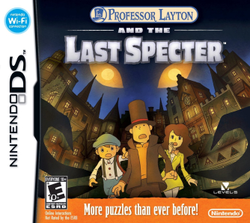
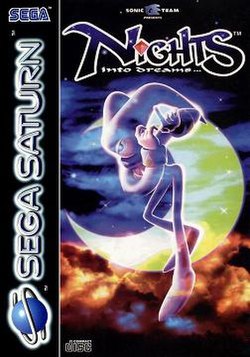 Puyo Puyo! 15th Anniversary on PS2
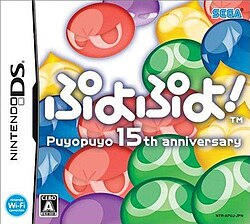 Puyo Puyo! 15th Anniversary on DS
 Sonic Racing: CrossWorlds on Switch 2
 Sonic X Shadow Generations on PS5
 Sonic Frontiers on PS5












 Another SquareThought Site