

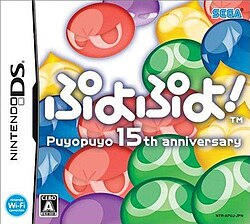

Puyo Puyo! 15th Anniversary arrives as a celebration of everything that made Sega's match-four blob puzzler addictive: speed, telegraphed chaos, and the quiet satisfaction of watching someone else's playfield fill with nuisance Puyo. Developed by Sonic Team and released in Japan for multiple platforms (including the PlayStation 2 on March 21, 2007), this installment is explicitly retro-aware - it bundles gameplay rulesets inspired by classic entries (Puyo Puyo, Puyo Puyo 2, and Puyo Pop Fever) and layers them with a smorgasbord of modes and character-driven content. If you're the kind of person who enjoys dissecting rule systems and how small parameter changes shift the competitive meta, this is the kind of puzzle package that treats rules as configuration knobs rather than mere backdrop. It's a technical love letter to chain-building, with a few rough edges in release logistics and localization.
At its mechanical core Puyo Puyo! 15th Anniversary sticks to the fundamental Puyo rule: stack Puyo blobs in a playfield, clear groups of four or more touching Puyo, and create cascades to send Nuisance Puyo to your opponent. The title's main engineering choice is to expose multiple canonical rule-sets - not just as cosmetic options but as distinct, tuneable gameplay modes. The inclusion of modes based on Puyo Puyo (classic), Puyo Puyo 2, and Puyo Pop Fever is important from a systems-design perspective because each ruleset changes player incentives for building chains versus quick clears. That variety effectively turns the game into a comparative testbed for emergent behaviors: a Puyo 2-style match encourages different risk profiles than Fever's reserved-charge mechanics, and letting players toggle rule parameters expands the design space further (board height, Puyo size, and other toggles are explicitly supported). One of the quirks the Anniversary package includes is a mode where Puyos are twice as large. A single numerical tweak like that dramatically alters combinatorics: larger pieces reduce the number of placement permutations, compress gravity-simulation outcomes, and magnify the impact of each placement mistake. For players who care about stochastic modeling or probability curves, these kinds of modes are educational: they expose how board geometry and piece granularity influence chain potential. The game's multiplayer options are a centerpiece for those scrutinizing netcode and competitive flow. The Wikipedia-sourced notes highlight both local and online play across the release, though implementation specifics differ by platform. On the DS side there are capabilities like Download Play; for console play on the PS2, local head-to-head is the default competitive environment and it's where the game shines: responsive input, clear visual feedback for chain activation, and immediate consequence (nuisance Puyo arrival) produce an excellent feedback loop for high-level play. Online on other platforms drew some criticism because friend-code systems made matchmaking fiddly - a reminder that infrastructure choices can be as decisive to a game's usability as the in-game mechanics. Story mode injects a light single-player scaffold so the game doesn't feel like a puzzle lab with no narrative context. The story frames a tournament run by Primp Magic School's teacher Ms. Accord and features Sig and a cast of characters - six comets that turn out to be Madou Monogatari characters serving as bosses. From a technical standpoint the story mode functions as a curated difficulty ramp and a method of exposing players to different opponent AIs and rulesets. Boss characters let the designers script encounters to teach chain setups or force you to adapt to alternate rule priorities. There was at least one noteworthy post-release technical hiccup: the original release had a save-data bug where the game would not save more than 255 times. That's a classical overflow-like symptom in a consumer storage system - likely a counter stored in a single-byte field or similar - and Sega addressed it with a version 1.1 release in January 2007. For collectors and competitive players this matters, because save stability intersects with long-term play (unlockables, progression tracking, tournament records). The PS2 release date comes after the patch window, so most contemporary PS2 copies should be free of that particular flaw. For competitive purists, another plus is the granular control over rulesets. Tweaking settings changes not only how matches feel but which heuristics and heuristically-driven AI will succeed. That level of configurability rewards players who enjoy exploring meta shifts and experimenting with constraints - it's a mechanically rich title because the designers committed to exposing those knobs instead of hard-coding a single "definitive" rule set.
Graphically, Puyo Puyo! 15th Anniversary is intentionally utilitarian: Puyo themselves are vibrant, readable blobs, character portraits are expressive in a chibi, anime-derived style, and UI elements prioritize legibility over flashy 3D spectacle. Nanako Yarimizu's art and Hideki Abe's compositions give the game an identity consistent with the series - colorful, quick-footed, and designed to telegraph state changes cleanly (chain warnings, nuisance arrival, and clear animations are all unambiguous). On PS2 hardware the visual target is stability rather than visual fidelity; the title opts for high-contrast color palettes and animation clarity so competitive players never second-guess whether a cascade occurred or whether a potential connection was missed. From a technical POV that's the right call: puzzle games live and die by feedback fidelity. The sprites and animations are tuned to communicate collision, chain triggers, and timing windows. While the game does not push the PS2's graphical ceiling, it avoids the common trade-off of decorative effects that obscure gameplay data. Frame-rate stability, crisp UX affordances, and character diversity (a point praised by reviewers) all contribute to a presentation that supports competitive play more than it seeks to dazzle the player with post-processing bells and whistles.
Puyo Puyo! 15th Anniversary on PlayStation 2 is a thoughtfully assembled package for players who care about the plumbing of puzzle games. It prioritizes mechanical clarity, a wealth of tuneable modes, and a competitive-friendly presentation that makes chaining and counterplay the central experience. The release hiccup with saves - patched early on - and the lack of an international official localization are the two main negatives to come out of the historical record; the former was fixed and the latter has been partially mitigated by an active fan translation scene. Critics praised the variety of modes and characters, and it's easy to see why: the game is half-engineering sandbox and half-arcade rival simulator. If you're a rules nerd or a competitive puzzler, this entry rewards careful study and experimentation with its multiple canonical rulesets and adjustable parameters. If you're a casual player looking for cinematic spectacle, this is not that kind of PS2 showpiece - but its consistent visual language and tight feedback loop make it one of the best practical Puyo compilations of its generation. Score: 8/10 - a robust, technically sound anniversary celebration that puts gameplay systems first and party tricks second.
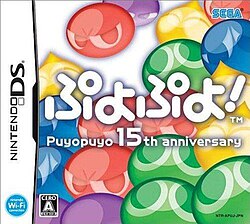 Puyo Puyo 7 on DS
 Puyo Puyo!! 20th Anniversary on DS
 Puzzle by Nikoli 4: on PS4
 Twinbee Taisen Puzzle Dama on PlayStation
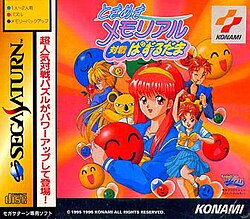
 Tokimeki Memorial: Taisen Puzzle-Dama on PlayStation
 Professor Layton and the Last Specter on DS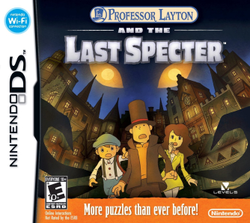
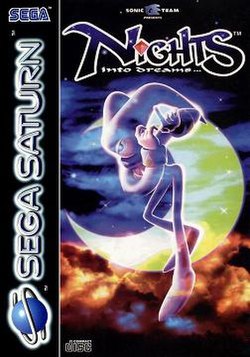 Sonic Racing: CrossWorlds on Switch 2
 Sonic Frontiers on PS5
 Sonic X Shadow Generations on PS5
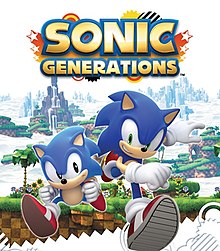 Sonic Colors on DS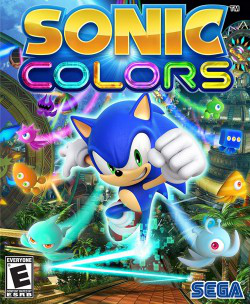












 Another SquareThought Site