

 Dec 2017
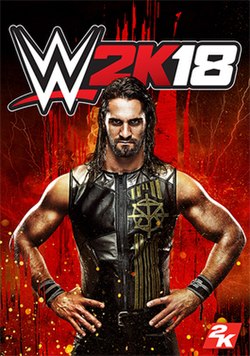

WWE 2K18 on Switch arrived with all the confidence of a championship challenger who skipped leg day: loud, impressive from a distance, and slightly wobblier when you try to pick it up. The base game is the nineteenth entry in the series and was developed by Yuke's and published by 2K. The headline features that got people excited include Seth Rollins on the cover, Kurt Angle making a triumphant return as a pre-order bonus, and an enormous roster-over 200 superstars, plus the baffling but delightful inclusion of Colonel Sanders as a cheeky creation option. On full-sized consoles the game promised enhancements like retooled Royal Rumble mechanics, a carry system for more cinematic grapples, and thousands of new animations. On Switch, it promised portability, which is a selling point until it turns out portability also means carrying a few technical problems into your lap. Reviews were mixed across platforms; the Switch version, however, got the short end of the stick in most critics' eyes.
The core of WWE 2K18 is unashamedly familiar wrestling game fare: strikes, grapples, finishers, and dramatic rolls of the analog stick while someone shouts your name. For the first time in a long while the series supports eight wrestlers in a single match on most platforms, returning to that chaotic royal-rumble energy-except on the Switch, where design choices limit matches to six wrestlers. It's like being invited to a party and being told two guests had to stay home because the living room is too small. Mechanically, 2K18 introduces a carry system that lets you pick up, drag, and place opponents where you want them. It feels satisfyingly tactile and gives players more control over how set-pieces are staged. The Royal Rumble has also been retooled with new finishers and elimination sequences that add variety to what could otherwise be an on-rails countdown. Thousands of new moves and animations are in the game, which, on paper, means more plausible looking smackdowns and fewer people doing that distinctive 'rubbery mannequin trying to dance' routine. MyCareer returns with backstage free-roaming, letting your MyPlayer build alliances and enemies, and chooses from eight fighting styles that affect play. Road To Glory replaces the online mode from last year, giving a competitive ladder feel to your created hero. Universe mode has had sensible improvements: a story system, cut-scenes, power rankings, and goals to nudge the simulation into more interesting directions. The Create suite expanded too, adding glow materials (because nothing says menacing like luminous boots), improved highlight systems, and crowd area templates in Create-An-Arena so you can decide which sections of the audience have the most weapons and the least taste. Where the game shines, mostly, is in those design choices that make matches feel more theatrical and varied. Where it falters is rarely ambition and more often execution-particularly on Switch. The handheld version keeps many of the features but sacrifices wrestler count and, more damningly, suffers from technical issues that were widely criticized. Glitches and bugs became the Switch version's signature move, many of which were less punchline and more 'please update' plea posted across YouTube. That undermines balance, online play, and the joy of actually finishing a match without witnessing the rare sight of a wrestler folding into the mat like origami. The roster is one of the game's selling points: over 200 names from across WWE history, the pre-order bonus Kurt Angle, and odd corporate crossovers like payable Colonel Sanders costumes in Create-A-Wrestler. Collector's and Deluxe editions padded the lineup further with John Cena variants, Batista, and Rob Van Dam. If you enjoy collecting characters, the game is generous; if you prefer a polished experience on the go, the Switch release is a compromise.
On PS4 and other big-box consoles, 2K18 showed off improved visuals, convincing facial captures, and more fluid animations that made finishers look suitably dramatic. Crowd sound and authentic chants were an added touch, and the commentary team of Michael Cole, Byron Saxton, and Corey Graves provides a professional-sports broadcast veneer that occasionally rises above canned lines. On Switch, however, the graphics tell a story of necessary concessions. Textures are softer, animations can be choppier, and the overall presentation feels like it was gently shoved through a smaller pipe to fit into a portable form factor. The result isn't catastrophic if you only care about button-mashing entertainment, but it loses some of the spectacle that makes WWE games enjoyable on larger screens. More importantly, the Switch release's technical shortcomings-frame rate drops, odd collision and clipping glitches, and occasional logic-breaking bugs-make the visual downgrades more noticeable because they interrupt the illusion the graphics are trying to sell.
WWE 2K18 is a game of two personalities: a confident, feature-packed wrestling sim on home consoles and a hampered, glitch-prone version on Switch. If you play on PS4, Xbox One, or PC you get the best of Yuke's ambitions: a massive roster, retooled match types, a deep creation suite, and modes that reward longer play. On Switch you get portability and a decent chunk of content-but you also get a version that reviewers felt was technically inferior, with enough glitches to merit caution. Give it a go if you want the roster or want to play WWE on a handheld and can tolerate a few rough edges. If you value polish and fewer comedic bugs mid-match, wait for a patch or stick to a console release. The game tries hard and often succeeds; sometimes, particularly on Switch, it trips over its own cape and you spend as much time laughing at the bugs as celebrating knockouts. The score here reflects that split personality: an enthusiastic six out of ten for the idea and the mode variety, docked points for execution on the platform that actually promised portability.
 NBA 2K18 on Xbox One
 WWE 2K17 on PS3
 Deca Sports DS on DS
 Accolade Sports Collection on Xbox Series X/S
 Alan Hansen's Sports Challenge on PS2
 EA Sports MMA on PS3
 WWE '13 on PS3
 UFC 2009 Undisputed on PS3
 WWE SmackDown vs. Raw 2010 on PS3
 UFC Undisputed 2010 on PS3
 Earth Defense Force: World Brothers on PS4










 Another SquareThought Site