

 Aug 2024
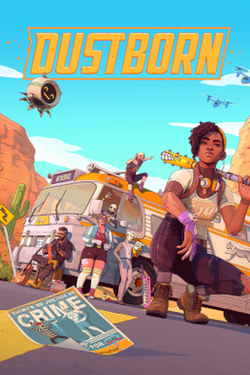

Dustborn is the kind of game that tells you up front it wants to fight with words - literally. Built by Red Thread Games in Unity and fronted by Ragnar Tørnquist, it's a single-player action-adventure that mixes a politically charged alternate-America narrative with a handful of gameplay ambitions: language-as-weapon PvE combat, Guitar Hero-esque rhythm segments, Telltale-style branching conversations and moral beats, and a comic-book visual aesthetic achieved via custom shaders. On Xbox Series X/S the package arrives feeling like a well-meaning indie attempting console-scale polish: some systems are tightly executed, others feel like ideas still being debugged on the road trip.
Mechanically Dustborn is a mash-up that leans on one high-concept pillar: Vocals, the game's representation of language powers, are the player's toolbox. The game frames combat as PvE encounters where word-based abilities (Vocals) alter enemy behaviour and reality. This is an unusual design vector in action-adventure terms because it asks the engine and the scripting layer to treat dialogue, intonation and rhetorical choices as gameplay state changes rather than purely narrative events. In practice that means a lot of state-driven triggers: NPCs move from one AI state to another when a Vocal lands, environmental props change, and scripted pacing shifts to accommodate these metaphorical "attacks." The ambition is clever, but it also stresses consistency requirements across your systems - hit detection, event queuing, AI state machines and animation blending all have to sing in the same key. The rhythm minigames are an explicitly different subsystem. The Guitar Hero-like segments are timing-based inputs layered over the narrative; they're a respite from the voice-combat loop and a way to diversify player interaction. From an engineering perspective these are straightforward: tight input polling, accurate timing windows, and responsive feedback (visual and haptic) are essential. When they land, the minigames offer one of the smoothest interaction models in Dustborn - crisp input windows and clear feedback. When they don't, the contrast makes the rest of the combat feel looser by comparison. Combat criticism in reviews - and the criticism that shows up in the reception - points to a monotonous loop in later hours. That's an important technical takeaway: a system that feels punchy for a few encounters can become repetitive if enemy archetypes, spawn logic, and progression cadence aren't continuously varied. GameSpot's assessment that combat becomes monotonous suggests the encounter generator and the content pipeline didn't sustain long-term engagement. On the flip side, the Vocals system is an interesting piece of design because it forces integration across many engine systems: audio (for voice and Vocal effects), UI (for selection and feedback), animation (for expression and reaction), particle systems and custom shaders (for visual weight). Where Dustborn succeeds is in the conceptual integration - the moments where a Vocal visibly and audibly alters a scene are satisfying because the technical stack actually carries the metaphor. Choices and narrative branches operate more like a classic Telltale influence: the game surfaces decisions and then toggles flags that affect scenes, NPC attitudes and short-term outcomes. This is less technically demanding than the Vocal combat because it's essentially conditional scripting backed by a save/flag system, but it demands thorough testing because narrative permutations multiply quickly. Reports of a bloated narrative and uneven beats hint at branching paths that may not all be equally supported by bespoke content, leading to sections that feel undercooked. On Xbox Series X/S specifically, the core experience is what you'd expect from a Unity build with bespoke rendering tech: the console is powerful enough to shoulder medium-to-high fidelity effects, and Red Thread's custom shaders produce the comic-book look without overwhelming the hardware. Performance-wise, reviewers and aggregators settled at a mixed midpoint: stable enough to enjoy the story-driven sections and rhythm sequences, but not a technical showpiece. The launch also suffered from modest sales and online controversy, which doesn't affect frame timings but does affect player perceptions and the developer's post-launch support priorities.
Graphically Dustborn is where the technical choices are clearest. The team used Unity and explicitly wrote custom shaders to produce a comic-book-inspired look. That's a smart engineering move: rather than shoehorning a post-process stack or relying entirely on asset art, bespoke shaders allow the team to control outlines, halftone patterns, color stops and non-photorealistic lighting. On Series X/S the shader code is likely compiled into platform-specific variants, and the result is a stylized pipeline that trades raw texture detail for strong artistic filters and painterly lighting. This reduces reliance on ultra-high-resolution textures but increases dependence on stable shader permutations and well-optimized draw calls. From a technical artist perspective, comic-book rendering is deceptively tricky. Edge detection, rim lighting, and screen-space effects need to avoid popping and maintain temporal stability across camera motion. Dustborn's visual identity mostly holds up: character silhouettes are readable, panels and on-screen text treatments feel intentional, and particle-based Vocal effects integrate with the shader passes to sell the power fantasy. There are moments where the stylization masks low-poly artifacts or where post-process contrast hides texture detail, but those are aesthetic tradeoffs rather than clear performance failures. The art and casting choices generated backlash online, a cultural hiccup that's unrelated to technical merit but did influence how some players and press approached the game. Technically, the game benefits from a strong audio design roster (voice talent like Dominique Tipper and a composed soundtrack by Simon Poole) which threads into the gameplay - Vocals need both sonic weight and precise lip-sync/animation alignment. Achieving believable lip-sync in Unity at this scale requires careful animation rigs and runtime blending to avoid the uncanny valley; Dustborn generally manages this in narrative scenes, although rapid combat transitions can expose interpolation seams.
Dustborn is a technically interesting experiment patched into a narrative-heavy indie roadmap. It's ambitious in integrating language as a mechanic, and the engineering work to make Vocals feel meaningful - from audio and animation to particle systems and custom shaders - is commendable. On Xbox Series X/S you get a visually cohesive comic-book presentation powered by Unity and bespoke rendering passes, and the rhythm minigames are a solid implementation of timing-based input mechanics. Where the technical and design visions collide is in longevity and content support: the combat loop's tendency toward repetition indicates the encounter systems and content pipelines weren't resourced to iterate on variety over the full run. Narrative branching feels earnest but occasionally uneven, which is more of a content-distribution problem than a code bug. Reception was mixed (Metacritic around the high 60s on consoles) and sales were modest at launch, but Dustborn also earned nods for representation and storytelling ambition, including a GLAAD nomination. If you're an 18-year-old who likes story-driven games, quirky aesthetics, and novel mechanics that try to make words feel dangerous, Dustborn is worth a rent or a sale if you pick it up on discount. If your patience for combat variety is thin and you care deeply about mechanical depth over narrative experiments, the Vocals system may start to fray by the back half. Technically polished in places and rough around some edges in others, Dustborn is a proud, imperfect hybrid - an interesting case study in how narrative ambition and engine-level craft meet (and sometimes trip) on the way to making language punch like a fist.
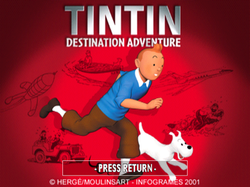
 Tintin: Destination Adventure on PlayStation
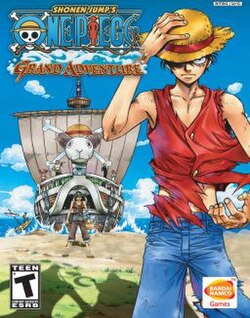
 One Piece Grand Adventure on PS2
 Taiko no Tatsujin: Dokodon! Mystery Adventure on Switch
 Onimusha: Dawn of Dreams on PS2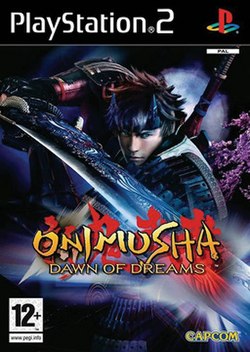
 Dreamfall Chapters: The Longest Journey on PS4










 Another SquareThought Site