

 Aug 2025
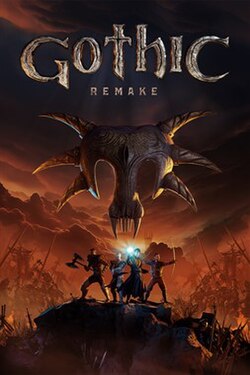

Gothic Remake is the polite-but-unforgiving reboot of Piranha Bytes' 2001 cult classic, rebuilt by Alkimia Interactive with Unreal Engine 5 and a stubborn devotion to the original's DNA. If you hoped this would be a hand-holding, arrow-highlighted stroll through a safe fantasy daycare, prepare to be disappointed - and oddly gratified. The remake leans into the old game's reputation for being demanding: the nameless hero begins as a blank slate, the world is no tutorial mat, and the NPCs behave like they have actual jobs. For players who like games that test patience, observation and a smidge of cruelty, Gothic Remake promises to be a deliciously tough cookie. This review zeros in on challenge design and the player skills you'll need to not just survive, but thrive on Xbox Series X/S.
If challenge is the dish, Gothic Remake is the spice rack - it gives you raw ingredients and expects you to cook. True to the 2001 original, the nameless hero starts untrained and useless at everything. That means no early-game power fantasy: you will die to wolves, be soundly humiliated by bandits, and probably get lost more than once. The skill system is explicitly stated to be "very close to the original," which implies training, faction choices and grind that actually matter. That design choice is deliberate: the remake forces you to invest in concrete abilities and think about trade-offs. Combat is the obvious skill check. Alkimia says the combat system is based on the original rather than the playable teaser's modernized take, which means timing, positioning and pattern recognition are key. You won't melt enemies with a single button combo; instead you learn attack windows, read enemy animations (more on that in the graphics/AI section), and pick your fights. The AI-driven animation sequencing - nicknamed "motion magic" - results in encounters where timing a counter or avoiding a heavy swing can pivot a fight. Play smart: explore choke points, use the environment, and consider upgrading or tweaking armor and weapons. The game expands weaponsmithing and armor modification, creating another layer of resource-management skill: decide whether to spend materials on a slight damage boost now or to stash them for a meaningful upgrade later. Stealth and dexterity play roles too. Lockpicking is back with a system similar to the original, but presented differently. Don't expect a one-button solution: this is a little puzzle that rewards patience, fine motor skill, and sometimes trial-and-error. The cooking and food system also got expanded. Food isn't just flavor text; it's a survival modifier that can change how sustainable a long dungeon crawl will be. If you like to prepare before a boss fight, managing rations and crafting buffs becomes an actual gameplay tactic rather than window dressing. Dialogue and social skill are not optional either. The remake retains dialogue choices that can meaningfully change outcomes. The game's writers rewrote the English localization to be harsher and truer to the original's tone, so saying the right thing at the right time matters. You'll need to learn NPC personalities, negotiate with factions, and remember that camp affiliation opens different quest paths. Those faction-specific quests add replayability but also require strategic decisions: do you want to grind standings with one camp and miss content in another, or split your focus? Both approaches demand planner skills and acceptance of trade-offs. Puzzle design has been revised to include "new interactions," which suggests more than fetch quests - expect environmental logic, multi-step puzzles and clever uses of tools you acquire. Problem-solving and patience are rewarded here. Also, the world is 10-30% larger than the original, with previously under-designed areas now filled out. That increases the scale of exploration challenges and puts a premium on map-reading and curiosity. Difficulty options are adjustable, and the developers explicitly added balance/difficulty tweaks. That doesn't mean the challenge is neutered; it's more like a volume knob for pain. If you want classic Gothic cruelty, crank it up and feel the burn. If you want the atmosphere but not the constant frustration, you can ease things. Modders will also be able to tinker using AngelScript - so if you love the design but hate a particular loop, the community might eventually give you a fix. Finally, expect to learn from failure. The demo "Nyras Prologue" reportedly lacked quick save, but the finished game aims to be more accessible in controls and UI. Even so, Gothic's demand for learning by doing remains. The skillset the game trains is a combo of mechanical ability (timing, aim, lockpick dexterity), strategic thinking (resource allocation, faction choice), and observational intelligence (reading animations, NPC behavior, environmental cues). If you enjoy games that make you better at their systems rather than carry you through them, you'll find a rewarding challenge loop here.
Alkimia rebuilt the game in Unreal Engine 5 and leaned into motion capture and AI to give NPCs and enemies believable movement. The "motion magic" system stitches 20-30 minute mocap recordings into context-sensitive sequences, which makes combat telegraphs clearer - once you learn to read them. That means the visual cues are part of the skillset; spotting a heftier wind-up or a tell that an enemy will stagger gives you the edge, and the animation fidelity actually rewards attention rather than distracting with flash. The world has been expanded and visually enriched: armor variants, morphed NPC faces (helped by deep-learning tools), and more detailed environments make the Minental feel lived-in. Armor now subtly changes with modifications, which is a small but satisfying nod to the player's progression - both visually and mechanically. On Xbox Series X/S the expectation is that lighting, particle work and draw distances will support the sense of place, and the demo footage and trailers suggest a moody, tactile aesthetic. The consequence for players: the graphics don't just look pretty, they communicate. Learn to read animations, item appearances and environmental tone; that's part of the gameplay.
Gothic Remake is shaping up to be a remake that asks you to work for every inch of progress, and that's the point. If you have fond memories of being humbled by the original, the remake's return to untrained beginnings, faction weight, lockpicking puzzles and AI-driven combat will feel like a respectful handshake - except the handshake also tests your grip strength. On Xbox Series X/S the game should deliver atmospheric visuals that serve gameplay signals, and the expanded systems (weaponsmithing, cooking, armor mods) deepen the challenge loops. This is not a game for a lazy Sunday power-level. It wants players who enjoy learning system languages, celebrating small victories (you beat that group of orcs without dying? Queue the confetti), and who appreciate consequence. With difficulty sliders and mod support, Alkimia gives you choices about how much teeth you want in your bite. For challenge-seekers who like their RPGs to be clever, occasionally cruel, and ultimately fair, Gothic Remake earns an enthusiastic 8/10. Bring patience, bring curiosity, and bring a pocketful of snacks - you're going to need them.
 Toki on Switch
 Tsukihime: A Piece of Blue Glass Moon on Switch
 Combat Elite: WWII Paratroopers on PS2
 Onimusha: Dawn of Dreams on PS2
 Action Man: Operation Extreme on PlayStation
 Project Sakura Wars on PS4










 Another SquareThought Site