

 May 2025


Revenge of the Savage Planet is the kind of sequel that wears its baggage like a satchel stuffed with slightly annoyed pines. Created by Raccoon Logic - the tiny phoenix team that rose from the ashes of Typhoon Studios after the whole Google/Stadia soap opera - the game takes the goofy, colourful DNA of Journey to the Savage Planet and straps it to a bigger, third-person frame. It's an action-adventure that prefers to be called a Metroidvania because 'Metroidvania' sounds like a more committed relationship than 'collect some gadgets and open up the map'. On Xbox Series X/S the game runs with Unreal Engine 5 under its hood, which mostly translates to very pretty scenery you will sometimes stop to admire while the alien fauna tries to eat you for being a pedestrian tourist in hostile biomes. Critics were broadly positive (Metacritic places the Series X/S aggregate around 78/100), and if you like your platforming with a side of pointed corporate satire and occasional toilet jokes, this is the planet for you.
Gameplay flips the camera from the first-person curiosity of its predecessor into a third-person perspective. The result is a protagonist with actual personality - they run like someone who misjudged where the surf ends - and a lot more emphasis on platforming theatrics. You start abandoned on Stellaris Prime with nothing but a mildly desperate stare at the sky and a will to survive. The mission is simple: survive, repair your ship and get revenge on your former employer, which the game treats as an idea worth lampooning on repeat. The game is spread across four main planets - Stellaris Prime, Xephyr, Quasadron IX and Zenithian Rift - each with distinct landscapes and traversal puzzles. A secret fifth planet appears after you finish the story, because secrets in games remain the most reliable way to keep players paying attention. Progression leans heavily on Metroidvania mechanics: certain areas are out of reach until you unlock traversal upgrades. The toolkit is cheerfully ridiculous and designed for chaos. The Proton Whip Tether lets you latch onto grapple points and fling yourself across chasms like a very determined yo-yo. The Hawx Rail Grinder gives the protagonist a satisfying rail-grinding power fantasy. The Goo Ingestor lets you spray the environment with water, lava or acid - and yes, the sheer variety of slimes and how the world responds is a major part of the game's joy. Exploration is incentivised by scanning flora and fauna. Doing so unlocks upgrades and research - plus new colour palettes for your outfit, because apparently interstellar fashion is a reward worth grinding for. Some enemies can be stunned and captured, then researched at your base to unlock further tech. Speaking of bases, Stellaris Prime doubles as your home base where you add rooms and facilities that grant further abilities. The base-building loop is small but meaningful: build something, get a new toy, go cause controlled chaos with it. Combat exists and will occasionally remind you of its half-hearted intention to be more than a traversal sandbox. Several critics and previews noted combat as the game's weaker suit; it feels functional rather than revolutionary. Encounters can be satisfying in short bursts, but they rarely reach the same pleasing complexity as the traversal puzzles. A fair bit of the game's charm comes from messing with gadgets to create emergent situations rather than orchestrated, skill-heavy fights. Revenge of the Savage Planet supports both local split-screen and online two-player cooperative play. Co-op adds a layer of friendly anarchy when two people decide to test the tensile strength of a Proton Whip Tether or attempt synchronized rail-grinds. The level design - explicitly inspired by Metroid Prime - gives players freedom in approach, rewarding curiosity and off-the-beaten-path fiddling. Be warned: the game can feel slow early on, with essential upgrades gated behind exploration and some tedium. Early segments occasionally lock you out of obvious fun until you've shuffled through the expected upgrade checklist. Whether that feels like methodical pacing or padded friction will depend on how patient your inner astronaut is.
On Xbox Series X/S the game flexes Unreal Engine 5's muscles in a way that reads as 'put the binoculars away, you are playing a video game, but look at those vistas'. Draw distances are massive, colours are deliberately saturated like someone painted the cosmos using a highlighter, and each planet has a distinct visual theme that makes mapping your route feel like choosing a holiday destination with more teeth. Critics praised the visuals as a 'technical tour de force' in places, and the world design truly rewards exploration: little details, quirky creature animations and the slapstick-inspired character animations give the game a lightness that offsets the occasional design grind. Framerate is generally solid on Series X/S, and the graphical fidelity helps sell platforming stunts and emergent interactions. There are moments where the humour is loud and the visuals lean into it with giddy exuberance - goofy creature models, exaggerated animations, and those satisfying particle effects when Goo does what Goo does. If you care about environmental variety and things that look nice while you get mildly mauled by an alien, this game delivers.
Revenge of the Savage Planet is an earnest little homage to Metroid-style exploration wrapped in a sitcom about layoffs, late-stage capitalism and the universal indignity of being left on a hostile world with nothing but your wits and a toolbox of questionable gadgets. It improves on its predecessor in meaningful ways: third-person personality, better traversal, smarter level design, and a base loop that actually matters. Where it falters is in combat pacing and occasional busywork; the humour, intentionally pointy and at times crass, will land for some and grate for others. Co-op is a delightful stamp of approval - two players wrecking alien biomes together is peak design intent. If you like colourful exploration, emergent gadget-based chaos, and a game that knows how to mock the industry that birthed it, you should be entertained. If you need your combat to be a philosophy seminar or you are allergic to toilet jokes in space, temper your expectations. On Xbox Series X/S it runs well, looks great, and offers dozens of hours of poking at alien ecosystems until they give you the upgrade you wanted. Scorewise, it settles comfortably into the 'solid good' bracket: not flawless, but frequently inventive and frequently funny in the deadpan, resigned way that comes from making something meaningful out of a messy development history. Which, honestly, is its real triumph.
 Neo Planet on PlayStation
 Planet Dob on PlayStation
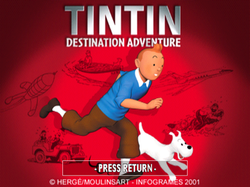
 Tintin: Destination Adventure on PlayStation
 One Piece Grand Adventure on PS2
 Taiko no Tatsujin: Dokodon! Mystery Adventure on Switch
 Onimusha: Dawn of Dreams on PS2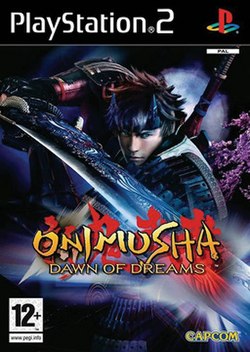











 Another SquareThought Site