



Ace Lightning started life as a peculiar bit of early 2000s televisual engineering: live actors sharing screen time with CGI superheroes who had wandered out of a fictional video game. The show was part teen drama, part Saturday-morning superhero scrap, and part earnest exploration of what happens when carnival clowns and high school detention meet supernatural amulets. The game adaptation for PlayStation 2, developed by Absolute Studios and released only in Europe, takes the exact premise the show built its reputation on and turns it into a single-player action affair. You collect pieces of the Amulet of Zoar, bash baddies, and hope the mysterious levels you were never supposed to find were implemented with more creativity than a detention excuse note. If you already know the series, the game's pitch is comfortingly familiar: Ace Lightning, Lord Fear, Pigface, Dirty Rat and other carnival oddities make the jump from TV to console, and the central loop - find amulet pieces, summon new powers or characters, fight the next boss - is intact. If you do not know the series, picture a superhero who moonlights as a walking power strip and a carnival that has terrible hiring standards. The story is functional: it mirrors the show enough to please fans and provides a scaffolding for the gameplay to hang on. Whether that scaffolding is made of solid planks or the kind of rope you get at discount haunted houses is the real question.
The game's narrative follows the series closely. You are essentially walking through the same beats the TV episodes hit: a stormy night, a seventh level that should not exist, a lightning strike, and a handful of pieces of magical jewellery scattered across locations that range from the carnival grounds to the school auditorium. The developers lean on the property hard, which is both a generous accommodation for fans and a safe play for anyone tasked with making licensed software under a deadline. Mechanically, Ace Lightning on PS2 mixes platforming with third-person shooting and light action brawling. The core objective in most levels is straightforward and, depending on your tolerance for repetition, either reassuring or soporific: locate the amulet fragment, defeat waves of minions, trigger a scripted event, then face off with a named villain. Enemies are drawn from the show's roster; Pigface, Dirty Rat and Googler's puppets provide the expected variety in enemy design even if their behaviour tends to recycle the same three attack scripts. Boss encounters, such as duels with Lord Fear or later threats, are the game's moments of theatricality, mostly because the stage set pieces allow the developers to shoehorn in a few spikes, moving platforms and a scripted lightning bolt for drama. There is some attempt at giving Ace and his allies a sense of progression. When the Amulet pieces combine in the source material new gear or characters appear; the game uses this concept to unlock abilities and set-piece summons. It is a tidy way to justify mid-level upgrades and to keep the objective list from becoming embarrassingly short. The PS2 controller manages these functions well enough, with attack, jump, and special ability buttons mapped in a way that rarely forces you to invent new contortions of your thumbs. That said, control fidelity sits squarely in the competent but uninspired camp. Movement and camera occasionally collaborate to remind you this was built in the era before twin-stick standards became a religious doctrine, and platforming sections sometimes punish you for trusting a camera angle that has clearly gone to sleep on the job. Level design is functional and unmistakably TV-inspired. You will revisit the carnival more times than etiquette recommends, but each revisit adds a slightly different obstacle or enemy composition. The mission design does not hide its pedigree: television episodes are short, episodic and focused, and the game mirrors that by making levels relatively bite-sized. This keeps the pace brisk, but also makes the game feel episodic in a way that exposes repetition over a longer play session. The single-player experience leans heavily on familiarity. Fans of the show will enjoy seeing key set pieces and characters reproduced in an interactive medium. Players approaching the game as a plain PS2 title will find it perfectly playable but unlikely to displace more ambitious contemporaries. There are no revolutionary mechanics, no emergent systems that surprise you into delight; instead you get a careful adherence to the source, which will either comfort or mildly frustrate depending on how strongly you prefer invention over fidelity.
The television series was unusual for its time for mixing live actors with CGI characters, and much of the game's visual identity is an attempt to capture that hybrid feel. The in-game models clearly aim to resemble the show's designs, and there is a certain charm in seeing a polygonal Ace Lightning stride through a low-poly carnival that looks like it has been painted with an optimistic palette. The PS2 was never going to deliver cinematic realism, but for licensed software the presentation here is decent. Textures are soft, edges are polite, and character animations oscillate between serviceable and slightly robotic. The team behind the show used Maya and Calibre Digital Pictures for their TV effects, and the game borrows that aesthetic rather than reinventing it. Lighting is used where it matters, such as during the thunder-laced moments that justify the title, and the carnival's neon and circus motifs translate into backdrops that are gaudy in a pleasing way. Where the game trips is in the occasional visual repetition and some pop-in; the engine is not always subtle about introducing set dressing. If you remember the PS2 era fondly, you will find the graphics nostalgically comfortable. If you demand modern polish, the textures will remind you that the early 2000s were still figuring out how to make digital heroes look emotionally nuanced.
Ace Lightning for PS2 is best understood as a faithful tie-in that does not overreach. It replicates the series' story beats and roster of oddball characters, packages them into bite-sized levels and delivers a competent action-platforming experience. The game's strengths are its fidelity to source material and its reliable, if conservative, approach to design. Its weaknesses are equally dependable: repeat visits to the carnival, a camera that occasionally takes unscheduled naps, and a reluctance to add new ideas beyond the show's framework. For fans of the TV show, the game is a pleasant, occasionally sentimental trip through familiar territory and scores points simply for existing in the same continuity. For players seeking innovation or a PS2-era standout, it is an amiable but unremarkable companion. The score of 6 out of 10 reflects this middle path: a respectable adaptation with moments of fun, but not the kind of experience that will have strangers on the internet forming fan clubs in its honour. If you played the show and always wanted to be the kid who keeps turning the seventh level on and off, this is the console version of that itch - maybe not essential, but it scratches it well enough.
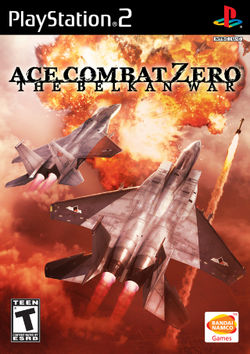
 Ace Combat Zero: The Belkan War on PS2
 Disney's Chicken Little: Ace in Action on PS2
 Crimson Sea 2 on PS2
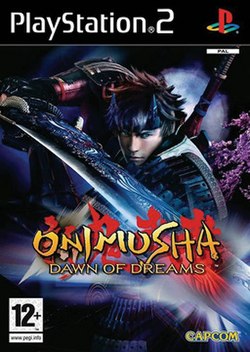
 Onimusha: Dawn of Dreams on PS2
 Pirates: The Legend of Black Kat on PS2












 Another SquareThought Site