

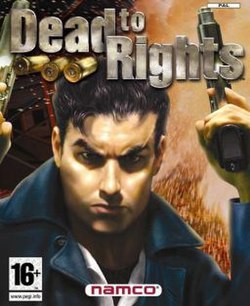

Dead to Rights on PS2 is Namco's attempt to bottle noir-strewn, Hong Kong-inspired gun fu and shove it through early-2000s console hardware like a lead pipe. You play Jack Slate, a hard-boiled cop framed for murder who, with the help of his K-9 partner Shadow, grinds through a melodramatic crime tale that careens from Chinatown shootouts to a mid-air finale. If you care about game design as much as you care about seeing criminals fall from a ledge in slo-mo, the PS2 build deserves a second look: it's mechanically confident, narratively ambitious, and technically interesting in ways the marketing copy didn't bother to underline.
Dead to Rights wears its influences on its sleeve: the game borrows bullet-time from Max Payne-era design (slow-motion aiming plus extended situational control) and layers on the kung-fu choreography motif common to early 2000s action titles. From a systems perspective, that's the headline-bullet time is the core mechanical modifier, used to turn chaotic firefights into controlled, cinematic windows where aim and timing matter more than raw twitch speed. On PS2 the implementation shifts the pacing of encounters: normal combat is a dance of cover, strafing and hip-fire, while bullet time creates an enforced attention spotlight that rewards careful trigger discipline. The companion AI-Shadow the dog-is the game's most notable mechanical flourish. Technically it's implemented as a context-sensitive ability with a resource constraint: Shadow will attack and instantly neutralize a chosen target when the dog's meter fills. The meter gating is a simple but effective balancing device that turns the dog from an auto-win button into a tactical option. The retrieval behaviour is also pragmatic design: enemies drop weapons and items, and Shadow will fetch the most useful of these, effectively abstracting an inventory-replenish routine into a single, visually satisfying animation. The game even lets you assume direct control of Shadow for two short puzzle segments; while brief, these sequences are informative about how the devs treated AI agents as mechanised gameplay tools rather than just set dressing. Enemy AI is geared toward spectacle over simulation. In standard encounters foes operate in chunky state-machine patterns-seek, flank, shoot, stagger-designed to produce emergent moments when combined with the level geometry and slow-motion. The result is predictably arcade-y: enemies telegraph aggression enough to be readable in bullet time, which is intentional. But that predictability cuts both ways; combat frequently rewards the same few tactics, which can make encounters feel like variations on a theme after several hours. Level design is a string of vignettes. The city spaces-Chinatown, the docks, prison yards, and the airbase-are designed as segmented arenas more than open worlds. This linear segmentation works in Dead to Rights' favor for pacing and streaming: each section loads a set of enemies, environmental hazards, and short scripted beats that aim for cinematic beats rather than sandbox variety. The scripting is strong on spectacle: vehicle chases, hostage situations, and the plane finale are staged to produce memorable visual moments. On the downside, the scripted approach leads to a few "set-piece fatigue" moments where the player performs the same animation-triggered gags several times, which is probably why critics noted some repetitive minigames. Controls on PS2 translate the console layout into an action-steering mapping that feels natural for the era: left stick for movement, right sticks/face buttons for aiming, and shoulder buttons for tactical modifiers (trigger-to-shoot, shoulder-for-cover/lean, etc.). The combination of positional awareness, manual aiming, and the bullet-time toggle creates a triage between movement, aiming and tactical timing. Where Dead to Rights scores is in its responsiveness-actions register quickly and the feedback loop between input and animation is tight enough to make combos and disarms feel rewarding. The game's difficulty curve and encounter design encourage the player to mix gunplay, melee, and the canine ability. Melee is deliberately punchy and close-quarters oriented; it complements ranged fighting in tight corridors and emphasizes the 'gun-fu' fantasy. Puzzle elements are minor and rarely break from being simple lever/door challenges-except for the Shadow-control puzzles which add a little variety. One technical nitpick is the inclusion of several minigame-like interludes that interrupt flow. Entertainment Weekly called them repetitive-stress-inducing; from a systems design lens, they are throwaway mechanics tacked onto primary loops rather than integrated subsystems. If you prize uninterrupted combat-drama, they can feel like speed bumps.
For a 2002 PS2 release, Dead to Rights presents competent production values. The art direction leans into noir lighting-sharp contrasts, neon signage in Chinatown, and wet pavement reflections that sell mood more than pixel count. Animation-wise, character movement and the specially choreographed takedowns carry weight: the devs put time into transitional animations so gun-tosses, disarms and blowback feel deliberate. Bullet-time is not just a gameplay modifier; it's a rendering and animation cue that allows higher-fidelity particle and slow-motion animation to mask lower model detail. On the PS2, texture resolution and geometry are consistent with console-era expectations: surfaces can look a bit flat at close range, and environmental variety is achieved through props and decals more than high-res assets. The camera is generally serviceable during combat but can be theatrical during scripted beats, sometimes getting a bit precious with angles. Particle effects-muzzle flash, smoke, and blood spurts noted by some contemporary outlets-are used liberally to sell impact, even if individually they are low-resolution billboards. Performance-wise, the PS2 build was noted by reviewers to be an improvement over the original Xbox release in some respects. While exact frame-rate figures weren't the focus of contemporary write-ups, the PS2 version's optimizations show in tighter control responsiveness and fewer streaming hitches in segmented levels. Lighting, bloom and slow-motion layering are handled well for the platform, producing moments that feel cinematic without breaking immersion.
Dead to Rights on PS2 is a technically curious action title that prioritises crafted combat beats and cinematic staging over systemic depth. If you're analyzing the game's construction, you'll appreciate the tight control-to-animation pipeline, the clever gating of the Shadow ability with a meter, and the measured use of bullet time to convert chaotic firefights into readable puzzles of timing and positioning. The linear, scripted level design and the somewhat repetitive minigames hold it back from being a full-on classic, but production values, story ambition (it won GameSpot's 'Best Story' nods) and solid mechanical execution keep it entertaining. For an 18-year-old who likes games that feel like action movies you can control-complete with a dog that fetches your ammo and murders people on command-Dead to Rights remains a worthwhile play. It won't reinvent the shooter-adventure wheel, but as a case study in how to marry slow-motion mechanics, companion AI and staged set pieces on PS2 hardware, it's a tidy, sometimes gleefully violent example of early-2000s design craft. Score: 7.5/10.
 Dead Rising 2 on PS4
 Dead or School on Switch
 Tintin: Destination Adventure on PlayStation
 One Piece Grand Adventure on PS2
 Taiko no Tatsujin: Dokodon! Mystery Adventure on Switch
 Onimusha: Dawn of Dreams on PS2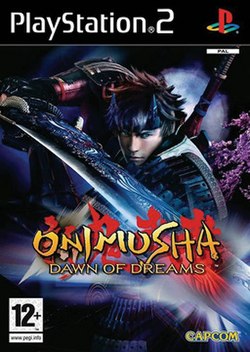
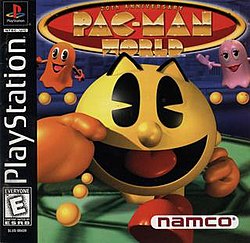
 Pac-Man World on PlayStation
 NAMCO Museum Vol. 1 on PlayStation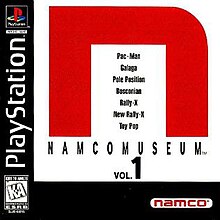












 Another SquareThought Site