



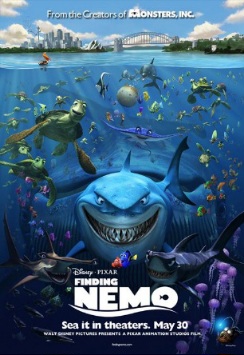
Licensed movie games live by different rules: they must look like the film, retell key moments, and leave parents willing to buy an overpriced lunchbox of nostalgia. Disney/Pixar Finding Nemo for PS2 (released in 2003 by THQ) ticks those boxes but does so within the technical tightrope the mid-generation consoles demanded. Critics gave the game mixed reception - IGN scored the PS2 version around 7.0/10 while GameSpot and GameSpy leaned more conservative - and when you look under the hood that's unsurprising. This review digs into the nuts and bolts: controls, engine behavior, level construction, rendering tricks and audio compression, rather than just whether the jellyfish look cute.
At its core the game is a level-by-level retelling of film beats: you play as Nemo, Marlin, or Dory and complete objectives tied to the movie's set pieces. From a mechanical standpoint the title behaves like a textbook licensed platformer of the time - discrete stages, scripted encounters, and a fairly rigid state machine for player actions. Input mapping on the PS2 is straightforward: face buttons handle primary movement actions and context-sensitive interactions, shoulder buttons modify attack/boost states, and analog sticks control movement and camera. The analog movement is serviceable but reveals an important design choice: the control system prioritizes simplicity over precision. Momentum and inertia are minimal by design, which helps younger players but makes tight platforming feel floaty rather than weighty. Collision detection is conservative: hitboxes are generous on both sides. Enemies and hazards register collisions with clear, forgiving margins which mitigates controller feel but also reduces player skill expression. The physics model is mostly kinematic; there are no emergent fluid dynamics, only pre-baked arcs for jumps and scripted currents for set pieces like jellyfish swarms. The 'water' interactions are implemented as localized velocity fields: enter a trigger and your character gets a predefined push. It's efficient for a PS2-era engine because it avoids continuous force integration but it also limits organic navigation. Camera is a mixed bag. The engine uses a hybrid camera that alternates between player-relative and cinematic framing. For open-ish reef stages the camera is player-relative with collision checks to avoid clipping; in narrow or story-critical sequences the engine snaps to pre-authored camera nodes. The latter looks great for cutscenes and cinematic moments - and the inclusion of film cutscenes strengthens narrative continuity - but sudden camera snaps can cause disorientation during platforming sequences. There is no modern dynamic collision avoidance for the camera, so occasional geometry clipping and occlusion of important platform edges occurs. AI is simple but functional. Enemies execute finite-state behaviors with limited perception cones and no pathfinding beyond waypoint following in most cases. For a licensed game targeting a younger audience this keeps CPU costs low and predictability high. Boss-like encounters are really scripted patterns masked as AI - a common approach that reduces processing overhead on the PS2's modest CPU and avoids pathfinding failures. Level design is explicit about the film-to-game mapping: each playable level corresponds to a movie scene, and cutscenes extracted from the film are used as level transitions. This reduces the need for in-engine cinematic fidelity but increases pressure on the gameplay to feel distinct. Checkpoint systems are friendly: relatively frequent respawn points reduce frustration but also dilute the value of learning from failure. Collectibles and small puzzles exist to pad playtime, implemented with basic trigger-and-switch logic. The save architecture on PS2 is typical: small PS2 memory card footprint with discrete save slots per profile, avoiding streaming save complexities. Technically, the engine favors deterministic scripting and low CPU cost over simulation. That choice lets the game be consistent across PS2 hardware variants, but it also makes some encounters feel repetitive. Where the game shines is in faithfully reproducing film moments through level gating and cutscene integration - a cheap but effective way to deliver the movie's emotional beats without a heavy runtime cinematic system.
Rendering on the PS2 is a lesson in constrained art direction. Character models are low-polygon by modern standards but maintain the silhouettes and color palettes of their film counterparts, which is what matters for recognition. Textures are aggressively mipmapped and heavily compressed to fit the disc and the PS2's VRAM limits; up close you see blocky mip transitions and limited texture detail, but from a gameplay viewpoint the readability remains strong. Water is treated as a shader illusion rather than a physics surface. The PS2 era lacked hardware pixel shaders, so the team relied on scrolling textures, vertex animations, and alpha layers to simulate refraction and surface motion. Normal-map-like effects are emulated via vertex perturbation and layered alpha, leading to convincing movement at a distance but noticeable cheating when you swim close to geometry. Particle systems are used sparingly - bubbles and simple foam sprites - to conserve CPU/GPU cycles and memory bandwidth. Lighting is baked in many scenes with a handful of dynamic lights for character highlights. Real-time shadowing is either very low-resolution or represented with blob shadows beneath characters, which is a pragmatic tradeoff to maintain frame rate. Speaking of frame rate, the PS2 build attempts a locked target but will dip in CPU-heavy set pieces (crowded jellyfish fields or sequences with many scripted objects). The engine manages LOD and object streaming with a short draw-distance to keep performance steady, but that produces pop-in on distant reef geometry, especially when the camera moves rapidly. One advantage is the integration of actual film cutscenes on disc. Using the movie footage for narrative beats reduces production of in-engine cinematics and provides high-quality visuals in those moments. The downside is visual discontinuity: the movie's high-fidelity CGI contrasts sharply with in-game assets, which can break immersion if you were hoping the PS2 would look like a Pixar render farm. Audio uses compressed voice samples and music stems. Given the PS2's audio constraints, music cues from the film's score are reduced to short loops and lower-bitrate samples. Voice work is included but is more sparse than the film - again a common space-saving compromise. The end result is serviceable: sound design supports gameplay clarity but doesn't reach cinematic depth.
Disney/Pixar Finding Nemo on PS2 is technically competent and very aware of its design constraints. The developers leaned into scripting, cutscene integration, and conservative physics to deliver a stable experience on mid-generation hardware. That design keeps the game accessible to its target younger audience and ensures predictable behavior, but it also leaves a technically curious player wanting more: tighter analog control, a smarter camera, and richer water simulation would have pushed it from 'faithful' to 'memorable' in gameplay terms. If you're judging this by how well it recreates the movie's moments, the game does a respectable job - cutscenes and set-piece scripting win the day. If you're judging by technical ambition on the PS2 hardware, it's conservative, pragmatic, and occasionally obvious about the concessions made for performance and disc space. Mixed reviews in contemporary outlets reflect that split: an endearing license adaptation with limited mechanical and technical depth. Recommendation: pick this up if you want a straightforward, family-friendly licensed platformer that hits the movie beats and doesn't punish the player with brutal precision sections. If you're chasing tight platforming or advanced water physics on PS2-era hardware, temper expectations. Final technical score: 6.5/10.
 Discworld II on PlayStation
 Disney's Winnie The Pooh's Rumbly Tumbly Adventure on PS2
 Tintin: Destination Adventure on PlayStation
 Disney's Chicken Little: Ace in Action on PS2
 One Piece Grand Adventure on PS2
 Taiko no Tatsujin: Dokodon! Mystery Adventure on Switch












 Another SquareThought Site