



If you were holding out hope that a Dora the Explorer game on PS2 would be an existential horror about a preschooler navigating late-stage capitalism and plastic waste, Dora Saves the Mermaids is here to gently disappoint you. Developed for the PlayStation 2 by Totally Games and published by 2K in 2008, this is the kind of licensed kids' game that treats 'adventure' like a synonym for 'collect-a-thon with polite music.' The premise is admirably simple: an evil octopus is dumping garbage into the Mermaid Kingdom, Marina's magical crown has gone missing, and Dora has to become a mermaid to retrieve it. It promises mermaid transformations, environmental indignation, and platforming so bland it could double as a sleep aid for toddlers who have seen every episode of the show, twice. This is not a story about innovation. It is about getting Dora from point A to point B while collecting shiny things and not getting too optimistic about variety. Reviews were, unsurprisingly, mixed: GameRankings averaged the PS2 version around 64%, and IGN's take was that the game does not offend visually but doesn't exactly inspire either. If you're an adult buying this for an actual child, the game's strengths are its voice actors (they're pulled from the show, which is commendably consistent) and a concept that sounds wholesome. If you're an adult buying it for yourself because you enjoy irony and aquatic crowns, you might want to reconsider your life choices. Then again, crown hunting is a noble pursuit.
Gameplay in Dora Saves the Mermaids is built out of very small building blocks: running down winding paths, picking up gems, and coping with World of Bounce - a feature where random terrain will catapult Dora into the air like an overenthusiastic trampoline. The core loop is charmingly simple because it is, in essence, not trying to be anything else. Players guide Dora through segmented levels in the Mermaid Kingdom, moving along snaking routes and collecting items needed to progress. Most objectives reduce to fetching or reaching points, and the challenge ceiling sits comfortably below the average preschooler's patience threshold. There are attempts at mixing things up: occasionally Dora has to interact with environmental bits, discover hidden items, or use bounce pads to reach otherwise inaccessible gems. Boots does not appear to be the co-op partner here; adult involvement is mostly supervisory and moral. The game occasionally flirts with puzzle elements, but it prefers to keep things linear and safe. This will please very young players who are still learning about cause-and-effect and the basics of spatial navigation, and it will frustrate anyone looking for real platforming nuance or a sense of accomplishment that isn't 'you collected ten shiny things.' Educational ambition is minimal. Where the Dora TV show asks viewers questions and encourages participation, this PS2 title mostly provides passive interaction. IGN's criticism that the game 'falls flat' as an educational tool is fair; the mechanics are too simplistic to actually teach reliably and too repetitive to keep attention beyond a short session. That said, the game is accessible. Controls are forgiving, the difficulty curve is practically a hammock, and checkpoints are generous, so tantrums over repeated failure are unlikely - which, in context, might be the actual selling point. Level progression is straightforward: find crown pieces or related quest items, clear small obstacles, and move on. Occasional mini-goals prevent the entire experience from being a single long hallway, but those mini-goals rarely surprise. There's a distinct feeling that the developers were trying to strike a balance: enough gameplay to feel like a game, but not enough to scare off the intended demographic. In practice, that balance tilts toward 'not challenging' rather than 'comfortably accessible.'
Visually, Dora Saves the Mermaids sits in the unremarkable but inoffensive corner of the PS2's catalogue. IGN's lukewarm assessment that the visuals 'do absolutely nothing to wow, but don't look terribly ugly either' is an accurate summary. The Mermaid Kingdom is bright, pastel, and very careful not to offend sensitive corals. Character models are chunky, environments are simple, and textures exist mostly to give your eyes something consistent to look at. The mermaid transformation looks cute enough for the target audience, and animation is functional: Dora moves the way cartoon heroes should - with purpose and an economy of motion. There are no dazzling effects, no jaw-dropping set pieces, and certainly no moment that screams 'this was worth the price of admission.' Instead, the game offers clean, readable visuals where objectives and collectibles are easy to spot. If clarity was the goal, mission accomplished. If aesthetic brilliance was on the brief, it went on a coffee break and never returned.
Dora Saves the Mermaids on PS2 is a textbook example of the licensed kids' adventure: polished in the places that matter for its audience, minimal in ambition, and predictably safe. Its strengths are familiarity and accessibility. Pulling the voice cast from the TV show was a sensible move; it keeps the game feeling authentic to fans. The visual presentation won't win awards, but it won't make any seven-year-old demand an immediate refund either. Its flaws are more decisive: repetitive fetch quests, a lack of meaningful educational content compared to the TV formula, and a paucity of variety that makes extended play feel like a chore for anyone over the age of eight. GameRankings' 64% for the PS2 version sums it up: an okay, occasionally pleasant experience that rarely excites and sometimes feels like a step back from the interactivity kids get from modern tablets and consoles. Buy this for a kid who worships Dora and needs a gentle, non-frustrating video game experience. Do not buy this if you are hoping for a deep or cleverly designed adventure - the octopus may be evil, but the game's ambition is harmlessly mediocre. Score: 6.4/10. It cleans up messes in the Mermaid Kingdom and leaves your standards for complexity slightly damp.
 Dora's Big Birthday Adventure on PS2
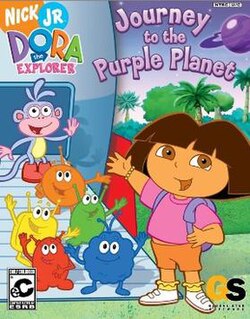
 Dora the Explorer: Journey to the Purple Planet on PS2
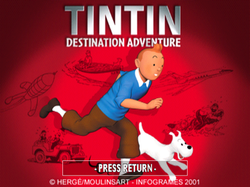
 Tintin: Destination Adventure on PlayStation
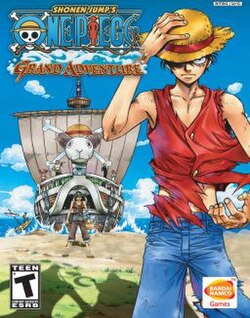
 One Piece Grand Adventure on PS2
 Taiko no Tatsujin: Dokodon! Mystery Adventure on Switch
 Taiko no Tatsujin: Don to Katsu no Jikū Daibōken on Switch












 Another SquareThought Site