



Dora Saves the Snow Princess is a short, saccharine 2D platformer aimed firmly at preschoolers, starring the indefatigable Dora and her best buddy Boots. The plot reads like a winter-themed bedtime story written on a sticky note: Snow Princess Sabrina has been trapped by an evil Witch, and Dora and Boots must trek through frosty levels, collect Snow Sparks, use items from Dora's backpack, and leap on mushrooms to rescue her. Clocking in at roughly two hours for a longplay, the game is swift and simple, which makes sense for its intended audience but leaves older players - or anyone expecting a 'real' emotional arc - wanting. Despite its brevity, the game offers a surprisingly neat canvas for an analysis of characters and their story beats, even if those beats are more like gentle marketing nudges than dramatic crescendos.
At its core, gameplay is a series of platforming vignettes dressed up with Dora-brand educational friendliness: collect Snow Sparks, move from point A to point B, and occasionally use an item from the backpack to open the next gate. On the surface these mechanics are shallow, but if you squint like a critic with nothing better to do, they form symbolic props in a miniature character drama. Dora, as protagonist, performs the role she always does: cheerful, resourceful, and encouraging. Her story arc in this adventure is less 'character transformation' and more 'steady-state heroism' - she starts cheery and stays that way, which fits a character whose primary job is to model curiosity and helpfulness for toddlers. Mechanically, Dora's access to backpack items functions as her agency. In a traditional narrative you might call these 'tools of change'; here they are literal inventory items that let her solve environmental puzzles. The backpack is a neat metaphor for Dora's preparedness and problem-solving ethos, even if the game rarely asks her to grow beyond being prepared. Boots, as sidekick, is predictably loyal. His arc is supportive rather than developmental: he cheers, bounces, and occasionally helps retrieve a hidden collectible. If Dora is the plot's brain, Boots is its heart, performing emotional work for the audience and giving younger players a familiar figure to identify with. His presence nudges the story toward cooperation; the game rarely lets him act as an independent agent, but Boots' role reinforces Dora's leadership and the duo's partnership. Snow Princess Sabrina is the damsel-in-delight; trapped, immaculately regal, and waiting to be rescued. Her arc is the shortest: imprisoned at the story's start and liberated by its end. There is minimal interiority offered - no monologues about longing for snowdrifts or existential crises about crown maintenance - but she functions as the story's moral north. In a lesson-friendly game, Sabrina's predicament creates clear goals and emotional stakes for the player: restore the kingdom, restore joy. The Witch, as antagonist, is archetypal and intentionally unnuanced. She's a convenient obstacle rather than a character with motives. The Witch's presence allows the game to introduce conflict without scariness; she is more plot device than person, the sort of villain you can boo at from the safety of a Sunday morning cartoon. Because of the target audience, the Witch never receives a redemption arc or complicated backstory - and frankly, the game wouldn't have the runtime for it. One of the game's consistent themes is collection-as-growth. Snow Sparks double as both score and narrative beat: every sparkle recovered takes the player closer to liberating Sabrina. It's a neat alignment of mechanics and motive, even if the emotional payoff is small. Traversal mechanics like mushroom-jumps and backpack-item usage act as micro-acts of agency for Dora, reinforcing that problems are solvable with curiosity, persistence, and occasionally a springy fungus. There is a tiny dramatic structure here - obstacle, attempt, use tool, reward - repeated in a rhythm that toddlers can learn and anticipate. For anyone wanting rich character arcs, the repetition blunts emotional spikes; for a preschooler, the pattern is pedagogically comforting.
Visually the game is functional and clean rather than dazzling. The art sticks close to the TV show aesthetic: bright colors, rounded shapes, and characters rendered in a friendly, non-threatening way. The design choices serve the story rather than compete with it; levels look wintry and inviting, and the Snow Sparks sparkle in a way that's satisfying to pick up. IGN noted the visuals 'do absolutely nothing to wow, but don't look terribly ugly either,' which is fair. There are no technical fireworks on PS2 hardware - no ambitious lighting or texture work - but the simplicity helps maintain focus on characters and objectives. Animations are serviceable, with Dora and Boots expressing a handful of moods that support their personalities: Dora's determined stride, Boots' enthusiastic hops, Sabrina's serene stillness. The Witch gets suitably cackly poses without veering into genuinely scary territory. The aesthetic choices keep the game accessible and readable for its audience, and they reinforce the small emotional beats the story tries to land.
If you judge Dora Saves the Snow Princess as a narrative-driven adventure for adults, it will fail you with the cold indifference of a frozen shovel. But if you read it on its own terms - a bite-sized, preschool-oriented platformer - the game does a tidy job of translating Dora's simple moral universe into play: cooperate, use your tools, collect the sparkles, and free the princess. Character arcs here are intentionally flat, more like safety rails than dramatic journeys. Dora remains the eternally prepared explorer, Boots the faithful emotional sidekick, Sabrina the clear-cut goal, and the Witch the uncomplicated foil. Critics pointed out the short length, repetitive nature, and lack of challenge, and those critiques are fair: the game doesn't push characters into new territory and rarely surprises. Still, there's a charm in how mechanics and character align. The backpack-as-resource, Snow Sparks-as-hope, and boots-as-heart are tiny storytelling devices that do what children's media should: make moral lessons legible and play accessible. For an 18-year-old reviewer with nostalgia or an interest in character design, the game is an instructive case study in narrative minimalism. For parents or preschool players, it's a decent, if forgettable, distraction. Score-wise, IGN's 5.7/10 captures the middle ground: competent for its purpose but stripped of depth. In short: Dora isn't reinventing fairy tales here, she's politely following them, backpack in hand, and that's exactly the point - whether that's satisfying depends entirely on how much narrative complexity you came to shovel into the snow.
 Dora's Big Birthday Adventure on PS2
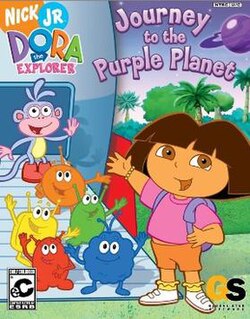
 Dora the Explorer: Journey to the Purple Planet on PS2
 Disney's Stitch: Experiment 626 on PS2
 Rad Rodgers on PS4
 Portal Runner on PS2
 Tigger's Honey Hunt on PlayStation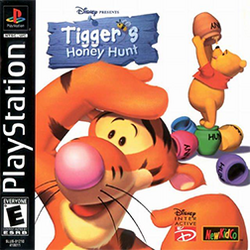
 Puchi Eva: Evangelion @ Game on DS
 Tsuribaka Nisshi on PlayStation
 Ultraman Fighting Evolution on PlayStation












 Another SquareThought Site