

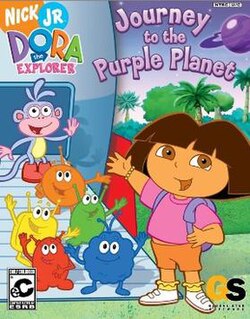

Dora the Explorer: Journey to the Purple Planet is a game that answers a very important childhood question: what happens when five lost aliens crash-land on Earth and someone has to be mildly inconvenienced so they can get home? Developed by Monkey Bar Games and published by Global Star Software, the PlayStation 2 version arrived in PAL regions in December 2005 and in North America in February 2006. It's based on a TV episode where Dora and Boots shepherd extraterrestrial tourists back to their Saturn-like Purple Planet. The game cheerfully pairs hand-holding guidance for tiny players with the occasional moment that might make an older player raise an eyebrow - or a controller - and wonder who thought 'no autosave' was a feature. Music credit goes to Jason Graves, whose soundtrack mostly behaves like a musical hall monitor: pleasant, encouraging, and slightly alarmed when you fall in a hole.
At its core, Journey to the Purple Planet is straightforward: control Dora, follow Boots, collect things, and do small tasks until a rocket can fly and keys can be found to open a space gate. The core collectible economy is pleasantly literal. Pick up 10 space gems in a level and Isa's rocket has enough fuel to launch you. Gather the keys scattered across various planets after launch and you inch closer to the Purple Planet. It's a very tidy loop - collect-gem-launch-go-collect-key-repeat - which makes perfect sense for the intended audience and is structured like a homework assignment with stickers. The game places Dora and Boots in a handful of themed obstacles lifted from the show. Before crossing Turtle River you must find and hop on four turtles in sequence; timing is everything unless you enjoy the aquatic version of faceplanting. The Icky Sticky Sand is a punishment box for careless button-mashing. Land on it and Dora gets stuck; recovery requires you to press the A button to free Dinky, which reads like an instruction manual for rescuing someone from an emotional sandpit. Crocodile Lake is a vine-swinging exercise: press the action button to latch onto vines and cross. Mushrooms and springboards give temporary access to higher platforms, which allows for a mild platformer challenge without threatening the player's confidence. Controls and interaction are pitched for small hands and shorter attention spans. The action button covers the basic needs - jumping, swinging, freeing friends - and there isn't a sprawling skill tree to learn. Some levels hide gems in obvious treasure spots and others tuck them into logs; the variety is minimal but consistent. There are little puzzle moments, largely of the 'press the right button at the right time' variety, which is a polite way of saying the puzzles are less 'riddle' and more 'do the thing the game asked you to do in a slightly different order.' Two design choices deserve mention. One, the PlayStation 2 version was notable for receiving an EC+ rating from the ESRB, apparently the first on that platform to do so. This implies the game is extra careful with content, which is accurate - the most dangerous thing in the world here is wet sand. Two, the PS2 release didn't arrive with a lot of fanfare; it wasn't announced at expos and slipped out quietly. That low-key rollout matches the game's temperament: modest, earnest, and not trying to win any awards beyond kindergarten smiles. Adults playing this will notice the educational veneer. IGN's Chris Roper called it a 'fun adventure for young children who are learning their first school-related skills' and scored it 7.0/10. He also rightly pointed out that 'it doesn't actually teach in any way' - the mechanics are more about repetition and recognition than structured lessons - and criticized the lack of autosave and a couple of confusing sections. Those gripes matter more if you are picky about modern conveniences; for a child guided by enthusiasm and the occasional 'Great job!' they'll probably go unnoticed. Replay value depends on what you value. If you love collecting every gem because it soothes your soul, there is some replay potential. If you are an adult replaying for nostalgia or curiosity, you'll get a short, sweet, and safe diversion. For kids, the loop of gathering gems, fueling the rocket, and unlocking the next space gate is rewarding. For anyone who expects a complex platforming epic, the experience will be about as intense as a laminated sticker chart.
Graphically, the PS2 version is tidy rather than showy. It uses the Vicious Engine to render friendly, colorful environments that mirror the TV series' art direction. The characters look exactly like they should: Dora's hair is fixed in eternal motion, Boots is ever-optimistic, and the aliens - Flinky, Inky, Plinky, Dinky, and Al - are charmingly extraterrestrial without violating any intergalactic treaties. Textures and models aren't pushing the PS2 into heroic territory, but they're clean, readable, and designed to minimize confusion for small children who are still learning which platform is safe to step on. The animations are serviceable; the camera is stable for the most part, though like many early-2000s kids' games it can be a little rigid in tighter platforming moments. There are no dramatic lighting tricks or jaw-dropping vistas, because the aesthetic doesn't ask for them. Instead, colors saturate in a reassuring palette designed to keep attention focused and temper tantrums out of orbit. If you're evaluating strictly on spectacle, this won't be on any 'best graphics' lists. If you evaluate on clarity and charm for a preschool player, it does its job well.
Dora the Explorer: Journey to the Purple Planet is not trying to be anything but a gentle, low-risk adventure for young children and a nostalgic curiosity for older players. It succeeds at being friendly, clear, and composed around small triumphs: finding a turtle at the right time, freeing a friend from Icky Sticky Sand, or finally getting enough gems to see the rocket flame. The lack of autosave and a couple of fuzzy sections make the game feel like a product of its time, and some of the so-called educational aspects are more background seasoning than a rigorous curriculum. The PlayStation 2 version earned a respectable 7.0/10 from IGN and a mixed-to-positive reception overall, which seems fair. If you are shopping for a tiny astronaut-in-training who likes bright colors and predictable rewards, this is a competent pick. If you are an adult seeking depth, expect to be charmed briefly and then politely requested to step aside so a five-year-old can experience the miracle of a rocket ship that runs on collectibles.
 Dora the Explorer: Dora Saves the Mermaids on PS2
 Dora's Big Birthday Adventure on PS2
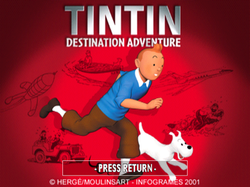
 Tintin: Destination Adventure on PlayStation
 Disney's Chicken Little: Ace in Action on PS2
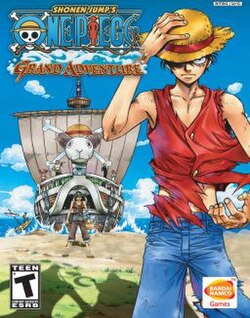
 One Piece Grand Adventure on PS2
 Taiko no Tatsujin: Dokodon! Mystery Adventure on Switch
 Madagascar 3: The Video Game on PS3
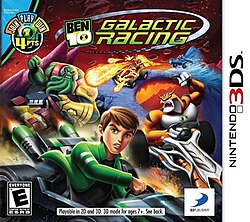
 Ben 10: Galactic Racing on PS3
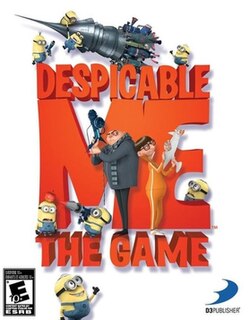
 Despicable Me: The Game on PS2
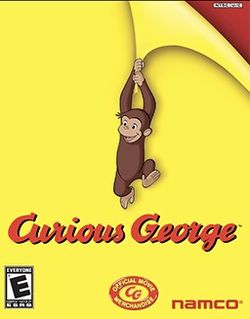
 Curious George on PS2
 Turbo: Super Stunt Squad on PS3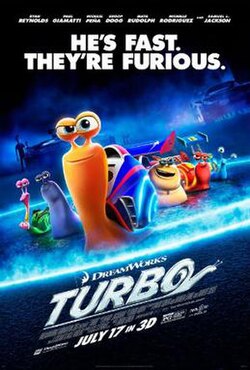












 Another SquareThought Site