

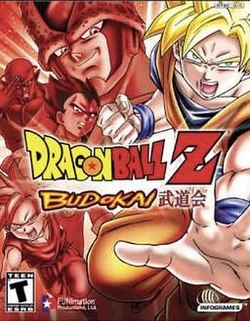

Dragon Ball Z: Budokai arrives like a very loud reunion special. It takes the first three DBZ sagas - Saiyan, Android, and Cell - straps them to a PlayStation 2, and promises you the experience of yelling at your TV while attempting a Kamehameha with your thumbs. Dimps, the developer, clearly understood that what fans wanted most was the anime's exact vocal convincingness and dramatic pauses, so they packed the game with TV voiceovers, 3D cutscenes and a roster of fighters who scream at the same decibel levels as they do when the ratings depend on it. The result is a faithful, sometimes clumsy translation of Goku's universe into a button-mashing arena that knows its audience: adolescents, and adults who never grew out of adolescence.
Budokai is not shy about recycling the show's greatest hits. Story Mode walks you through recreated set pieces from the anime, separated into chapters and punctuated with the series' original voice acting. If you wanted to relive Goku getting pummeled, Vegeta yelling in increasingly creative ways, or the dramatic slow-build to a power-up, you can. Each arc ends with a bonus "What If" chapter that lets you wonder what would happen if events were marginally more tragic, or just embarrassingly different - Vegeta turns Super Saiyan after being reminded of Nappa by Yajirobe, and Frieza gets to play dictator-for-life after making a questionable wish. These alternate timelines are a neat little treat, because nothing says fan service like letting characters make worse decisions for fun. Mechanically, Budokai is straightforward fighting: punches, kicks, guard, and a ki button for smaller energy attacks. Connect that ki at the end of a combo and you'll trigger a special move. There's a satisfying rhythm to landing techniques and chaining into flashy abilities, though the depth is more shallow pond than ocean. The innovation is in the RPG-lite customization: a seven-slot skill tray lets you assemble special moves, physical attacks and equipment bonuses. Skills take up varying space, which forces choices that can actually make matchups interesting. Mr. Popo acts as the game's chandlery, selling skills and Dragon Balls bought with World Tournament prize money. World Tournament mode itself is a pleasant grind: tree-based competitions across three difficulty tiers that unlock more stuff the more you win. Duel and Practice modes are functional if unsexy alternatives for local play. The roster clocks in at 23 playable characters, which is respectable, though not exhaustive. The Great Saiyaman appears as an odd cameo (he's the only Buu-arc character here), and an unused voice file hints that Cui was originally on the chopping block before being replaced. You'll unlock capsules and characters through Story and World Tournament progression, and collecting all seven Dragon Balls triggers a Shenron wish that hands you Breakthrough capsules - basically a permission slip to use all of a character's abilities at once. The result is sometimes chaotic and very loud. Budokai rewards familiarity. Fans who already know the beats of the series will appreciate the scene-by-scene homages and the "you know what happens next" confidence. Competitive fighting fans expecting tight, technical brawling might be disappointed; the game trades precision for spectacle. If you want your fights to feel like a montage in which someone inevitably levitates into the stratosphere and screams for three minutes, Budokai will oblige. If you want subtle footwork and frame-perfect punishes, you will feel vaguely like you've been asked to tango with a guy who only knows how to do a stampede.
For its era the visuals are an earnest attempt to be anime-correct within the PS2's limitations. Characters lack fine artistic detail, but they move and emote like the broadcast counterparts - they scream, they strain, and they achieve the exact facial expressions that made the cartoon memeworthy. Environments are functional backdrops; they exist mostly to be obliterated and to give a sense of scale when someone launches a flurry of energy attacks. Cutscenes are in 3D and efficient at retelling familiar plot beats, which is useful when you want the story without having to dig through manga panels or emotionally taxing flashbacks. Animation quality sometimes stumbles between competent and comically exaggerated. Super moves are flashy, of course - Budokai understands that if you're going to commit to melodrama, you should commit hard. Frames pop when characters transform or throw screen-filling energy waves. Detail on textures and models is conservative, which helps performance but also makes the world feel a little plasticky compared to hand-drawn anime cells. Critics noticed this: Entertainment Weekly observed that characters, while artistically simplified, still behave like their TV versions, which is both a compliment and a backhand. The net effect is nostalgic; the game looks like a toy chest from the show rather than a love letter from photorealism.
Dragon Ball Z: Budokai is a reliable nostalgia machine with enough customization and modes to keep fans busy. It doesn't invent the genre, and it doesn't pretend to be the deepest fighting game of its generation. What it does do, with stubborn earnestness, is let you re-enact the anime's biggest moments, buy weird power-ups from Mr. Popo, and watch alternate-universe Goku get his teeth kicked in for your amusement. Reviews at the time reflected this split personality: critics gave mixed scores (Metacritic sits in the mid-60s for the PS2 version), but the public apparently wanted exactly what Budokai offered - over two million PS2 copies sold in the United States alone and millions more worldwide. If you're a DBZ fan who wants to feel like they're part of the broadcast - yelling, powering up, and occasionally making poor tactical decisions - Budokai will make you contentedly aggressive. If you're a fighting purist after nuanced match-ups and tight, competitive balance, this is more of a collectible action toy than an esport candidate. Either way, Budokai understands its priorities: make it loud, make it recognizable, and make sure someone somewhere turns into a Super Saiyan by pressing the right sequence of buttons. That is not a bug. It is a promise kept.
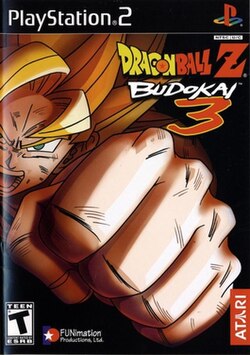 Dragon Ball Z: Budokai 2 on PS2
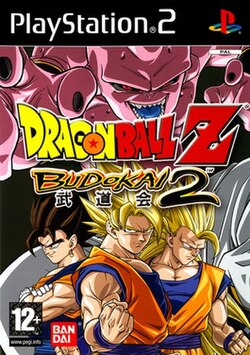 Dragon Ball Z: Infinite World on PS2
 Ultraman Fighting Evolution on PlayStation
 ACA Neo Geo: Art of Fighting 2 on Xbox One
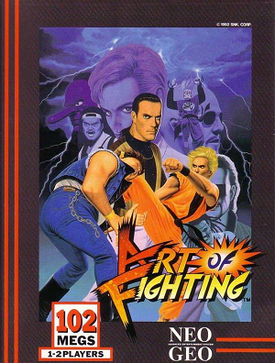 ACA Neo Geo: The King of Fighters '98 on Xbox One
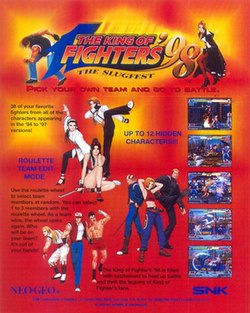 Touhou Hyoibana: Antinomy of Common Flowers on Switch
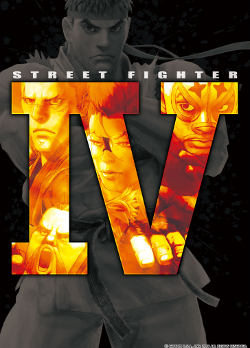 Dragon Ball Xenoverse 2 on Xbox Series X/S
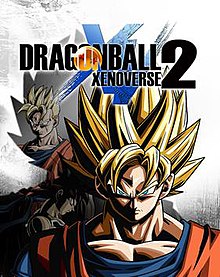 Sonic Rush on DS
 The Rumble Fish 2 on PS5
 Dragon Ball Xenoverse 2 on Switch
 Freedom Wars Remastered on PS5












 Another SquareThought Site